#v2x
#v2x
[ follow ]
#autonomous-vehicles #robotaxis #waymo #robotaxi #tesla #safety #autonomous-driving #self-driving-cars #baidu
#autonomous-vehicles



NYC politics
fromStreetsblog New York City
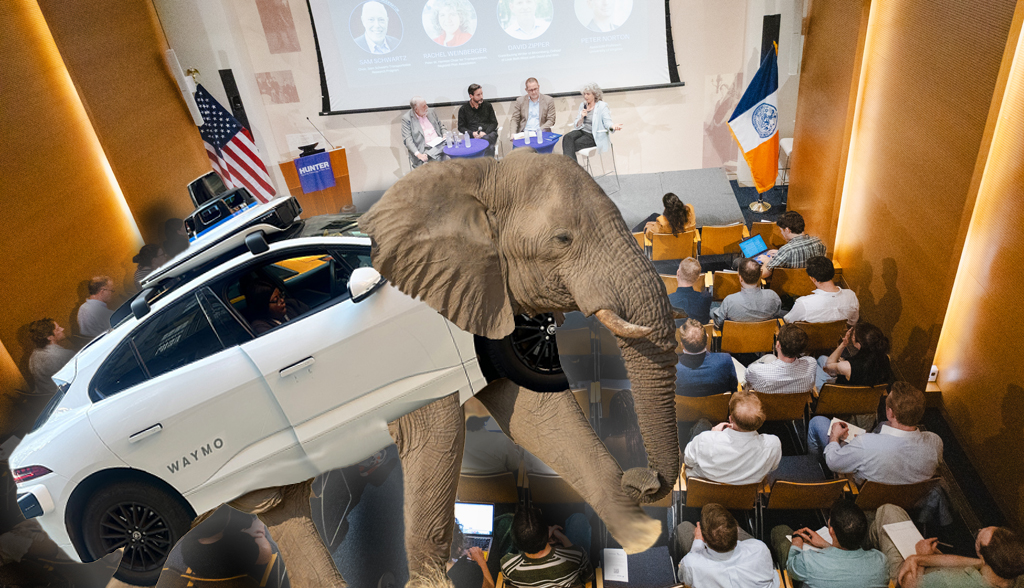
22 hours ago'A Solution, But To What Problem?' Experts Say AVs Are The Elephant In The Room, But There's Still Time To Figure Out Their Role - Streetsblog New York City
Autonomous vehicles require a comprehensive discussion on benefits, risks, and regulations to ensure a balanced approach to their integration into society.
fromSFGATE
15 hours agoOrange County makes the call, ends freeway call box service
"While the need for safe, reliable roadside assistance hasn't changed, the way people access help has," Transportation Authority spokesperson Eric Carpenter stated. "We're focusing on modern tools like 511 and freeway service patrols to deliver faster service while reducing the need for drivers to leave their vehicles in potentially dangerous conditions."
California


London startup
fromLondon Business News | Londonlovesbusiness.com
4 days agoHow digital technology is making road freight operations more efficient - London Business News | Londonlovesbusiness.com
Digital technologies enhance operational efficiency and transparency in UK logistics, addressing rising costs and customer expectations.
#tesla

Toronto startup
fromTESLARATI
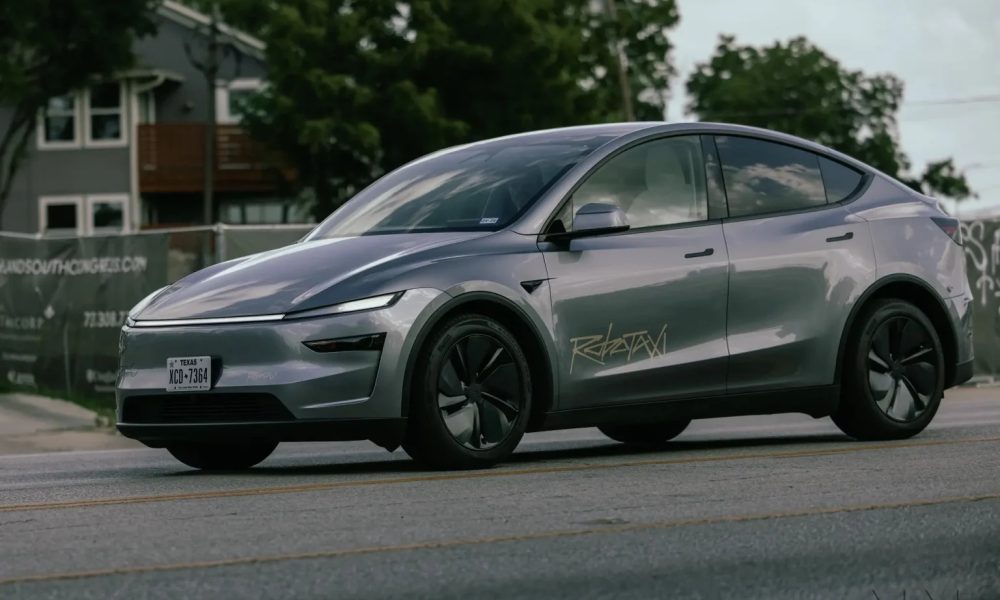
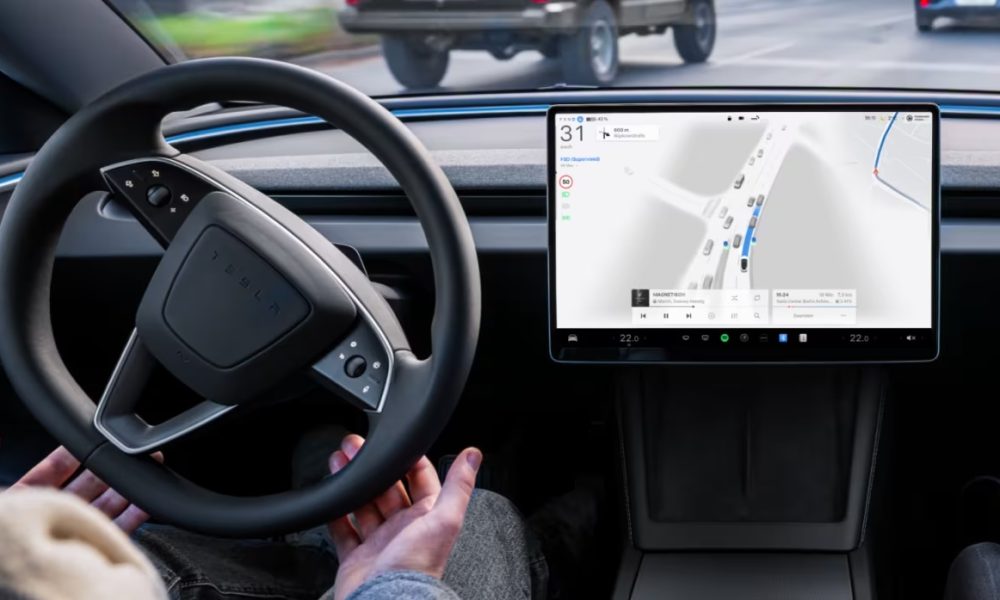
2 days agoTesla is pushing Robotaxi features to owner cars with Spring Update
Tesla is rolling out Robotaxi-inspired features, including an interactive rear passenger display, to existing customer vehicles with the Spring 2026 Update.
Business intelligence
fromComputerWeekly.com
2 weeks agoWilson Connectivity, Autonomous Systems team for in-building wireless service | Computer Weekly
Wilson Connectivity and Autonomous Systems partner to automate in-building wireless infrastructure management, enhancing deployment and ongoing optimization.
Marketing tech
fromTelecompetitor
1 month agoVendors introduce tools for the AI + broadband world: Roundup
Major vendors announce AI-integrated networking solutions for broadband service providers, including Wi-Fi 8 access points, unified platforms, and enhanced cloud services designed for enterprise edge optimization and agentic AI deployment.


fromwww.businessinsider.com
3 weeks agoDriverless cars, meet your eye doctor
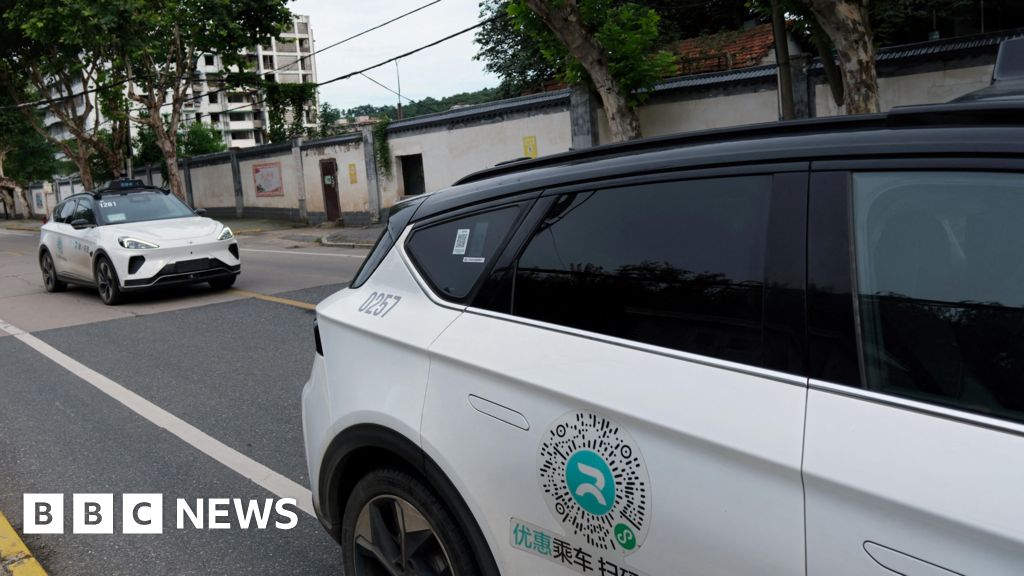
Kinetic's CEO Nikhil Naikal states, 'We have eyes, and when we need to correct vision, we go to an optometrist... In the same way, this is a digital prescription to correct the errors of the car's understanding of the world around it.'
Cars
Artificial intelligence
fromMedium
1 month agoFrom Dumb Devices to Digital Teammates: How Agentic AI is Revolutionizing the Internet of Things
Agentic AI transforms IoT from obedient automation into intelligent systems that anticipate needs, reason through problems, and take initiative rather than simply following programmed commands.
fromLondon Business News | Londonlovesbusiness.com
1 month agoWhy long range communication is useful for industrial monitoring - London Business News | Londonlovesbusiness.com
Long-range radio waves can pass through obstacles more easily, which makes them perfect for monitoring expansive factories or outdoor infrastructure. A recent report by Fabrity highlighted that these systems use very little power. This allows sensors to operate for 5 to 10 years on a single battery. Using such tech means you do not have to install expensive wiring across your entire site.
Roam Research
Gadgets
fromComputerWeekly.com
1 month agoConnectivity, AI drive fleet safety, productivity and decision-making | Computer Weekly
AI, connected data, and safety-focused services are transforming fleet operations, with GPS tracking adoption at record highs and AI delivering measurable safety improvements and cost reductions.
fromFast Company
1 month agoIf technology could bring traffic fatalities down to nearly zero, why not embrace it?
Compact, low-rise villages and cities made sense based on how far people could reasonably travel on foot or by horse. This was true all the way up until the late 1800s. Then came an invention that let people travel incredible distances in seconds, entirely reshaping cities with dense population clusters.
Miscellaneous
fromSustainable Bus
2 months agoAutonomous Systems: depot-first autonomy for smartbuses
For more than a decade, autonomous buses have been "almost ready." Demonstrations with safety drivers began around 2015, and ten years later, this is still largely what we see. The reason is not a lack of ambition - it is physics, safety, and economics. Autonomous buses on city streets are inherently difficult. They carry dozens of passengers, operate as heavy vehicles, and move through a chaotic urban environment.
Business
fromBusiness Insider
2 months agoRobotaxis are in a literal land grab moment
The robotaxi takeover - assuming they take over - will also be a real estate story. As Waymo, Uber, Tesla, and other competitors race to flood the streets with fully autonomous cars, robotaxi operators will need to find places to park, charge, and maintain their vehicles. Voltera, a charging infrastructure company based in Palo Alto that has partnered with Alphabet-backed Waymo, is buying up real estate now to prep for the AV boom.
Real estate
Gadgets
fromComputerWeekly.com
2 months agoHyundai Motor Group and Vodafone IoT deploy connected cars across MENA region | Computer Weekly
Vodafone IoT and Hyundai Motor Group will deploy regulatory-compliant, locally routed Global SIM+ in-car connectivity across Bahrain, KSA, Kuwait, Qatar and the UAE for secure, seamless connected vehicle services.
Gadgets
fromComputerWeekly.com
2 months agoDirect-to-device connectivity set to underpin next generation of industrial IoT | Computer Weekly
Ubiquitous satellite direct-to-device (D2D) connectivity will drive rapid, near-term mass adoption in industrial IoT across agriculture, mining, energy, transport and utilities.
Cars
fromComputerWeekly.com
1 month agoWayve gears up with end-to-end AI for autonomous vehicles | Computer Weekly
Wayve and Qualcomm partnered to integrate Wayve AI Driver with Snapdragon Ride Platform, enabling automakers to deploy advanced ADAS/AD systems faster with reduced complexity and integration effort.
Artificial intelligence
fromTechzine Global
1 month agoMaking sense of 6G: what will the 'agentic telco' look like?
6G networks will integrate AI across all layers to enable autonomous, physical AI applications like self-driving cars and robotic systems, with multiple industry players collaborating on open standards by 2030.
Artificial intelligence
fromeLearning Industry
2 months agoArtificial Intelligence In Transportation Training And Education
AI enables individualized transportation training by evaluating trainee performance, tailoring instruction, simulating real scenarios, and measuring performance for targeted improvement.
fromTelecompetitor
1 month agoAI and machine learning are the future of Wi-Fi management: WBA report
AI and ML are critical for enabling autonomous, self-optimizing Wi-Fi networks capable of managing dense deployments and real-time performance demands. AI/ML reduces operational costs, improves reliability and security and delivers a more consistent quality of experience. Proprietary approaches, inconsistent data quality, and closed interfaces slow innovation and increase integration costs. Interoperable frameworks - not algorithms - will be key to success. Interoperability must include data models, telemetry, APIs, and model lifecycle management.
Artificial intelligence
fromSustainable Bus
2 months agoEvolution: the practical path to autonomous buses - Sustainable Bus
It's tempting to frame autonomous driving as a single leap. In public transport, adoption tends to be incremental - because the system is built for reliability, and new capabilities have to fit into daily operations without disrupting service. That is why a practical strategy is evolution, not revolution: introduce autonomy in a defined domain, learn safely in real operations, and expand capability step-by-step.
Artificial intelligence
fromEngadget
2 months agoHonda vehicles used to proactively report road safety issues in nation-first pilot
Honda and DriveOhio have teamed up on a new road safety initiative in which Honda vehicles are being used to collect real-time data that can advise about potential issues and road deficiencies before they become a problem. Honda's Proactive Roadway Maintenance System, which has been in prototyping since 2021, uses "advanced vision and LiDAR sensors" to identify issues such as worn or obstructed road signs, damaged guardrails, rough roads and emerging potholes.
Cars
Artificial intelligence
fromTechzine Global
1 month agoHuawei expands Agentic Communication Network for mobile AI era
Huawei's Agentic Communication Network transforms traditional networks to support AI agent communication through digital identity management, dynamic group communication, and task session management.
fromFast Company
1 month agoElon Musk's 'self-driving' delusions get a reality check
Tesla's attorneys filed a complaint alleging the state "wrongfully and baselessly" labeled it a false advertiser, brazenly arguing that "it was impossible" to buy or use the "auto-pilot" software "without seeing clear and repeated statements that they do not make the vehicle autonomous." Yet, their fine-print defense clashes with Musk's failed promises and stunts, such as when he took his hands off the wheel on CBS's 60 Minutes in 2018 and proudly declared he was "not doing anything."
Cars
[ Load more ]