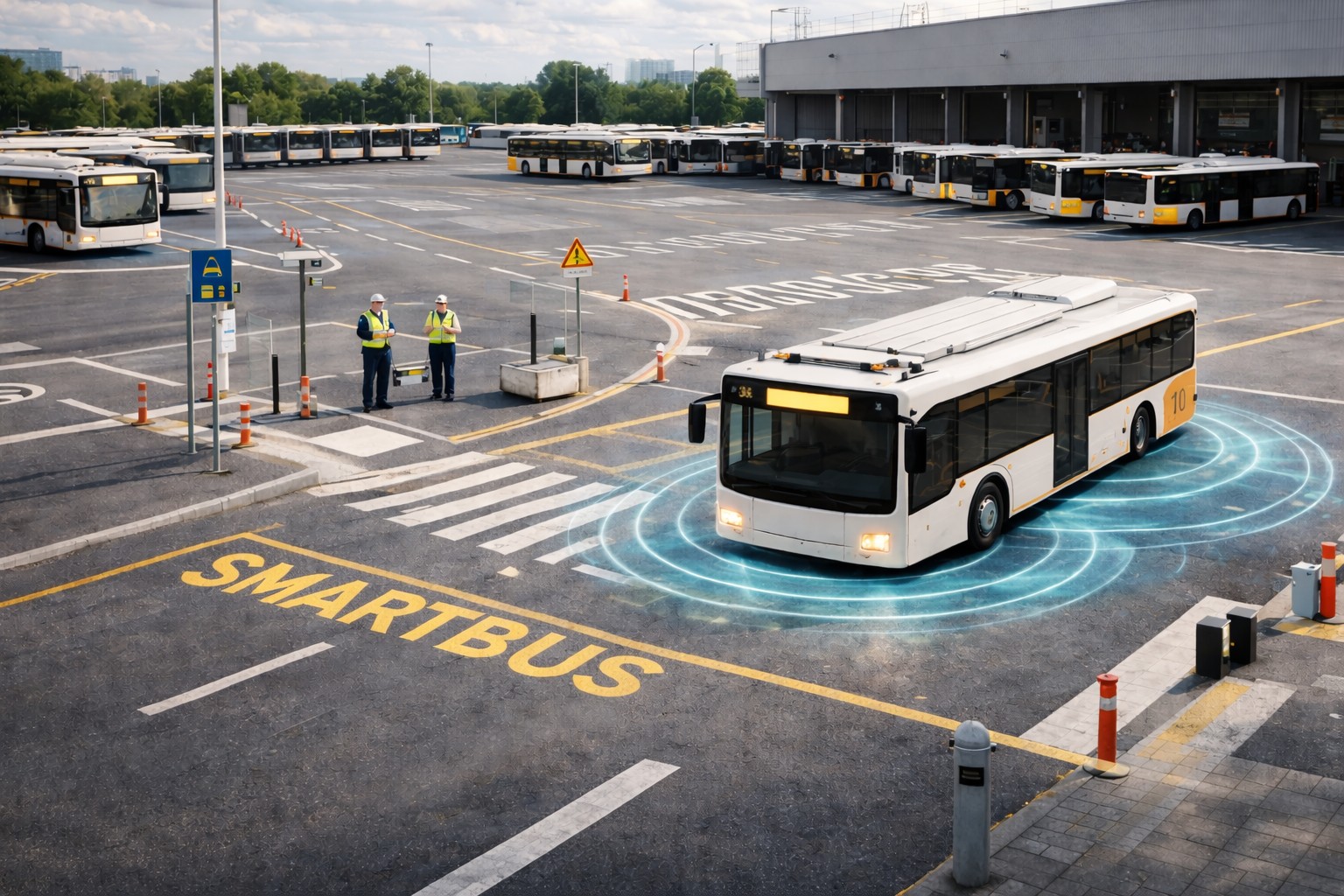
"It's tempting to frame autonomous driving as a single leap. In public transport, adoption tends to be incremental - because the system is built for reliability, and new capabilities have to fit into daily operations without disrupting service. That is why a practical strategy is evolution, not revolution: introduce autonomy in a defined domain, learn safely in real operations, and expand capability step-by-step."
"Depots are full of repeatable, non-revenue movements: * staging and repositioning* parking and re-parking* moving to charging, washing, servicing* queueing and shunting These activities are necessary, but they consume time and capacity. When autonomous driving reduces the manual effort required for depot manoeuvres, the value shows up early in operational terms that are easy to track: recovered driver time, smoother depot flow, and fewer bottlenecks."
Autonomous driving adoption in public transport should follow an evolutionary path, starting within predictable, bounded depot environments where low-speed, non-revenue movements allow safe learning without passengers. Depots handle repeatable tasks—staging, repositioning, parking, charging, washing, queueing—that consume time and capacity; automating these reduces manual effort, recovers driver time, smooths flow, and reduces bottlenecks. De-risking requires simultaneous attention to technical consistency, operational integration with dispatch and maintenance workflows, people interactions across drivers and staff, clear health-and-safety procedures and exception handling, and organisational readiness to absorb change without degrading service.
Read at Sustainable Bus
Unable to calculate read time
Collection
[
|
...
]