Pottery made by people of the Halafian culture, who inhabited northern Mesopotamia between around 6200 and 5500 BC, is painted with flowers that have 4, 8, 16 or 32 petals, and some show arrangements of 64 flowers. These patterns show a clear understanding of symmetry and spatial division long before written numbers came into use around 3400 BC, argue scientists in a new study. The skill might have helped the Halafian people with tasks such as sharing harvests or dividing communal fields, the authors say.
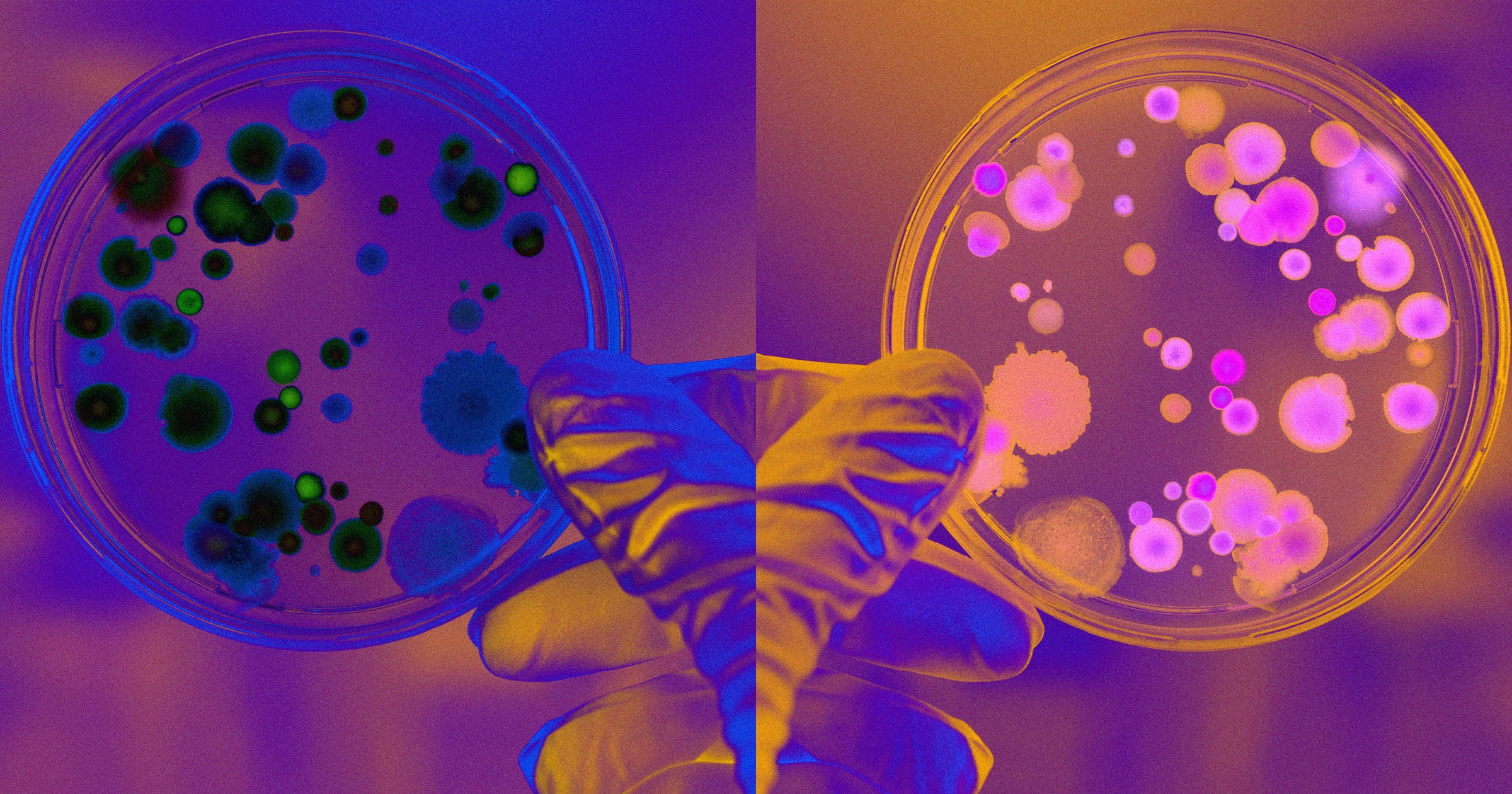
Think of them like pesky little genomic robots that hijack our biology to replicate, since they don't generate their own energy and can't reproduce on their own. They aren't made of cells, and are driven by a ruthless set of programmed instructions to multiply at all costs. Since their genomes are pretty simple, they're easier to tinker with and less ambitious for a human or machine to recreate. Remember: a genome is the DNA in an organism, not just a few strands.
According to the program's stated goals, DARPA is looking to "engineer red blood cells to contain novel biological features that can safely and reliably modify human physiology." In the short term, DARPA wants these bio-engineered red blood cells to improve human performance (think faster recovery times, more resistance to lactic acid buildup that causes muscle soreness, improved cardiovascular fitness, and the like) and "enhanced hemostasis," i.e., better blood clotting.
"This is the first time, as far as I know, that anybody has done anything like this - generate a structure that has the properties of life from something, which is completely homogeneous at the chemical level and devoid of any similarity to natural life."
Increasingly, organoids are being fused to create 'assembloids', complexes of interacting organoids. Sergiu Pasca's laboratory at Stanford University has created an assembloid that models the human spinothalamic pathway, a neural circuit critical for the transmission of sensory information from the body to the brain.
"This offers a powerful tool to selectively affect dynamic properties at each individual condensate," says Rick Young, a biologist at the Whitehead Institute for Biomedical Research in Cambridge, Massachusetts.