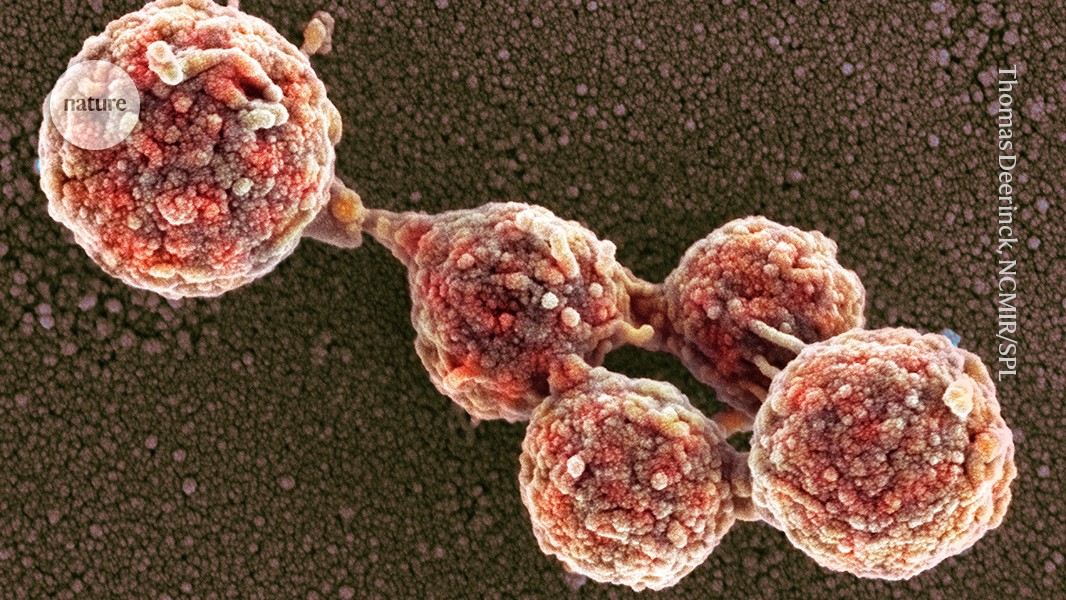
"The feat - reported on the preprint server bioRxiv this month - could boost efforts to re-engineer microbial life by moving entire genomes into bacteria to imbue them with useful properties, such as making drugs or biofuels."
"For me, this paper represents a significant step forward for genome engineering in synthetic biology, says Olivier Borkowski, a synthetic biologist at the French National Research Institute for Agriculture, Food and Environment (INRAE) and Paris-Saclay University."
"More than 15 years ago, researchers chemically synthesized the 1.1-million base-pair genome of the bacterium Mycoplasma mycoides and transplanted it into living cells of the closely related species Mycoplasma capricolum, creating what they called the first synthetic cell."
"A 2016 study successfully transplanted genomes between species in the same class of bacteria as Mycoplasma, called Mollicutes. But efforts to transplant genomes more widely have failed, says John Glass, a synthetic biologist at the J. Craig Venter Institute (JCVI) in La."
Researchers have successfully resurrected 'dead' bacterial cells by substituting their non-functional DNA with a functional genome from a different species. This breakthrough could enhance the re-engineering of microbial life, allowing for the transfer of entire genomes into bacteria to endow them with beneficial traits, such as drug production or biofuel generation. Previous genome transfers were limited to species within the same bacterial class, but this new method may enable testing of engineered genomes from more widely studied species like Escherichia coli.
Read at Nature
Unable to calculate read time
Collection
[
|
...
]