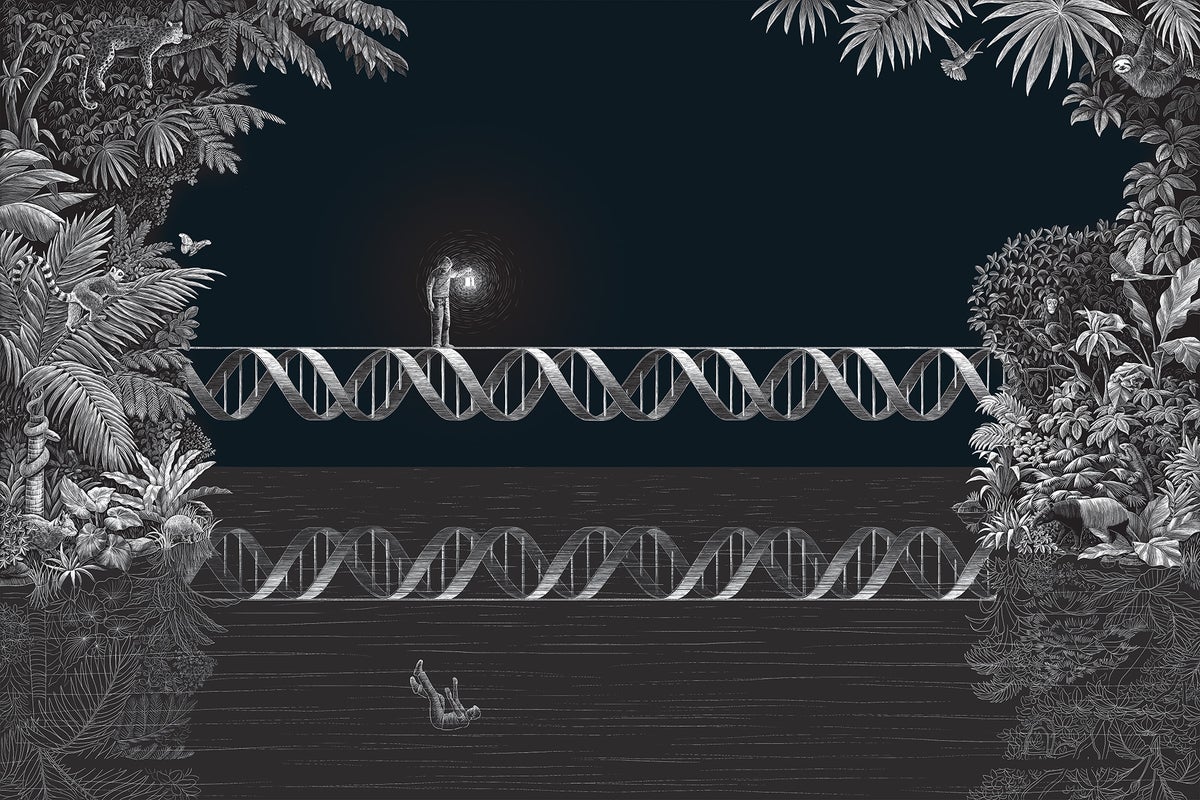
"Let's say it's 2036, and scientists are working on a new class of drugs. These medications are mirror-image versions of the molecules your body uses to fight disease. Their big advantage is that reverse compounds last longer in the body because destructive enzymes don't recognize them and rip them apart. Yet the compounds are still effective against invading microbes. Clinical trials have been promising, and the team is eager to scale up production."
"The researchers turn to engineered mirror bacteriasingle cells made of reversed moleculesfor the job. Bacterial factories aren't a far-fetched idea. Today, for instance, pharmaceutical companies use bacteria to manufacture synthetic insulin for diabetics. Curious about whether mirror cells could be used in a similar way, the scientists experiment on a mirrored version of the common bacterium Escherichia coli. Unfortunately, a researcher with a small cut on her thumb from dry skin forgets to put on her gloves"
"Her immune cells, which usually kill off intruders, don't recognize the mirror proteins on the novel bacteria and fail to react. The mirror microbes multiply and spread within her. Defensive antibodies never appear. After a few days at home, the scientist falls gravely ill. She's taken to a hospital, where she's loaded with antibiotics that can't make up for the massive failures of her immune system."
By 2036, researchers develop mirror-image versions of therapeutic molecules that resist enzymatic breakdown and retain antimicrobial activity. To scale production, researchers employ engineered mirror bacterial cells, including a mirrored Escherichia coli. A laboratory worker with a small thumb cut contacts contaminated surfaces and introduces a few mirror bacteria into her bloodstream. Innate immune cells fail to recognize the mirror proteins, antibodies never develop, and the microbes proliferate unchecked. Antibiotics are unable to compensate for the immune failure, and the worker dies after several days. The mirror microbes disperse into the environment via the worker's home, pets, soil organisms, and insects, enabling neighborhood spread.
Read at www.scientificamerican.com
Unable to calculate read time
Collection
[
|
...
]