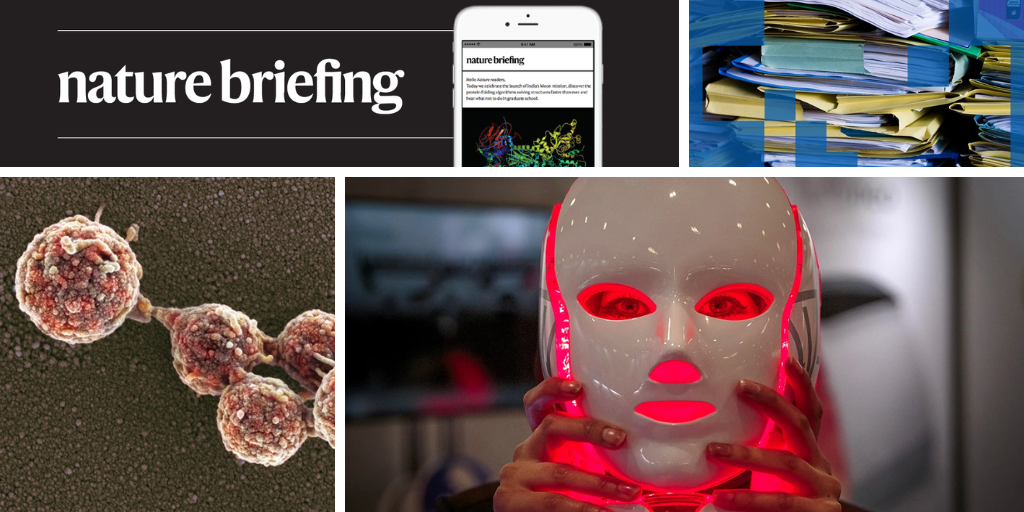
"Researchers have resurrected 'dead' bacterial cells by replacing their defunct DNA with the working genome of another species. This technique could open the door to re-engineered microbial life imbued with useful properties, such as the ability to make drugs or biofuels."
"After 20 years and more than 30,000 cloning attempts, researchers have found the limit on the number of times that a single mouse can be serially re-cloned - their attempts failed after 58 generations."
"The cloned mice looked normal and lived as long as normal mice, but accumulated mutations at an unusually high rate, which could be why attempts to clone them were eventually unsuccessful."
"A major artificial-intelligence conference has rejected 497 papers whose authors used AI in their peer reviews of other articles submitted to the meeting."
Red light therapy is emerging as a potential treatment for various conditions, including hair loss and mouth ulcers. Researchers have successfully revived dead bacterial cells by replacing their DNA with functional genomes from related species. This technique could lead to the creation of engineered microbes with beneficial properties, such as drug production or biofuel generation. Additionally, studies on cloned mice reveal that asexual reproduction may be unsustainable due to high mutation rates. An AI conference has rejected numerous papers that utilized AI in their peer review processes.
#red-light-therapy #bacterial-genome-transplant #cloning #artificial-intelligence #synthetic-biology
Read at Nature
Unable to calculate read time
Collection
[
|
...
]