Environment
fromEarth911
3 days agoThe Search for Sustainable Pavers
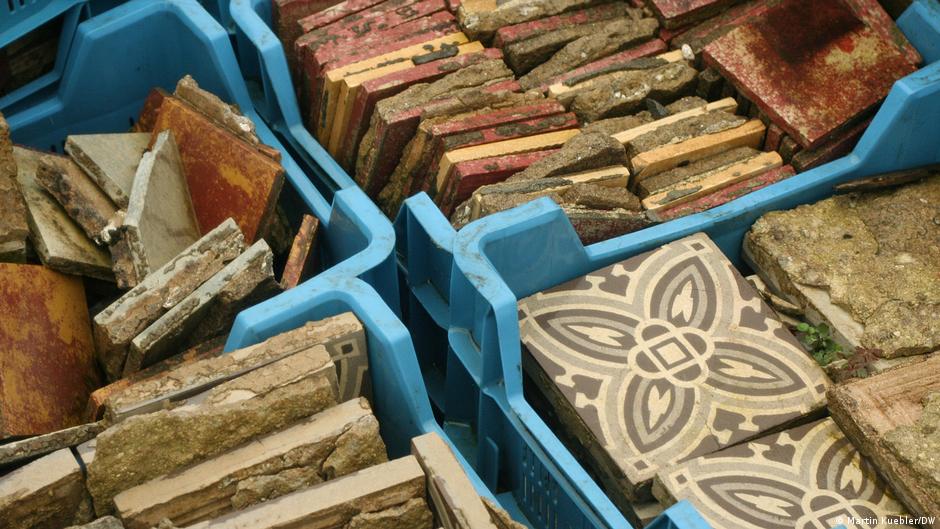
Cement and impervious paving drive major emissions and stormwater pollution, while permeable and recycled-material paving can cut runoff and improve water quality.
When you think about building a house, what materials come to mind? Brick, wood and metal all come to mind; there are also some very distinctive glass houses out there. (Even if their occupants should refrain from throwing stones - though honestly, that's a good tip for indoor living in general.) A group of MIT researchers have come up with a very different way of making buildings, and it's one that also addresses an ongoing waste issue."We've estimated that the world needs about 1 billion new homes by 2050. If we try to make that many homes using wood, we would need to clear-cut the equivalent of the Amazon rainforest three times over," explained AJ Perez, who conducts his research in the MIT Office of Innovation. The title of a paper written by Perez and his colleagues - "Design, Manufacture and Testing of Structural Trusses Using Additively Manufactured Polymer Composites" - gives a sense of the solution that they have in mind.
Researchers at the Norwegian University of Science and Technology and the University of Tokyo have made a prototype of botanical cement made of desert sand and plant-based additives in hopes that it can be used to build houses and roads. Once mixed, the team adds tiny pieces of wood together and presses them all with heat to produce the cement.
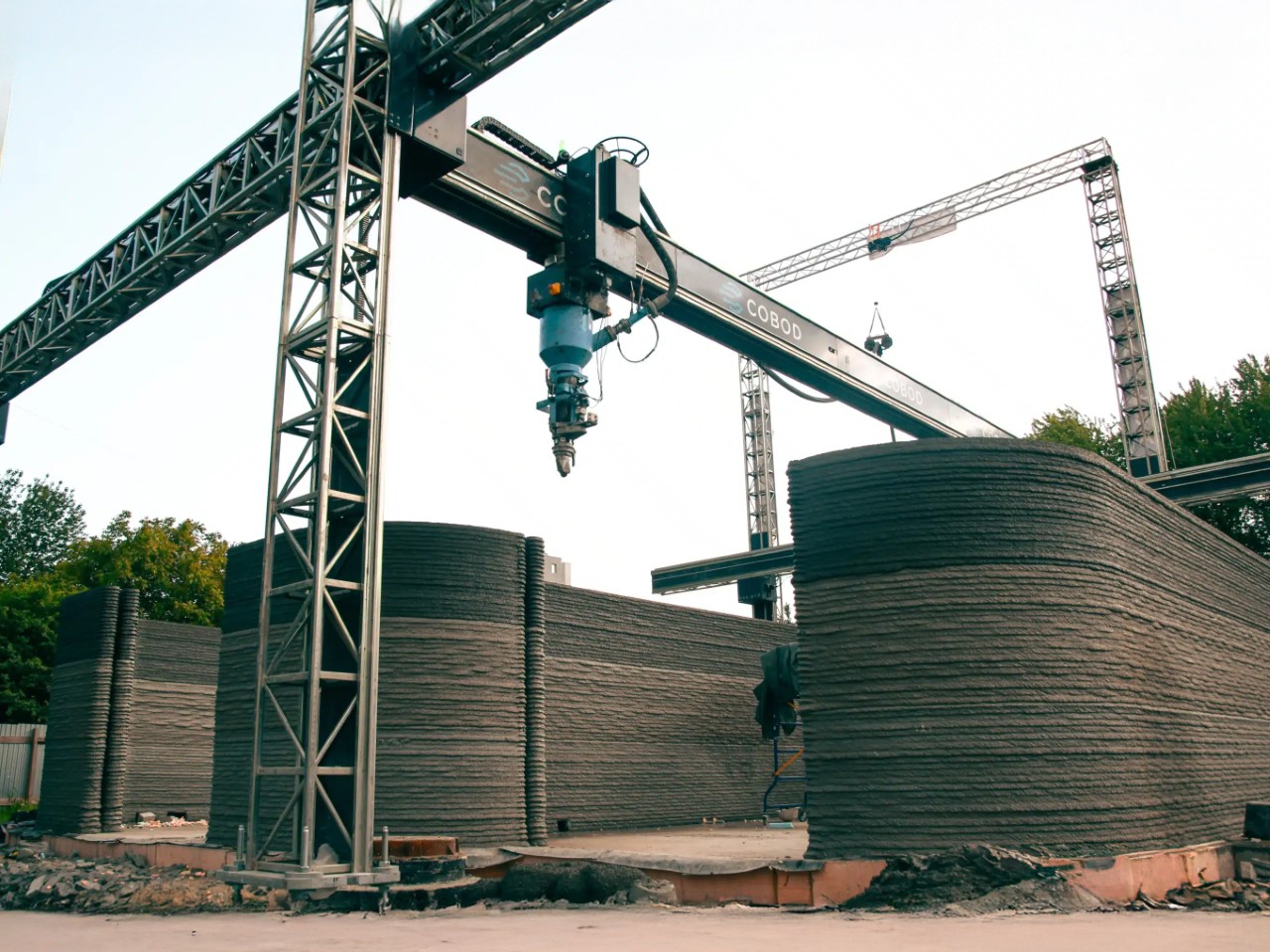
Traditional construction is often marked by inefficiencies like material waste, labor intensity, and long project timelines that push up the final cost per square foot. In contrast, 3D printing, or Additive Manufacturing in Construction (AMC), introduces a fundamentally different approach, shifting from subtractive to additive building processes. Its central ambition is to make housing more accessible by lowering material and labor costs while enabling faster delivery of structurally sound, architecturally considered homes.
Lu Wenyu-co-founder of Amateur Architecture Studio with Pritzker laureate Wang Shu-has shaped many of the practice's most emblematic works across China, including the Ningbo History Museum and the Xiangshan Campus of the China Academy of Art in Hangzhou. Often working outside the spotlight, her leadership is unmistakable in the discipline of execution and the roles she has assumed: in 2003, together with Wang Shu, she established the Architecture Department at the China Academy of Art,
One of the earliest large-scale examples of composite materials can be found in the Great Wall of China, where stone, clay bricks, and organic fibers such as reeds and willow branches were blended to create a resilient and lasting structure. These early techniques reveal a timeless intuition: distinct materials, when combined thoughtfully, produce properties unattainable by any single element.
The construction sector is increasingly focusing on sustainable practices to address environmental concerns. As awareness of these issues grows, the adoption of eco-friendly materials is becoming a priority. These materials help reduce the ecological footprint of buildings and enhance their long-term value and efficiency. By choosing sustainable options, you can play a crucial role in promoting a greener construction industry. For example, companies like North West Timber Treatments offer a variety of eco-friendly materials that support these initiatives.
The future of urban planning and architecture is promising if the world, collectively, looks beyond the concept of mere sustainability and instead embraces a nature-positive approach. As global population growth drives rapid urbanization-requiring humanity to build the equivalent of a city the size of Madrid every week for decades to come-the construction sector faces a defining challenge: how to build durable, energy-efficient, and resilient urban environments in harmony with natural ecosystems.
The Holcim Foundation for Sustainable Construction has announced the 20 winning projects of the 2025 Holcim Foundation Awards, recognizing contributions to sustainable design and construction across five regions: Asia Pacific, Europe, Latin America, the Middle East and Africa, and North America. This year's selection spans a broad range of scales, from a 200-square-meter semi-permanent school in a Kenyan forest to major urban regeneration initiatives in Madrid, Dhaka, and Shenzhen, reflecting the diversity and reach of sustainable architecture today.
At 753 meters above sea level, Meishajian is the third-highest peak in Shenzhen, characterized by steep trails, exposed bedrock, and fragile soils shaped by erosion. The site attracts many hikers but presents significant challenges for construction due to its altitude, terrain, and limited accessibility. The project brief called for an observation station to provide rest, shelter, and viewing space while minimizing environmental impact.
Bamboosaurus Studio designs Satimi.sook, an located on Thailand's Koh Phangan, to reinterpret the site's former coconut grove through architecture that integrates with its natural and cultural context. The project emphasizes continuity between built form and landscape, using local references to shape both structure and atmosphere. The design concept originates from the geometry and rhythm of the coconut palms that once occupied the site. Structural columns are placed in alignment with the original tree positions,
The new headquarters for Wikicampers in Bidart, France is designed as an adaptable workplace that can evolve with the company's growth and operational needs.
Martinez et al. tested three different Roman concrete recipes with varying slaked lime-to-pozzolan ratios (1:2, 1:3, and 1:4), and assessed greenhouse gas and air emissions for each production stage based on known Roman construction practices. The results surprised the scientists. Per volume of concrete, the production process for Roman concrete ended up emitting as much and, in some cases, more CO2 than modern formulations.
The property that homeowners Heather and Chris discovered was a mid-century detached house, on a steep slope overlooking the beach, damp and barely habitable.