#military-history
#military-history
[ follow ]
#world-war-ii #cold-war #nike-missile-site #sausalito #iran #historical-events #american-history #armored-warfare




fromThe New Yorker
1 month agoA Lesson of Vietnam: Getting in Is Easier than Getting Out
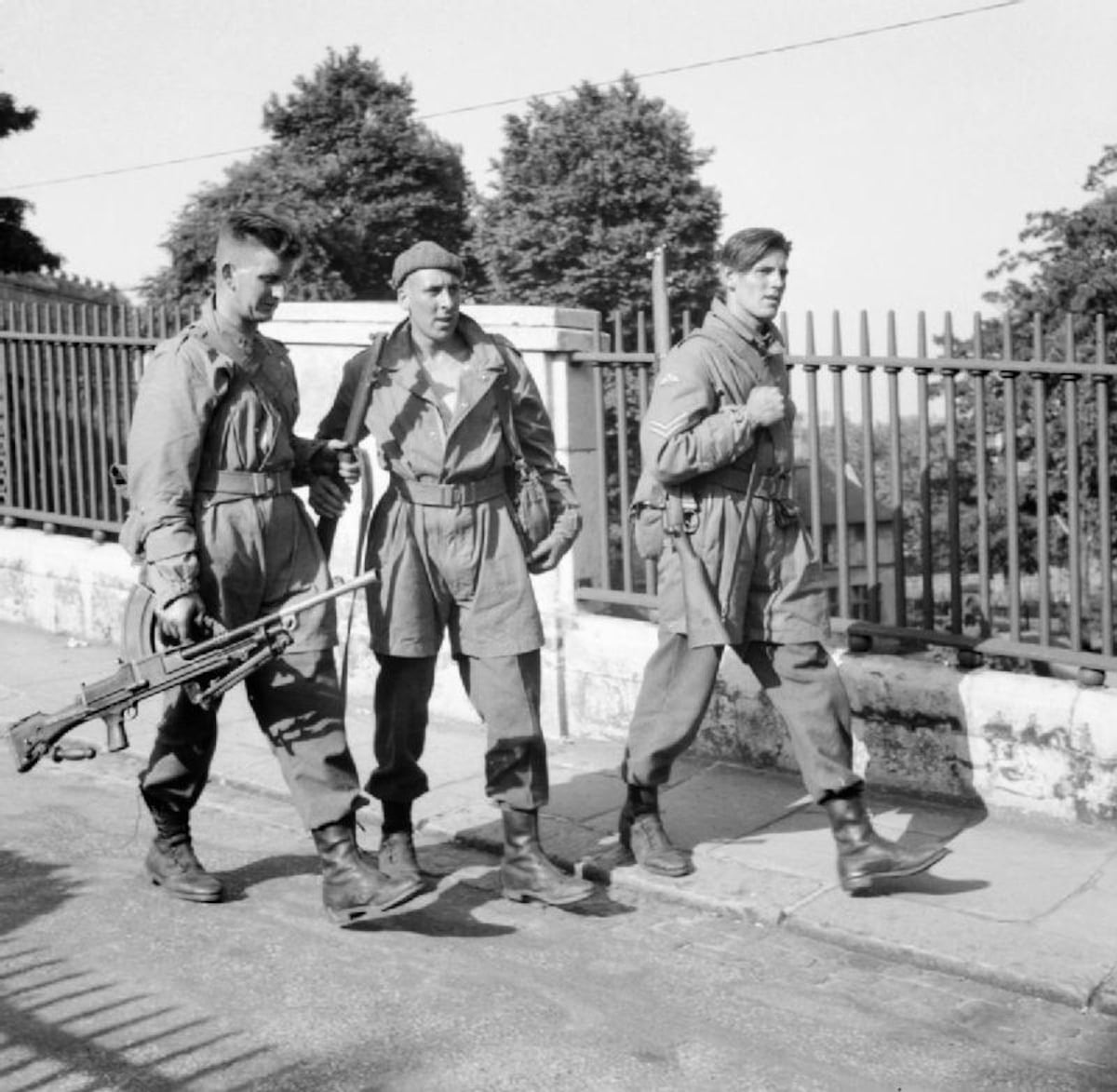
The Johnson Administration downplayed the significance of the landing, explaining that the marines were being deployed to secure an airbase used for Operation Rolling Thunder, a bombing campaign against North Vietnam.
Washington DC

Women in technology
fromThe Atlantic
1 month agoThe Women of Avenger Field
Women Airforce Service Pilots (WASPs) trained at Sweetwater's Avenger Field during World War II to fly military aircraft, enabling male pilots to focus on combat while remaining largely unrecognized and denied veterans' benefits after the war.


Roam Research
fromFortune
2 months agoPete Hegseth called it 'quiet death'-the first time a U.S. sub fired a torpedo and hit an enemy ship since the 1940s | Fortune
A U.S. submarine launched a torpedo in combat for the first time since World War II, striking and destroying a ship in what Defense Secretary Pete Hegseth called a 'quiet death.'


History
fromThe Mercury News
2 months agoSan Francisco exhibit honors Japanese American who fought for US in WWII while their families were locked up
Japanese American Nisei soldiers fought for the United States in World War II while their families were imprisoned in internment camps, and their stories are now being honored through a traveling exhibit in San Francisco.
from24/7 Wall St.
2 months agoThe Most Feared Tanks of the Second World War
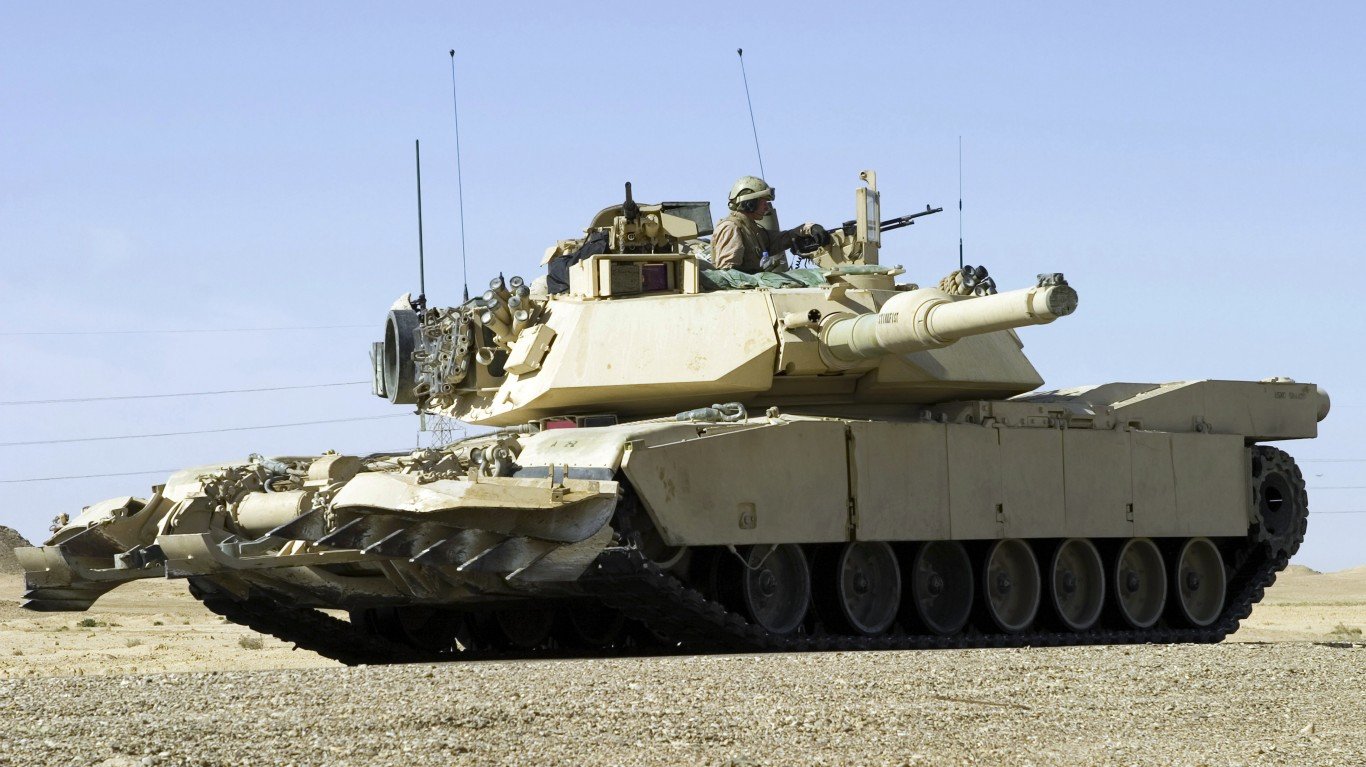
Tanks became a central part of how armies fought, and certain designs quickly gained reputations among soldiers who faced them in combat. Some were feared for their firepower, others for their armor or battlefield dominance.
History
History
from24/7 Wall St.
2 months agoThe Most Influential Handguns in American Combat History
American military handguns have evolved from nineteenth-century cavalry revolvers to modern modular pistols, with certain models significantly influencing military doctrine, design standards, and combat operations across generations of conflict.
from24/7 Wall St.
3 months ago30 Standard-Issue Rifles That Outlasted Entire Conflicts
Across the 20th and 21st centuries, armies repeatedly tried to replace standard-issue rifles that simply refused to disappear. Designed for specific conflicts like World Wars, Cold War showdowns, or even regional wars, many of these weapons stayed in service for decades longer than intended. In most cases, it wasn't nostalgia that kept them around. It was reliability, logistics, and the uncomfortable reality that replacing a rifle on paper is far easier than doing it across an entire military.
History
from24/7 Wall St.
3 months agoWeapons That Performed Well Except For Desert, Jungle, or Arctic Conditions
On paper, many of the world's most famous weapons looked like reliable successes. In practice, desert sand, jungle humidity, and arctic cold often had other ideas. Systems that performed well in testing or early combat sometimes broke down once environmental stress became unavoidable. Here, 24/7 Wall St. is taking a closer look at how the environment, not enemy fire, can quietly expose limits that designers never fully anticipated.
World news
fromwww.mercurynews.com
3 months agoToday in History: February 1, space shuttle Columbia destroyed during re-entry
On Feb. 1, 2003, the space shuttle Columbia broke apart as it re-entered the Earth's atmosphere, killing all seven crew members: commander Rick Husband; pilot William McCool; payload commander Michael Anderson; mission specialists Kalpana Chawla, David Brown and Laurel Clark; and payload specialist Ilan Ramon. Also on this date: In 1865, abolitionist John S. Rock became the first Black lawyer admitted to the bar of the U.S. Supreme Court.
World news
fromWashingtonian - The website that Washington lives by.
3 months agoThe Spy Museum's New Exhibit Explores the Hidden World of Camouflage - Washingtonian
The International Spy Museum will unveil its newest special exhibit, " Camouflage: Designed to Deceive," on March 1. The museum has previously featured artifacts that used elements of camouflage, like the Aston Martin V12 Vanquish with "adaptive camouflage" that appeared in the 2024 exhibit "Bond in Motion." For the first time, however, the Spy Museum will dedicate an all-new exhibit to exploring the history of camouflage, in an installation that will be on display for the next three years.
History
from24/7 Wall St.
3 months agoFirearms That Required Extensive Training to Use Effectively
Military history is filled with firearms that looked formidable on paper but proved far less impressive in the hands of average troops. In many cases, the issue was not flawed engineering, but unrealistic assumptions about training and doctrine. Some weapons were built with elite users in mind, soldiers who could manage the weapon and tactical nuance at a level most forces never reached.
History
from24/7 Wall St.
5 months agoThe Legendary Sharpshooters Who Redefined Special Operations Warfare
For over a century, sharpshooters have shaped the evolution of special operations warfare. From the minimalist precision of Simo Häyhä to the extreme-range shots of modern SOF snipers, these marksmen forced militaries to rethink how small teams could dominate the battlefield. Advances in optics, ballistics, and training didn't just make rifles better, they transformed snipers into high-value assets for reconnaissance, target interdiction, and mission security.
History
fromwww.mercurynews.com
7 months agoToday in History: September 17, aircraft crash kills a person for the first time
Also on this date: In 1787, the Constitution of the United States was completed and signed by a majority of delegates attending the Constitutional Convention in Philadelphia. In 1862, more than 3,600 men were killed in the Civil War Battle of Antietam (an-TEE'-tum) in Maryland. In 1944, during World War II, Allied paratroopers launched Operation Market Garden, landing behind German lines in the Netherlands.
History
Miscellaneous
fromThe Art Newspaper - International art news and events
9 months agoA painting of a Russian soldier treating a wounded Ukrainian has been seen hanging in a church in Russia: what does it mean?
A painting depicting a Russian soldier aiding a Ukrainian soldier has been displayed at Valaam Monastery during a report on Putin and Lukashenka's meeting.
fromwww.npr.org
9 months agoJournalist Mstyslav Chernov talks about his documentary '2,000 Meters to Andriivka'
The documentary '2,000 Meters To Andriivka' narrates the struggle of a small Ukrainian platoon attempting to reclaim a town from Russian forces, depicting the intense combat over a span of three months.
Russo-Ukrainian War
fromwww.dw.com
9 months ago30 years since Croatia's war of independence DW 08/05/2025
Operation Oluja (Storm) commenced from August 4 to 7, 1995, during which Croatian forces successfully recaptured the Krajina region, previously seized by Serbs. The assault lasted only 85 hours, reclaiming a significant portion of Croatia’s territory. The aftermath saw changes in the Bosnian war dynamics, breaking the Serbian siege on Bihac and allowing Croatian and Bosnian forces to reclaim territory, leading to a reduction of Serbian-held territory from 70% to 49%.
Miscellaneous

fromwww.theguardian.com
10 months agoEasy regime change in Tehran is a nice idea. But look to history: it's a near-impossible one | Martin Kettle
On the eve of the 1991 Gulf war, General Schwarzkopf remarked on the complexities of regime change, reinforcing that while it's easy to desire change, executing it is fraught with challenges.
US politics
[ Load more ]