Antarctica is one of the most successful models of peaceful governance and international cooperation. If we don't actively work to build peace, what naturally arises is tension and conflict.
When light shines through water, colors with longer wavelengths are absorbed by the water, with the longest wavelengths absorbed first. Blue and violet have the shortest wavelengths of visible light, so they are able to penetrate the deepest.
These reefs are living, breathing snapshots of a watery world that you can peek into: refreshing oases where the noise of the land falls away; in its place, an intricate and utterly at-ease slice of life that you're lucky enough to witness.
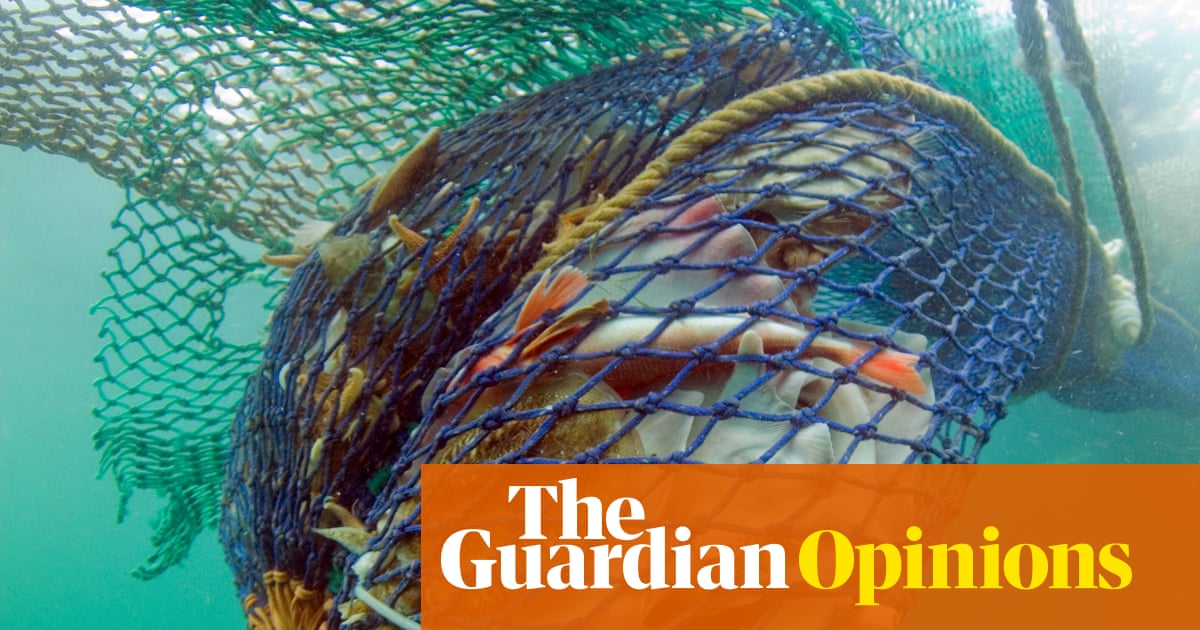
"There are not very many conservation issues that I'm aware of where industry and conservationists and consumers and the fishermen and the resource users all want the same thing. Every stakeholder wants less bycatch."
Recovered CWMs continue to pose worker and food safety risks. Because of ocean drift, storms, and offshore industries, sea-disposed CWMs locations are largely unknown and potentially far from their originally documented dump site. The three incidents exposed at least six crew members to mustard agent, which causes blistering chemical burns on skin and mucous membranes.
If you enter the amounts of different types of plastic that you clean up into the Wildlife Impact Calculator, it will tell you how many animal lives would have been at risk, had those items made their way into the ocean and been ingested.
In February 2023, an article in the Mexican press announced the capture of a vessel some 195 nautical miles from the port of Lazaro Cardenas in the state of Michoacan. It had been carrying nearly 700 pounds of cocaine packaged in plastic-wrapped bricks, in addition to 1,650 liters of hydrocarbons in 33 plastic containers. Two Ecuadorian fishermen were among the five detainees, and their immigration records showed unusual activity.
The government said the plans would increase the number of England's official bathing sites to 464. An official bathing spot on the Thames in London would mark a "vast transformation" in water quality in the river which was declared biologically dead in the 1950s due to pollution, officials said. Water minister Emma Hardy said rivers and beaches were "at the heart of so many communities, where people come together, families make memories and swimmers of all ages feel the benefits of being outdoors safely".
Consumers must be aware that seafood fraud, in which vendors label cheaper fish as products of higher quality and price, is common practice. According to Oceana, fish is mislabeled 25 to 70% of the time, especially when it comes to prized fish like wild salmon and Atlantic cod. Those of us who care about the environment are also concerned with traceability,
Off the deep waters of Kumejima, Japan, Steven Kovacs captured an image that would be awarded Best in Show for the 2025 Ocean Art Photography Contest. Traveling to the Okinawa prefecture in the hopes of encountering a scarcely documented species of larval goosefish, Kovacs spent nearly two weeks blackwater diving before photographing the rare moment. "Unfortunately, this beautiful little fish turned out to be incredibly uncooperative and difficult to photograph," Kovacs says.
Krill are a keystone species and the main food source for whales, penguins and seals. Aker QRILL, the world's largest harvester of krill, a tiny crustacean and keystone of Antarctica's fragile ecosystem, and its sister company, Aker BioMarine, produce feed additives for aquaculture and dietary supplements for pets and humans.
On September 14, Alejandro Carranza, a 42-year-old fisherman, set out to sea from a remote town in La Guajira, Colombia's northernmost province, bordering Venezuela. It was an ordinary fishing trip, in search of tuna and marlin, said Leonardo Vega, a childhood friend and the president of the fishing association Carranza belonged to. But this time, Carranza never returned.
From glacier-fringed archipelagos to palm-lined atolls, islands come in every imaginable shape and size. But when it comes to sheer numbers of islands, not every country is created equal. The nations that top this list aren't just tropical destinations or volcanic chains, they're often places where inland lakes, fjord-laced coastlines, and geological fragmentation have produced thousands of discrete landmasses. That raises a deceptively simple question: which countries have the most islands?
In the pristine High Arctic sits the Kitsissut island cluster, also known as the Carey Islands, nestled between northwest Greenland and northeast Canada. The surrounding seas are perilous, and traveling there is difficult even with modern boats. But new archaeological evidence suggests ancient humans managed to sail to the islands, too. Early settlers lived on the islands between 4,500 and 2,700 years ago.
It looked like the silvery blade of a knife. Peering through his goggles, diver Ted Judah had laid eyes on a deep-sea creature rarely encountered by humans. He and wife Linda were diving off McAbee Beach in Monterey County in late December when, near the surface, he spotted the undulating thing. It was some kind of ribbon fish, he wrote in a post on the Facebook group Monterey County Dive Reports. Kevin Lewand solved the mystery.
One of the most precious marine reserves in the world, home to sharks, turtles and rare tropical fish, will be opened to some fishing for the first time in 16 years under the UK government's deal to hand back the Chagos Islands to Mauritius. Allowing non-commercial fishing in the marine protected area (MPA) is seen as an essential part of the Chagossian people's return to the islands, as the community previously relied on fishing as their main livelihood.
A solitary figure stands on the shore of Thailand's Tang Khen Bay. The tide is slowly rising over the expanse of sandy beach, but the man does not seem to notice. His eyes are not fixed on the sea, but on the small screen clutched between his hands. About 600 metres offshore, past the shadowy fringe of coral reef, his drone hovers over the murky sea, focused on a whirling grey shape: Miracle, the local dugong, is back.
The dinghy slowed to a stop at a long line of black bobbing baskets and David Lawlor reached out to inspect the first one. Inside lay 60 oysters, all with their shells closed, shielding the life within. They look great, beamed Lawlor. So did their neighbours in the next basket and the ones after that, all down the line of 300 baskets, totalling 18,000 oysters.