DevOps
fromTechRepublic
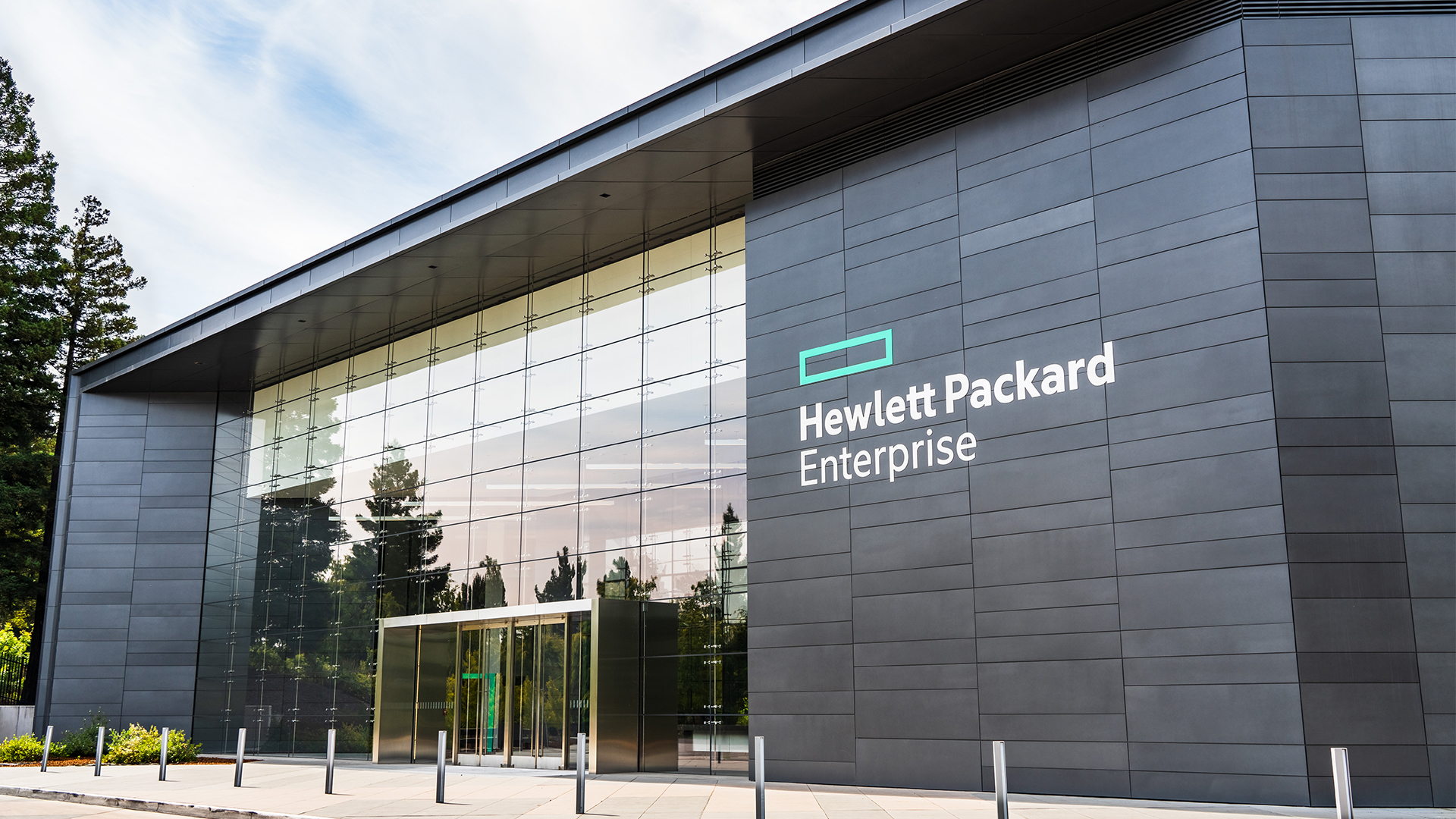
1 day agoHPE Reboots Private Cloud for the AI Era
HPE unifies private cloud and storage into an AI-ready stack with a single Morpheus control plane across VM, Kubernetes, and AI workloads.
A North American manufacturer spent most of 2024 and early 2025 doing what many innovative enterprises did: aggressively standardizing on the public cloud by using data lakes, analytics, CI/CD, and even a good chunk of ERP integration. The board liked the narrative because it sounded like simplification, and simplification sounded like savings. Then generative AI arrived, not as a lab toy but as a mandate. "Put copilots everywhere," leadership said. "Start with maintenance, then procurement, then the call center, then engineering change orders."
Earlier this year, Amazon Web Services (AWS) announced the availability of the Well‑Architected Data Residency with Hybrid Cloud Services Lens, a new extension of the AWS Well‑Architected Framework aimed at helping organizations design and operate hybrid cloud workloads that must comply with complex data residency and sovereignty requirements. The announcement underscores AWS's growing focus on governance, regulatory compliance, and hybrid operations as enterprises increasingly balance cloud adoption with on‑premises and geopolitical data constraints.
Amazon Web Services is adding support for the Nutanix AHV hypervisor within its Storage Gateway service. This allows organizations using Nutanix AHV to connect their on-premises infrastructure to AWS storage via S3 File, Tape, and Volume gateways. The expansion applies to all AWS regions and makes it possible to implement Storage Gateway in environments running on AHV, in addition to existing options such as VMware ESXi, Microsoft Hyper-V, and Linux KVM.
Leaseweb has announced the appointment of Ronald Richardson as its new chief revenue officer, as the infrastructure as a service (IaaS) provider looks to capitalize on growing hybrid cloud demand. A seasoned industry executive, Richardson brings more than 20 years' experience of international commercial leadership across the tech, cloud, software, and online advertising sectors. Previously, he has served in senior leadership roles at high-growth B2B technology businesses - including Banyan, Microsoft,
The two companies are presenting five innovations for data resilience, ranging from backup for HPE Morpheus VM Essentials to improved storage efficiency with HPE StoreOnce. Veeam and HPE are focused on simplifying data protection in hybrid cloud environments. Trust, resilience, and availability are key areas of focus. The strengthened collaboration aims to give companies more control over their data, regardless of where it is located.
One of the biggest recent challenges we hear from many of you is around virtualization costs - licenses, fees are skyrocketing. You're faced with rigid architecture and upcoming deadlines and single vendor runtime models are becoming harder to adapt and afford. It is not enough to lift and shift to the public cloud. You need a cloud model and experience everywhere.
Microsoft recently announced a limited preview of Azure Virtual Desktop (AVD) for hybrid environments, a new capability that brings cloud-native desktop virtualization to existing on-premises infrastructure. With this update, on-premises Arc-Enabled Servers can be configured as AVD session hosts, expanding Azure Virtual Desktop's hybrid capabilities beyond Azure Local to Microsoft Hyper-V, Nutanix AHV, VMware vSphere, and physical Windows Servers, or anywhere Arc-Enabled Servers can be deployed on-premises.
IBM is collaborating with Cockroach Labs to help mainframe users modernize business-critical applications. The two companies have signed an OEM agreement to integrate CockroachDB, the distributed relational database with PostgreSQL compatibility, into IBM's hybrid infrastructure. According to The Register, IBM aims to enable organizations to use cloud-native databases on systems such as LinuxONE, Linux on Z, Power Systems, and Red Hat OpenShift.
Cloudera describes itself as the company that brings "AI to data anywhere" today. It's a claim stems from its work that spans a multiplicity of data stacks in private datacentres, in public cloud and at the compute edge. As we now witness enterprises move quickly through what the company says are "new stages of AI maturity", Cloudera used its Evolve25 flagship practitioner & partner conference this month in New York to explain the mechanics of its mission to help enterprises navigate this transformation with an AI-powered data lakehouse.
The Storm-0501 threat group is refining its tactics, according to Microsoft, shifting away from traditional endpoint-based attacks and toward cloud-based ransomware. By leveraging cloud-native capabilities, from the tech giant shows Storm-0501 exfiltrates large volumes of data, destroys data and backups within the victim environment, and demands ransom - all at speed and without relying on traditional malware deployment. This time last year, Microsoft warned that Storm-0501 had extended its on-premises ransomware operations into hybrid cloud environments.
The more things change, the more they stay the same, as the French say. That's certainly the case in enterprise storage. Here we review the storage supplier profiles published this year on ComputerWeekly.com, and find all the key players building on key themes of the past decade. These include: flash storage (often QLC for increased density), hybrid cloud operations, storage and backup for containerised apps, as-a-service models of purchasing, and storage for AI workloads.
Red Hat AI Inference Server is intended to meet the demand for high-performing, responsive inference at scale while keeping resource demands low, providing a common inference layer that supports any model, running on any accelerator in any environment.