#cyberattacks
#cyberattacks
[ follow ]
#cybersecurity #iran #russia #critical-infrastructure #hybrid-warfare #china #national-security #phishing
Information security
fromTNW | Insights
5 days agoPoland water treatment plants breached by hackers using default passwords as US faces same critical infrastructure threat
Five Polish water treatment plants were breached via default passwords and internet-exposed control systems, enabling changes to pump, filter, and chemical operations.


#critical-infrastructure
Information security
fromSecuritymagazine
2 months agoIran Conflict and Cybersecurity: What to Expect in the Next 30 Days
U.S. cyber defenders should expect retaliatory cyberattacks from Iranian state actors and hacktivists targeting critical infrastructure, financial services, healthcare, and media outlets within the next 30 days.
Information security
fromSecuritymagazine
2 months agoIran Conflict and Cybersecurity: What to Expect in the Next 30 Days
U.S. cyber defenders should expect retaliatory cyberattacks from Iranian state actors and hacktivists targeting critical infrastructure, financial services, healthcare, and media outlets within the next 30 days.
#ai-security


Information security
fromSecurityWeek
2 months agoHackers Weaponize Claude Code in Mexican Government Cyberattack
Attackers exploited Claude Code to compromise ten Mexican government bodies and a financial institution, exfiltrating 150GB of data affecting 195 million identities by bypassing AI safety guardrails through social engineering.
World politics
fromRadioFreeEurope/RadioLiberty
2 months agoIran Plunged Into Digital Darkness as Internet Blocked Amid US, Israeli Air Strikes
Iran experiences near-total internet blackout to 4% connectivity during coordinated US-Israel aerial bombing campaign targeting missile and nuclear infrastructure.



fromwww.theguardian.com
3 months agoWelcome to new cold war as world descends on Italy amid global political chaos
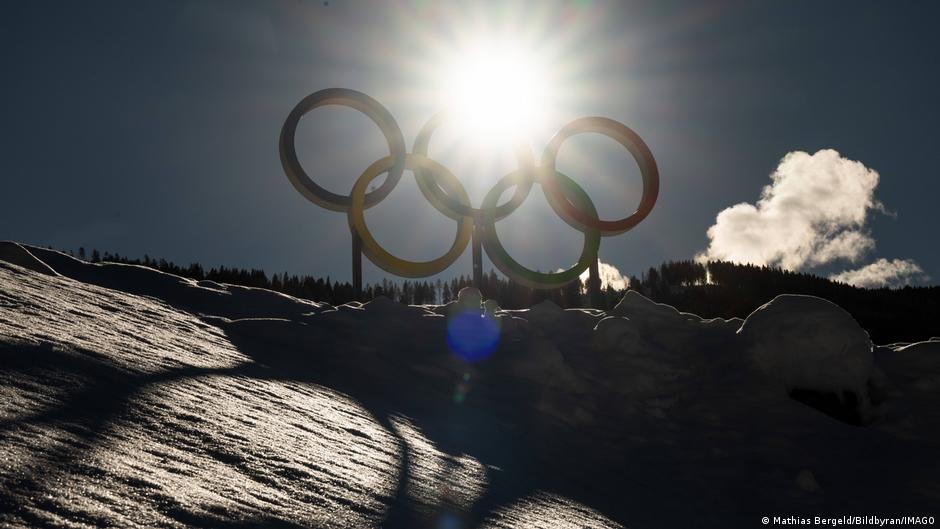
Earlier this week, the IOC president, Kirsty Coventry, called for sport to be a neutral ground, separate from politics and the actions of governments. It was a worthy sentiment. But she might as well have been singing kumbaya in a warzone. While Coventry was speaking, US Olympic officials changed the name of an athlete hospitality space in Milan from Ice House to Winter House, following protests over the fatal shootings by US Immigration and Customs Enforcement (ICE) officers.
Miscellaneous

fromThe Cyber Express
3 months agoThe Cyber Express Weekly Roundup: Jan 2026 Threats & Trends
On January 26, 2026, Delta, a Russian alarm and vehicle security provider, suffered a major cyberattack, disrupting alarms, vehicle systems, and company communications for tens of thousands of customers. While no confirmed customer data breach occurred, an unverified leak circulated online.
Information security
fromTheregister
3 months agoCyberattack on Poland's power grid could have been lethal
It called the attacks irresponsible, and if they succeeded in disrupting the country's power grid, it could have led to civilian deaths given the timing. "An attack on a power grid at any time is irresponsible, but to carry it out in the depths of winter is potentially lethal to the civilian population dependent on it," Dragos said. "It is unfortunate that those who attack these systems appear to deliberately choose timing that maximizes impact on civilian populations."
Information security
fromwww.dw.com
3 months agoUkraine updates: Kremlin says Abu Dhabi talks 'constructive'
Speaking during a visit to Latvia on Monday, Wadephul called for "better cooperation between Baltic nations," including Germany, including better maritime surveillance and more effective deterrence. "We want to take action against ships whose flag status is unclear," he said. "We must use all the possibilities offered by maritime law to stop such ships." His Latvian counterpart, Baiba Braze, concurred, saying: "All loopholes that are being exploited by Russia to carry out these operations must be closed."
Miscellaneous
fromSecuritymagazine
5 months ago3 Top Cybersecurity Trends from 2025
2025 has been a transformative year for cybersecurity, with emerging technologies and evolving threats changing the landscape as we once knew it. Reflecting on the year, there are several trends that come to my mind, both good and bad. Organizations prepared for a quantum future, foreign adversaries and cybercriminals alike made strategic moves, and industries as a whole found themselves targeted with waves of cyberattacks (such as the case with the retail sector).
Information security
fromwww.npr.org
5 months agoRussian hacking suspect wanted by the FBI arrested on Thai resort island
The Russian Foreign Ministry and the Russian embassy in Thailand also did not respond to requests for comment, but Russia's consul general in Phuket, Yegor Ivanov, told Russian state news agency Tass that the consulate had "received notification of the arrest of a Russian citizen on charges of committing an information technology crime." "He was arrested on November 6 and transferred to Bangkok that same day," Ivanov said, without providing further details.
World news
fromThe Cipher Brief
6 months agoCountering the Kremlin's Five Most Effective Narratives About Ukraine
Russian tanks rolled toward the borders of Georgia, the battle had already begun-shaped decisively by large-scale cyberattacks and cognitive warfare. Weeks before the first shots, cyberspace erupted with coordinated attacks crippling Georgian government and media websites, including distributed denial-of-service (DDoS) and defacements. Simultaneously, state-controlled and aligned media saturated both domestic and international audiences with fabricated narratives portraying Georgian aggression, warnings of impending genocide in South Ossetia, and accusations blaming the U.S. for encouraging Georgian belligerence through NATO membership promises.
Miscellaneous
fromTheregister
6 months agoCloudflare logs a turbulent Q3 online
Cloudflare's latest internet disruptions report reads like a global disaster log, with exam-related shutdowns, natural calamities, stray bullets, and even a Starlink software failure all taking chunks out of global connectivity. In its Q3 2025 internet disruption summary, the content delivery network said it observed "a wide variety of known causes" for global outages between July and September - from government-directed shutdowns in Sudan, Syria, and Iraq to cable cuts in Angola, Haiti, and the United Arab Emirates, along with power failures, cyberattacks, and natural disasters.
World news
fromTechzine Global
7 months agoOpenAI reports growing misuse of AI by states and criminals
OpenAI has intensified its efforts to combat the misuse of artificial intelligence. In a new report, the company reveals that it has dismantled several international networks in recent months that were using its models for cyberattacks, scams, and political influence. The analysis shows how malicious actors are becoming increasingly sophisticated in their use of AI, while OpenAI is simultaneously expanding its defense mechanisms.
Artificial intelligence
fromSecurityWeek
7 months agoScattered Spider Suspect Arrested in US
A juvenile suspected of being involved in cyberattacks against multiple Las Vegas casinos was arrested last week, the Las Vegas Metropolitan Police Department announced. The attacks were attributed to the infamous hacking group Scattered Spider, and the FBI, which took over the investigation, identified a teenage male as a suspect. The unnamed teenager, the Las Vegas police say, surrendered to the Clark County Juvenile Detention Center on September 17, and was booked on identity theft, extortion, and computer intrusion charges.
World news
Information security
fromKotaku
8 months agoDon't Let Hackers Win, This 60% Off Solution Keeps Your Identity Safe at All Times - Kotaku
Rising global cyberattacks targeting individuals demand upgraded paid cybersecurity solutions, and Avast is offering discounted Premium and Ultimate plans with comprehensive protections.
Privacy professionals
fromTechzine Global
1 year agoAlmost 70% of organizations still fall victim to cyber attacks
Ransomware attacks remain a significant threat, despite a slight decline in affected companies.
Only 10% of organizations recover more than 90% of data after an attack.
Data exfiltration attacks are rising, threatening sensitive information directly.
[ Load more ]