#scattered-spider

[ follow ]
fromwww.scientificamerican.com
1 day ago

See these ziti-sized fish scale a 50-foot waterfall

During major floods, thousands of tiny fish convene at Luvilombo Falls in the upper Congo River Basin to undertake a peculiar vertical migration, described for the first time today in Scientific Reports.
OMG science
fromwww.scientificamerican.com
4 days ago

These snakes steal poison from their preyhere's how they know they have enough

Red-necked keelback snakes possess a potent toxin derived from the toads they consume, which can cause severe harm to predators like mongooses. The snakes store these toxins in specialized nuchal glands.
Pets
Environment
fromNature
5 days ago

How buildings and cities can be aligned with life

Buildings currently harm the environment, but regenerative design can restore ecological systems and reduce waste through nature-inspired strategies.
Roam Research
fromwww.theguardian.com
5 days ago

Forget birdwatching, I'm into moth-watching: they're fascinating and misunderstood insects | Helen Pilcher

Learning to identify birds and moths can enhance brain function and protect against cognitive decline as we age.
Non-profit organizations
fromNature
1 week ago

'Continuity over novelty': why environmental science needs to rethink its focus

The closure of forest-service research offices threatens long-term ecological research and institutional memory in the US.
Online Community Development
fromNature
1 week ago

Scientists should join collaborative online editing communities for biodiversity

Biodiversity scientists encourage researchers to edit Wikipedia to enhance the quality and accessibility of biodiversity information.
Pets
fromwww.theguardian.com
1 week ago

Wily coyote? Urban canines take more risks compared with rural ones, study finds

Urban coyotes are less afraid of new stimuli and take more risks compared to rural coyotes, according to a study across multiple US sites.
Agriculture
fromwww.theguardian.com
2 weeks ago

Country diary: Daffodils and chiffchaffs are here, the wet months behind us | Virginia Spiers

Spring transforms an abandoned market garden orchard into a landscape of blooming daffodils, fruit tree blossoms, and returning wildlife, revealing seasonal changes in light, warmth, and natural activity.
fromArs Technica
2 weeks ago

The science of how fireflies stay in sync

The fireflies were most likely to change their own flashing rhythm in response when the LED blinked almost, but not quite, at the same time as the fireflies. The males would speed up their next flash if the LED blinked just before and waited a bit longer for their next flash when the LED blinked right after.
Science
OMG science
fromMail Online
2 weeks ago

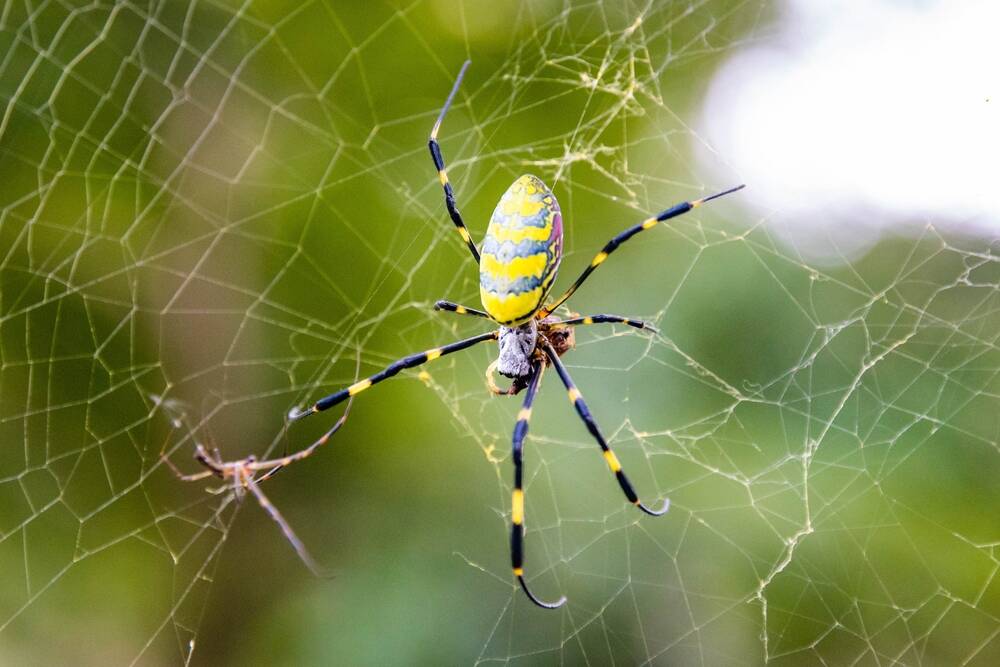
Venomous flying spiders the size of a human hand spreading across US

Joro spiders from Asia are rapidly spreading across the US through ballooning, with new populations expected to hatch in spring and expand their range significantly.
Roam Research
fromDefector
2 weeks ago

Even After Being Eaten, This Beetle Has Two Ways Out Alive | Defector

The Japanese water scavenger beetle Regimbartia attenuata survives passage through a frog's digestive system and exits alive within minutes to hours.
Agriculture
fromwww.theguardian.com
2 weeks ago

Plantwatch: the Natal crocus co-opts fire, bees and ants to reproduce

The Natal crocus uses fire, bee pollination, and ant seed dispersal, with seeds mimicking ant larvae scent to trick ants into transporting them to nests.
OMG science
fromwww.theguardian.com
2 weeks ago

Butterflies crossing oceans, moths navigating by the stars: unravelling the mysteries of insect migrations

Insects, including butterflies and dragonflies, undertake massive long-distance migrations across continents and oceans, with trillions traveling annually over previously unknown routes.
Science
fromDefector
3 weeks ago

This Pink Bug Is Not A 'Rare Freak Mutant' After All | Defector

A neon pink katydid discovered in Panama challenges the century-old assumption that pink coloration in these insects is a disadvantageous mutation, suggesting it may provide evolutionary advantages.
Pets
fromwww.theguardian.com
2 weeks ago

I love vultures, mosquitoes and, yes, even wasps. This is why you should too | Jo Wimpenny

Humans hold irrational emotional biases toward animals; wasps deserve reconsideration as valuable pollinators and pest controllers despite negative perceptions.
fromwww.independent.co.uk
3 weeks ago

Bees can breathe underwater for a week, scientists discover

This study started from a discussion with my co-author and postdoctoral researcher, Sabrina Rondeau, whose recent findings showed that these queens can survive submersion for over a week, which is extraordinary for a terrestrial insect. We wanted to understand how that's even possible.
Science
fromHigh Country News
1 month ago

Coyotes and cougars and rats, oh my! - High Country News

An unnamed tourist saw it and told Aidan Moore, who works for Alcatraz City Cruises. Moore told SFGATE that he was initially skeptical, but the guest's iPhone footage left little room for doubt. The video shows, not a sea lion or an otter, but an actual Canis latrans, doggedly dogpaddling, then clambering out of the water, noticeably shaky and struggling to settle tired paws on the craggy rocks.
California
Environment
fromNature
1 month ago

Limited thermal tolerance in tropical insects and its genomic signature - Nature

Tropical insects face severe heat vulnerability due to climate warming, with sparse data on thermal tolerances and limited capacity for adaptation to rising temperatures.
Science
fromwww.theguardian.com
4 weeks ago

Marsupials previously thought extinct for millennia discovered in New Guinea

Two marsupial species presumed extinct for 6,000 years were discovered alive in West Papua rainforests, representing rare Lazarus taxa that survived despite disappearing from fossil records.
OMG science
fromwww.theguardian.com
1 month ago

I love midges because I know what their hearts look like': is the passion for taxonomy in danger of dying out?

Taxonomist Art Borkent warns that biting midges and other organism groups face extinction from scientific study as aging researchers lack successors and funding dries up.
OMG science
fromArs Technica
1 month ago

The strange animals that control their body heat

Many animals employ heterothermy, varying their body temperature for extended periods to survive environmental challenges like storms, floods, and predators.
Science
fromwww.scientificamerican.com
1 month ago

Mosquitoes may have evolved a taste for human blood thanks to Homo erectus

Some mosquitoes developed a preference for human blood 1.6 to 2.9 million years ago, potentially coinciding with Homo erectus presence in Southeast Asia.
Science
fromwww.scientificamerican.com
1 month ago

The surprising scientific value of roadkill

Researchers use roadkill as a valuable scientific resource to study wildlife behavior, track species distribution, obtain specimens ethically, and discover new species across diverse research applications.
fromwww.theguardian.com
2 months ago

What links the basilisk lizard and the fishing spider? The Saturday quiz

1 Rodney King beating. 2 Boreal forest (taiga). 3 Named storm in the UK. 4 Dr Faustus (Marlowe play). 5 Floella Benjamin. 6 Gentlemen v Players. 7 RNLI. 8 Classical music. 9 Plots against Elizabeth I. 10 Ways of having your steak in France. 11 Animals that can walk on water. 12 Birth states of US presidents. 13 Scales used to measure natural phenomena: tornadoes; earthquakes; hurricanes; hazard from near-Earth objects.
Arts
fromwww.theguardian.com
2 months ago

From scorpions to peacocks: the species thriving in London's hidden microclimates

London is the only place in the UK where you can find scorpions, snakes, turtles, seals, peacocks, falcons all in one city and not London zoo. Step outside and you will encounter a patchwork of writhing, buzzing, bubbling urban microclimates. Sam Davenport, the director of nature recovery at the London Wildlife Trust, emphasises the sheer variation in habitats that you find in UK cities, which creates an amazing mosaic of wildlife.
London
Environment
fromEarth911
1 month ago

Plant a Pollinator Garden To Support Butterflies, Bees, & Birds

Plant native, nectar-rich home gardens to support pollinators threatened by climate change, habitat loss, pesticides, and significant population declines.
Science
fromDefector
1 month ago

Finally! An Ancient Fish That Understood Life's Terrors | Defector

Haikouichthys, an early Cambrian fish, possessed four eyes and lacked jaws, reflecting distinctive sensory and feeding adaptations among early vertebrates.
Environment
fromFuturism
1 month ago

Forests Are Steadily Crawling North, Satellite Imagery Shows

Boreal forests are shifting northward and expanding due to warming, altering carbon sequestration potential and increasing young forest cover.
Environment
fromMail Online
2 months ago

Ominous warning for humanity as insects mysteriously 'fall silent'

Rapid global insect declines threaten pollination, food production, nutrient availability, and human health, signaling imminent ecological instability.
fromwww.scientificamerican.com
2 months ago

What's scarier than a spider? A fake giant spider

What's scarier than a spider? A really big spider, of course. A newfound defensive tactic takes advantage of this idea: researchers documented spiders building giant spiderlike silhouettes on their webs to ward off predators. These decoys are an example of web decorations that some spiders are known to produce, often to prevent getting eaten, avoid bird strikes or attract prey.
Science
OMG science
fromKqed
3 months ago

This Stick Insect Has a Peppermint-Scented Secret Weapon | Deep Look | KQED

Peppermint stick insects spray actinidine-based pepperminty chemicals from birth to deter predators and rely on Pandanus plants for the chemical precursor.
fromKqed
1 month ago

What an Insect View Really Looks Like | KQED

On a spring day in 1694, Antonie van Leeuwenhoek - the father of microbiology - used a magnifying lens to look at a candle through the dissected eye of a dragonfly. But instead of seeing 1 candle flame, he saw hundreds of tiny flames, repeated over and over. But spoiler alert - this is not how insects see. Hi, I'm Niba, and today we're going to explore how insects really see the world.
Science
fromNature
1 month ago

Biodiversity conservation has an evidence problem - it's time to fix it

Biodiversity loss is continuing at an unprecedented rate, with species becoming extinct at between 100 and 1,000 times the average pre-human, or 'background', rate. Human activities are the main cause. Although there are hundreds of local, regional and international initiatives to conserve and sustainably use species and ecosystems, many conservation scientists worry that measures such as interventions to conserve individual species or incentives to create protected areas are not supported by strong evidence from research.
Environment
Environment
fromThe Mercury News
2 months ago

How do animals know it's safe to eat mushrooms in Sunnyvale yard?

Backyard wildlife commonly eat mushrooms; many species avoid toxic varieties through experience, with wild turkeys a likely candidate for scratched soil.
Environment
fromwww.mercurynews.com
2 months ago

How do animals know it's safe to eat mushrooms in Sunnyvale yard?

Many backyard animals eat mushrooms; they learn to avoid those that cause illness, but death cap and western destroying angel are deadly to all creatures.
Science
fromKqed
2 months ago

Hide! 4 Tiny Animals That Go Undercover In Style | KQED

Decorator crabs use seaweed, anemones, and hooked hairs to camouflage, while glasswing butterflies and Australian stick insects employ transparent or twig disguises.
Environment
fromPsychology Today
1 month ago

Rewilding Rejects the We're-So-Special Exceptionalism

Rewilding requires rehabilitating human hearts, overcoming self-centeredness, and treating nature with compassion so ecosystems and nonhuman lives can flourish.
Science
fromPsychology Today
2 months ago

Secrets of the Sleeping Beauties of the Animal Kingdom

Some organisms can suspend metabolism for millennia and revive unchanged, carrying survival information throughout their bodies rather than confined to neurons.
Environment
fromNature
2 months ago

Defending endangered trees against climate change and hungry goats

Socotra's unique endemic trees face threats from climate-driven drought and free-ranging goats, requiring community-linked habitat restoration balancing conservation and local livelihoods.
Science
fromKqed
6 months ago

Tiger Beetles Bite First, Ask Questions Never | KQED

Tiger beetles run at extreme speeds but use rapid stops and forward antennae to sense obstacles and capture prey with sickle-shaped mandibles.
Science
fromwww.npr.org
2 months ago

Sick young ants send out a 'kill me' scent to prevent deadly epidemics

Young terminally ill ant pupae emit signals prompting worker ants to kill them, preventing pathogen spread and protecting colony health.
fromNature
2 months ago

To improve resilience to climate change, track what endures

When the category-5 storm Hurricane Melissa struck Jamaica in October, its path crossed communities that had varying levels of preparedness. Many with maintained coastal protections, upgraded drainage and reliable early-warning systems had power and water restored in days. Others were immobilized for weeks.
Environment
Science
fromKqed
5 months ago

Pick Your Player: Dragonfly vs Damselfly | KQED

Damselflies stabilize and capture prey in turbulent vegetation via four-wing adjustments and panoramic binocular vision; dragonflies use independent wings and near-360° vision for high-speed interception.
Science
fromLos Angeles Times
1 month ago

A SoCal beetle that poses as an ant may have answered a key question about evolution

A rove beetle suppresses its own pheromones, adopts ant cuticular hydrocarbons to infiltrate colonies, and permanently sacrifices its waxy waterproofing.
Science
fromInsideHook
2 months ago

Environmental Changes May Make Sharks Less Dangerous

Ocean acidification can corrode and degrade shark teeth, reducing serrations and root structures and threatening foraging efficiency, energy uptake, and elasmobranch fitness.
Science
fromwww.scientificamerican.com
2 months ago

Mosquitoes Show a Clear Preference for Human Blood after Deforestation

Mosquitoes in remnants of Brazil's Atlantic Forest predominantly fed on humans, showing species-level preference linked to deforestation and increased disease risk.
Science
fromNature
1 month ago

Parasitic wasps use tamed virus to castrate caterpillars

A parasitic wasp uses a domesticated virus to kill moth larvae testis cells, effectively castrating its hosts and benefiting wasp reproduction.
fromwww.scientificamerican.com
2 months ago

Why Does Life Keep Evolving These Geometric Patterns?

The mirror spider can rapidly shift a patchwork of minuscule reflective plates underneath its abdomen's outer surface, altering the pattern of mirrorlike flashes. This uncommon display comes from common building blocks: Similar tilelike arrangements of plates and soft joints appear throughout the tree of life, from turtle shells to tropical fruit peels. Researchers have now compiled 100 examples of this pattern across animals, plants, microbes and viruses, which they describe in PNAS Nexus.
Science
Science
fromKqed
8 months ago

The 4 Most Ruthless Ants We've Ever Filmed | KQED

Fire ants form body rafts during floods, using larvae with air-trapping hairs for buoyancy and increased defense while afloat.
[ Load more ]