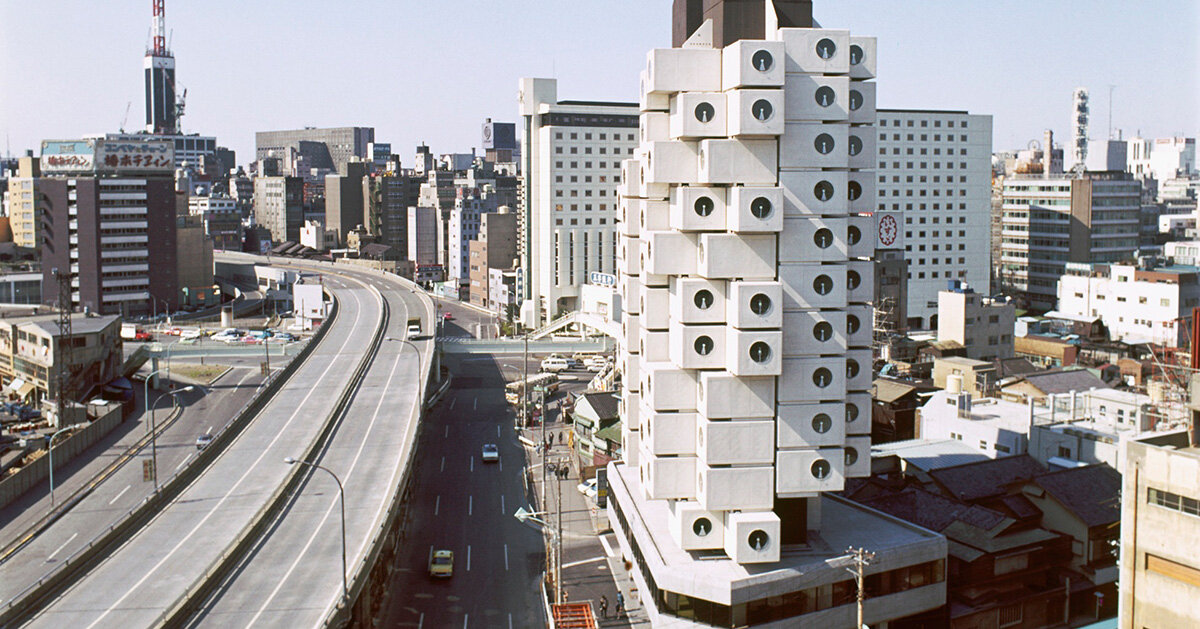
"Emerging from the ashes of post-war Japan, Metabolism reframes architecture as a living system in flux, replacing the permanence of Western modernism with a logic of growth, decay, and renewal."
"The urgency of the movement is inseparable from the devastation of World War II. Faced with destroyed cities and an uncertain national identity, Japanese architects began to imagine urbanism as a resilient system capable of absorbing shock and adapting to change."
"Under the intellectual guidance of Kenzo Tange, a network of young designers explored how megastructures, infrastructure, and prefabrication could support continuous growth."
"Metabolism formally enters the global stage during the 1960 World Design Conference in Tokyo, where Kiyonori Kikutake, Kisho Kurokawa, Fumihiko Maki, and their collaborators publish Metabolism 1960: the proposals for a new urbanism."
Metabolism emerged in post-war Japan, presenting architecture as a living, evolving system. This movement, initiated in 1960, contrasts with Western modernism by embracing change and regeneration. It envisions cities as adaptable organisms, influenced by the devastation of World War II. Under Kenzo Tange's leadership, architects explored megastructures and prefabrication to support urban resilience. The Tokyo Bay Plan exemplifies this vision, proposing a modular, expandable city. Metabolism's manifesto, presented at the 1960 World Design Conference, further solidified its global significance and focus on urban processes.
Read at designboom | architecture & design magazine
Unable to calculate read time
Collection
[
|
...
]