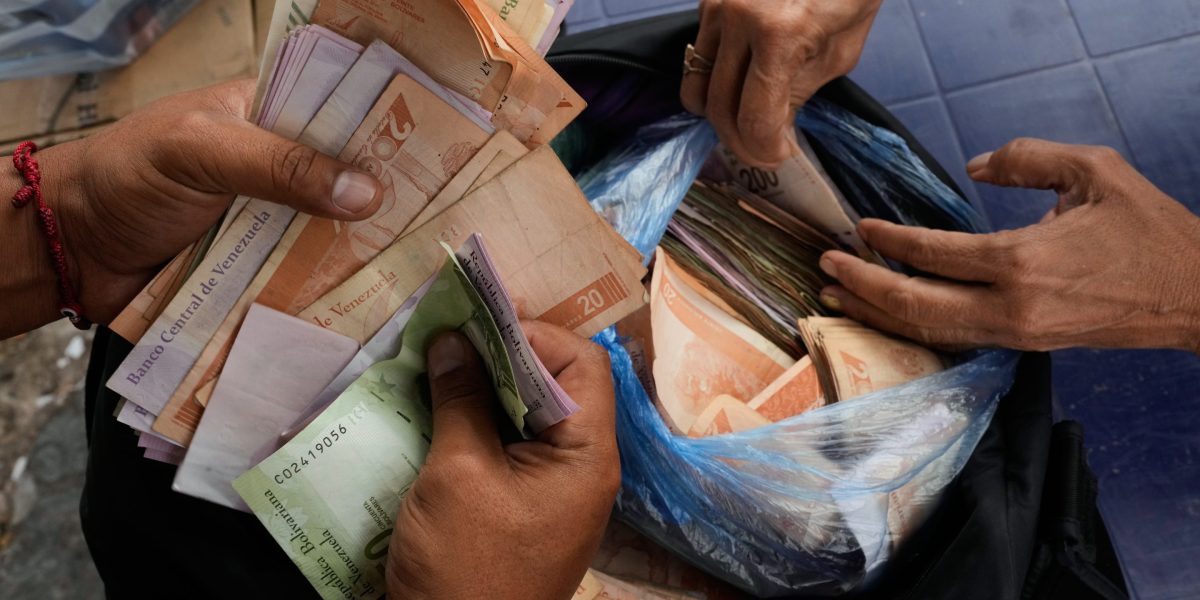
"At the White House, President Donald Trump vows American intervention in Venezuela will pour billions of dollars into the country's infrastructure, revive its once-thriving oil industry and eventually deliver a new age of prosperity to the Latin American nation. Here at a sprawling street market in the capital, though, utility worker Ana Calderón simply wishes she could afford the ingredients to make a pot of soup."
""Food is incredibly expensive," says Calderón, noting rapidly rising prices that have celery selling for twice as much as just a few weeks ago and a kilogram (2 pounds) of meat going for more than $10, or 25 times the country's monthly minimum wage. "Everything is so expensive." Venezuelans digesting news of the United States' brazen capture of former President Nicolás Maduro are hearing grandiose promises of future economic prowess even as they live through the crippling economic realities of today."
""They know that the outlook has significantly changed but they don't see it yet on the ground. What they're seeing is repression. They're seeing a lot of confusion," says Luisa Palacios, a Venezuelan-born economist and former oil executive who is a research scholar at the Center on Global Energy Policy at Columbia University. "People are hopeful and expecting that things are going to change but that doesn't mean that things are going to change right now.""
U.S. officials pledge billions to rebuild Venezuela's infrastructure, revive its oil industry and restore prosperity. Many Venezuelans, however, face crippling economic realities: rapidly rising food prices, meat costing far more than monthly wages, and basic goods often unaffordable. Most people work multiple jobs yet endure near-empty cupboards and hard choices between medicine and groceries. Widespread poverty affects an estimated eight in 10 people and has driven millions to flee the country. Political events and promises have created hope for change, but visible improvements on the ground remain limited amid repression and confusion.
Read at Fortune
Unable to calculate read time
Collection
[
|
...
]