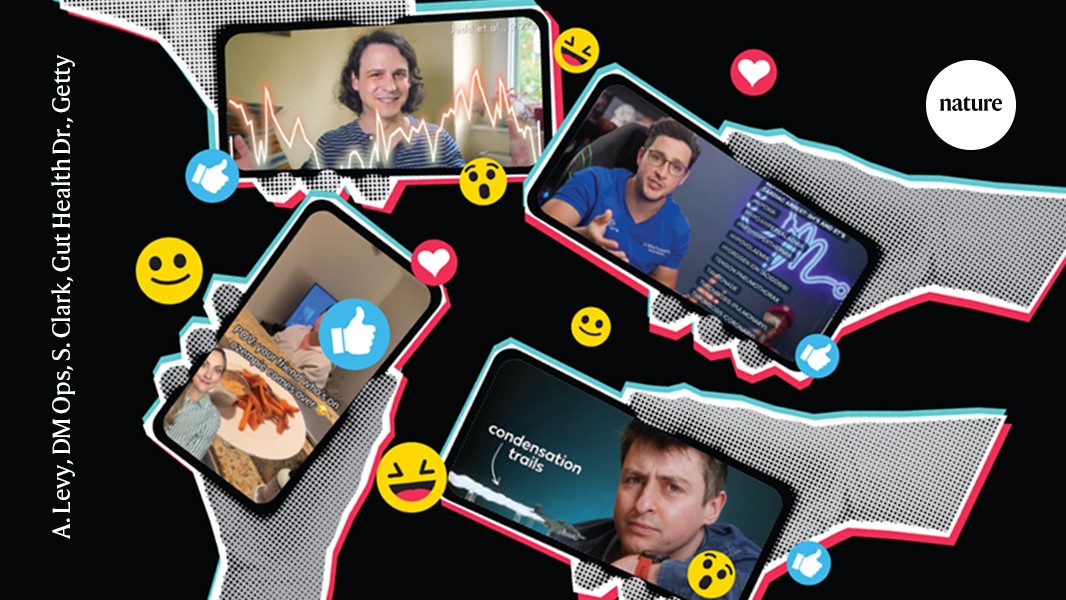
"One of Simon Clark's most popular TikTok videos begins with him playing the part of a clueless climate contrarian. Adopting the overconfident tone that is common among social-media influencers, he proclaims: "Renewables are a scam!" Cut to the real Clark, who has a PhD in stratospheric dynamics and uses the handle @simonoxfphys, as he dismantles several myths about renewable energy using a deadpan style and a torrent of charts. The video, with almost 180,000 views, is an effort to fight misinformation by meeting people where they are, he says."
"Clark started making YouTube videos more than 15 years ago as a master's student in physics at the University of Oxford, UK. He wanted to help others learn about getting into elite universities and navigating the collegiate system. After he got his PhD from the University of Exeter, UK, he decided to make content creation a full-time career. "The natural thing in my field was talking about the climate crisis," he says, "the physical causes behind it, the solutions we have to it, and increasingly at the moment, why we aren't implementing those solutions.""
"Clark is now also on Instagram, Facebook and the live-streaming service Twitch, where he leans on his scientific credentials to both communicate science and combat misinformation. He is one of many scientists and medical experts who are countering the flood of anti-science advice and rhetoric across social-media platforms. According to a 2025 report by the Reuters Institute in Oxford and the University of Oxford, 65% of people worldwide now consume video on social media. Increasingly, many individuals, especially young people, get their news from these platforms. But a lot of that 'news' is created by anti-science influencers who build loyal followings, using their position as opinion leaders to promote climate denialism, conspiracy theories, vaccine scepticism, autism myths, sham treatments and other pseudoscience."
Simon Clark uses short-form video and a scientific background to debunk renewable-energy myths and fight misinformation. He combines credentials, charts and a deadpan style to reach viewers and counter misleading narratives. Clark began making educational videos as a student and later transitioned to full-time content creation after earning a PhD. He focuses on climate causes, available solutions, and barriers to implementation. Many scientists and medical experts now use Instagram, Facebook, Twitch and TikTok to communicate science and push back against anti-science advice. Global social-media video consumption is widespread, and anti-science influencers exploit those platforms to spread misinformation.
Read at Nature
Unable to calculate read time
Collection
[
|
...
]