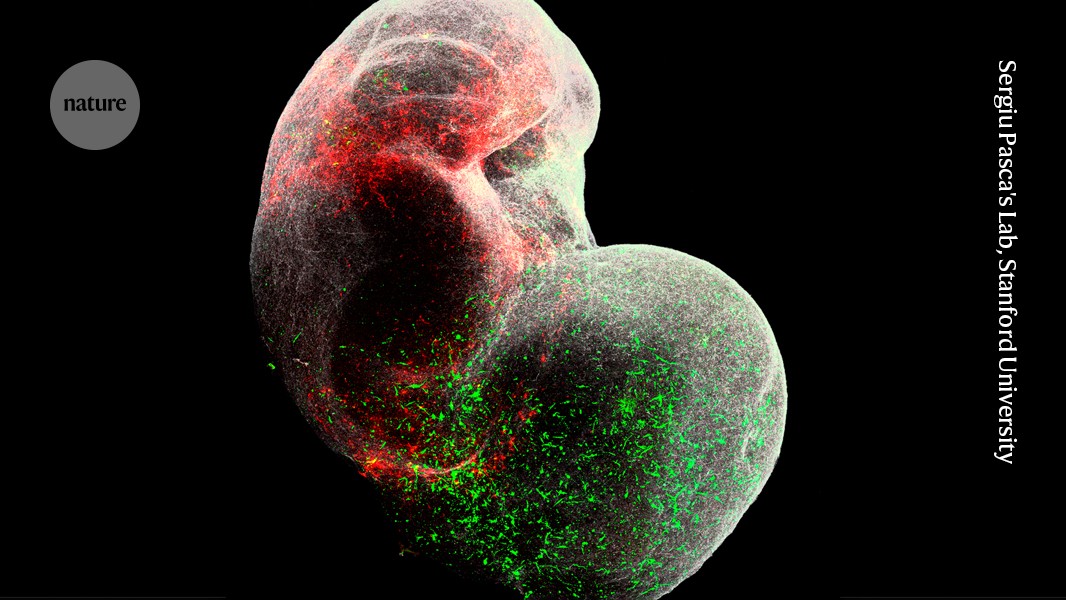
The human brain's development involves precise timing, migration, differentiation, and synaptic connections, continuing for nearly three decades. Traditional research relied on animal models and limited human tissue. Organoids, tiny lab-grown brain models, have advanced significantly, allowing for intricate representations of brain regions. They facilitate research into brain development, neurodevelopmental disorders, and treatment testing. Despite their potential, organoids face limitations in sustainability and complexity, raising future questions about sentience and consciousness.
"First created more than a decade ago, these organoids started off as very simple models. But in the past few years, scientists have refined the technology to grow more-intricate systems that represent more brain regions."
"These tiny spheres are helping researchers to get at difficult-to-answer questions such as why the human brain develops so much more slowly than other mammalian brains do."
"The field is at an inflection point, says developmental biologist Jürgen Knoblich at the Institute for Molecular Biotechnology in Vienna."
"Looking ahead, there are also questions about whether properties such as sentience or even consciousness could emerge as technologies improve."
Read at Nature
Unable to calculate read time
Collection
[
|
...
]