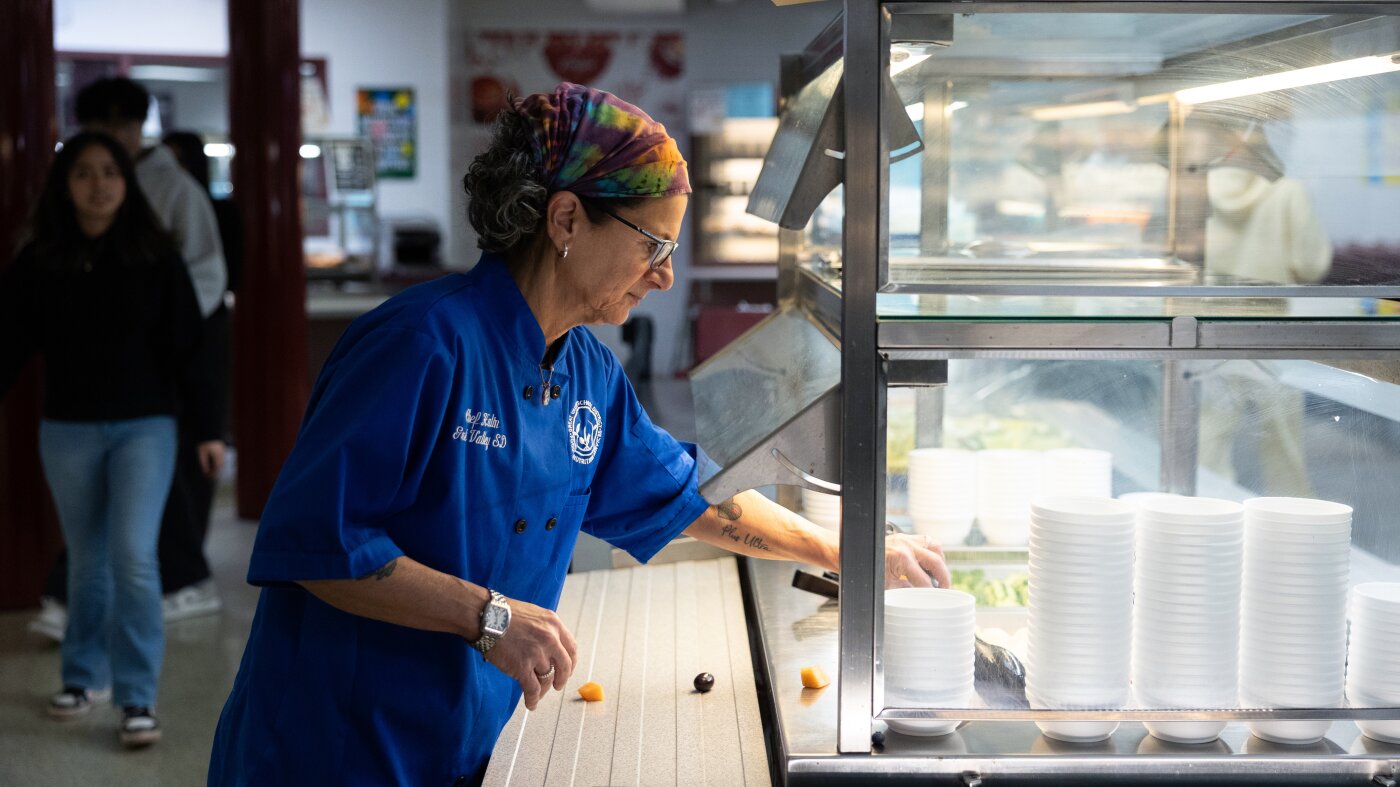
"“I don't have a TikTok account, but they're telling me, 'Hey, I saw this on TikTok. Can you make this? Can we do this?'” said Nichole Taylor, supervisor of food and nutrition services at the Great Valley School District in Malvern, Pennsylvania. “I would have never asked my lunch lady to make something special for me. I would've just ate what they told me,” she said, adding that the students are “very engaged.”"
"Taylor has been working to refresh the suburban Philadelphia district's meal program since she took over a year and a half ago, trying to balance a desire to cook more fresh food from scratch with budget constraints and a lack of skilled labor. But now, districts like Taylor's and others across the U.S. are waiting to see whether it will become even more expensive to prepare a meal."
"“In January, the Trump administration overhauled the national dietary guidelines. Announced by Health Secretary Robert F. Kennedy Jr., they follow the Make America Healthy Again blueprint, urging Americans to avoid highly processed foods and prioritize ‘high-quality, nutrient-dense’ protein at every meal. Those guidelines form the basis of federal nutrition standards that schools participating in federal meal programs must follow.”"
"“Yet many districts rely on processed, premade foods to feed their students, and protein is already the most expensive ingredient on the cafeteria plate, school nutrition experts say. This year, the U.S. Department of Agriculture's reimbursement rate for schools in the contiguous 48 states is about $4.60 per meal for a student who is eligible for a free lunch, according to the School Nutrition Association (SNA).”"
A suburban school district is updating its meal program to cook more food from scratch while managing budget limits and limited skilled labor. Students increasingly request meals inspired by social media food trends, making engagement higher. Federal dietary guidelines were overhauled to discourage highly processed foods and emphasize high-quality, nutrient-dense protein at every meal. These guidelines shape federal nutrition standards for schools participating in meal programs. Many districts currently depend on processed, premade foods, and protein is already among the most expensive cafeteria ingredients. USDA reimbursement rates for eligible students provide limited funding, increasing pressure on districts to meet new standards without raising costs.
#school-meals #food-costs #federal-nutrition-guidelines #meal-planning #processed-foods-vs-fresh-foods
Read at www.npr.org
Unable to calculate read time
Collection
[
|
...
]