"The Big Dig actually expanded the roadway by widening it from six lanes to eight and adding a 10-lane bridge. Shortly after the project's completion, congestion worsened citywide as induced demand filled the new capacity, eventually turning Boston into one of the five most-congested cities in the country."
"Scientists have observed for decades that vehicular traffic behaves like a gas, expanding and contracting to fill whatever space it is given. The Big Dig simultaneously buried and widened the highway, thereby aggravating the congestion it was designed, in part, to solve."
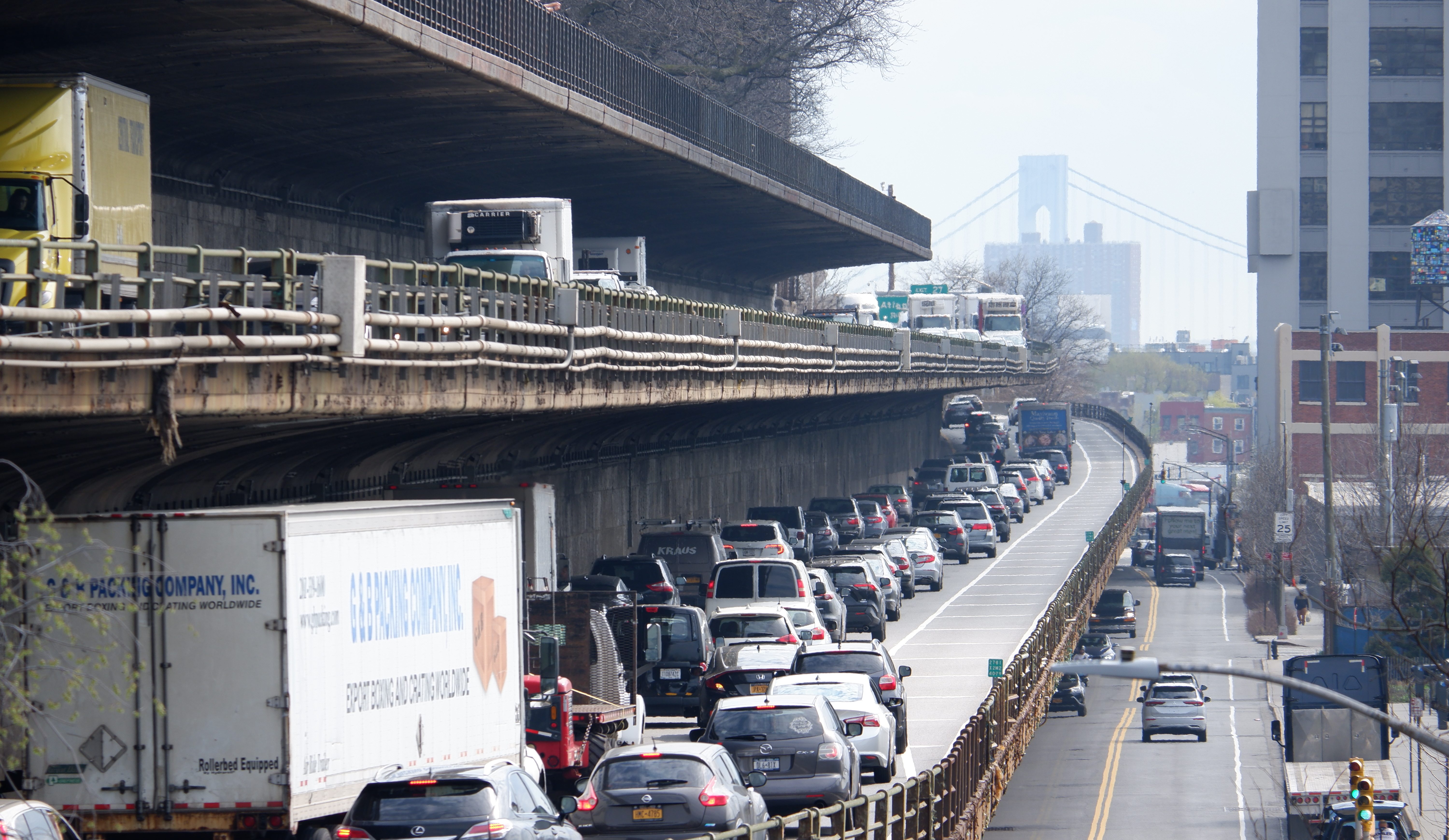
"Decades of salt and water intrusion have compromised the roadway's integrity to such a degree that, in 2021, the city removed an entire lane in each direction and began issuing fines to trucks that exceeded weight limits."
"City politicians have sent mixed messages about the best course of action. In 2020, the City..."
The Big Dig in Boston successfully buried the Central Artery, freeing up land and improving air quality. However, it also expanded the highway, leading to increased congestion as demand filled the new capacity. This outcome illustrates the principle that traffic expands to occupy available space. New York City faces similar challenges with its deteriorating highways, particularly the Brooklyn-Queens Expressway, where mixed political messages complicate the decision-making process for future infrastructure improvements.
Read at Streetsblog New York City
Unable to calculate read time
Collection
[
|
...
]