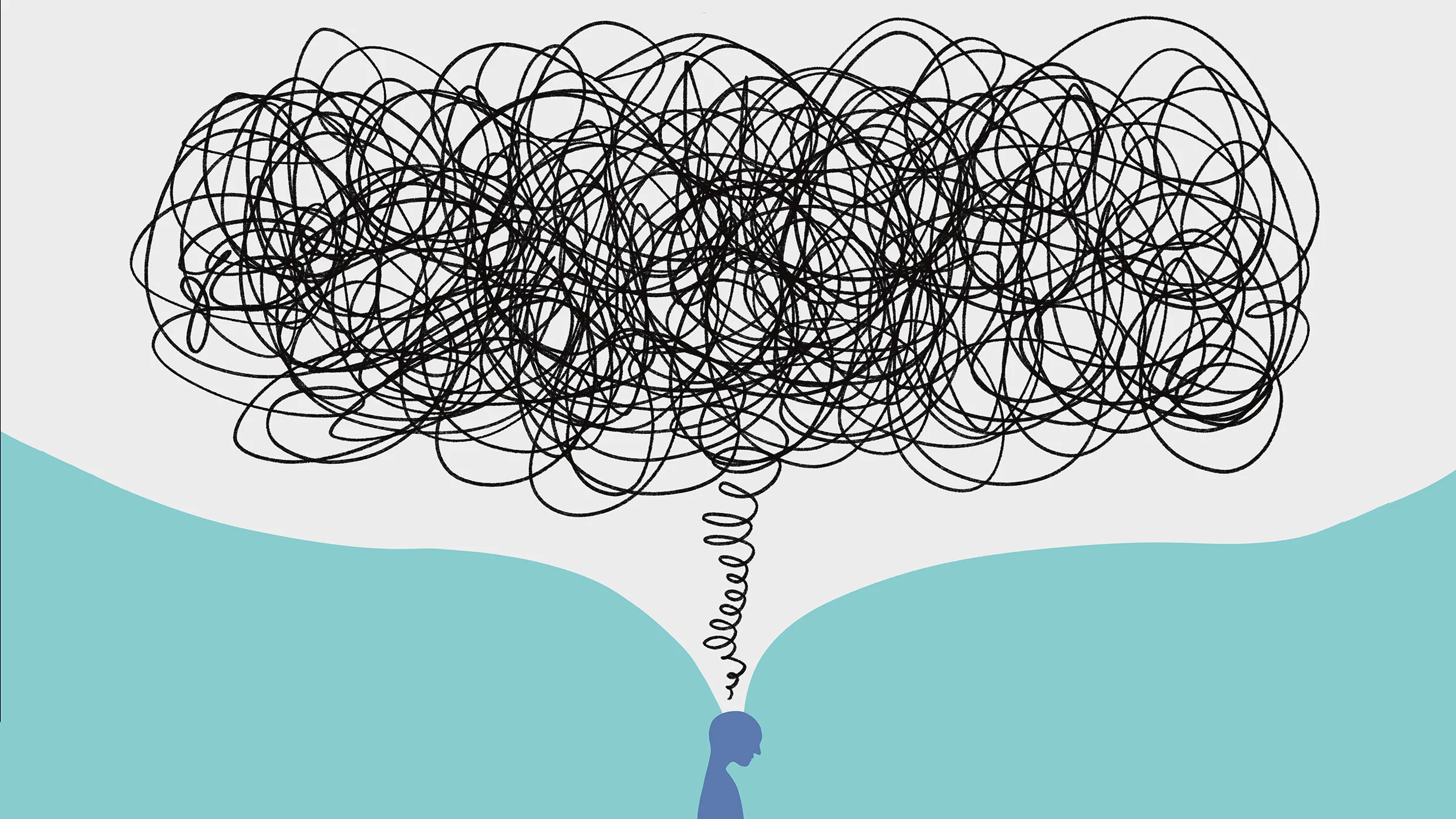
"Part of the disconnect might be that we often confuse stress with anxiety. Although the two are related, they're different problems that demand distinct solutions. While stress is usually circumstantial-a response to external demands-anxiety generally comes from within, and might or might not involve an active trigger. While stress might dissipate once you've solved the problem at hand, anxiety can linger, haunting your thoughts as you ruminate in circles."
"Dr. Josh Altman is a psychotherapist who works with high achievers to manage their mental health. He knows from firsthand experience that the health-promoting habits many people skip when overburdened are often the precise behaviors that can help the most: eating well, getting enough sleep, and stepping away from your desk for 20 minutes of exercise."
""Folks who are very performance-oriented are not looking to stop performing," he says. When someone's brain is constantly on like that, he makes a business case for truly letting oneself off the clock. "Taking time away from work will actually improve the quality of work when you get back to it," Altman says. "If we understand that taking a break is benefiting our cognitive functioning, our focus, our problem solving, it becomes a little bit more palatable.""
""Start with baby steps" For those of us who tend to put 100% into our work at all times, it can be temp"
Anxiety and stress are related but distinct, with stress typically tied to external demands and anxiety often arising internally and lingering even after problems are addressed. Anxiety can disrupt creativity, motivation, and decision-making by causing rumination. For high-functioning, high-achieving people, common advice like walking, sleep, or meditation may not be sufficient when the brain stays “on.” One approach is to give permission to take breaks, including eating well, getting enough sleep, and stepping away for exercise, because breaks can improve cognitive functioning and work quality. Another approach is to start with baby steps, especially for people who demand constant 100% effort.
Read at Fast Company
Unable to calculate read time
Collection
[
|
...
]