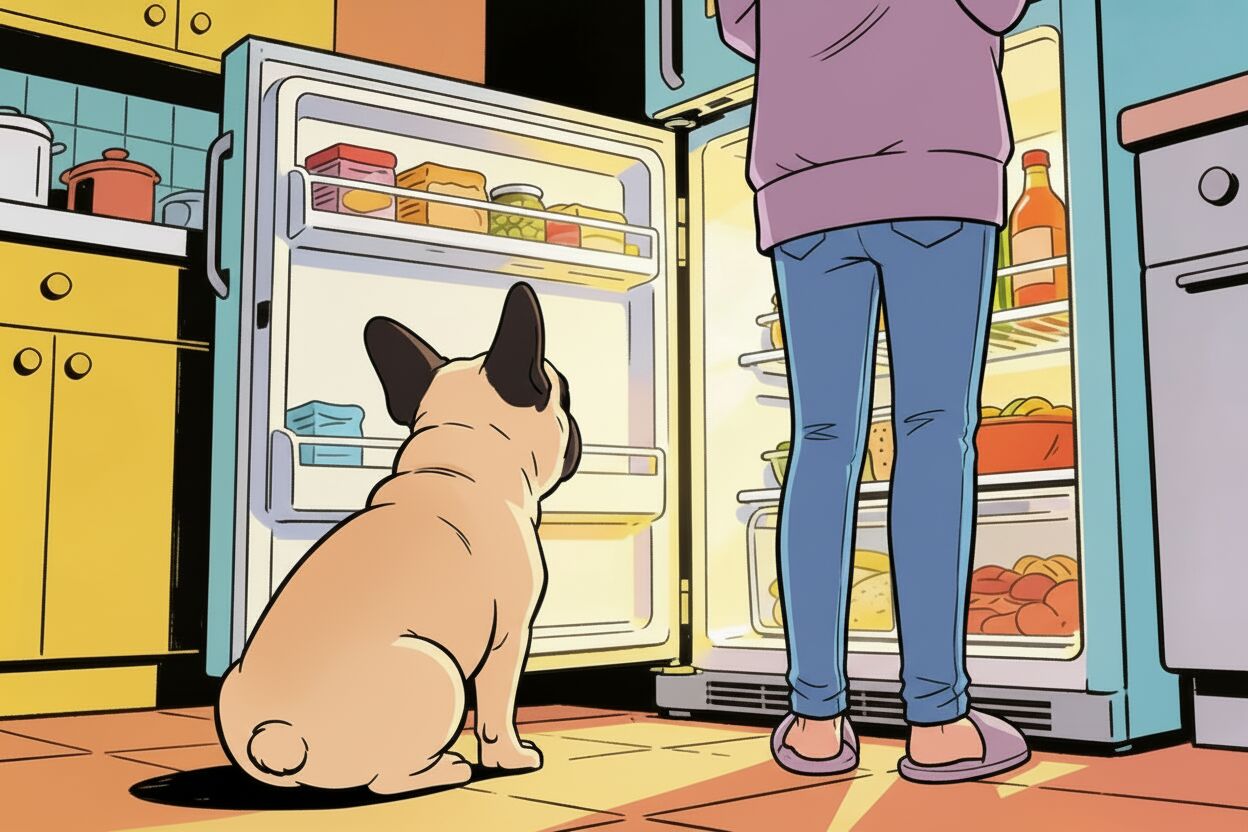
"A talk show on TV, a car honking outside, music from the house next door, a phone rings, the dishwasher humming along and the dog? Sound asleep and snoring on the couch. You tiptoe into the kitchen, open the fridge door, and out of the blue the dog is right there next to you: big eyes, all ears, wide awake."
"Call it attention, selective hearing, conditioning... whatever you want. It's not all that different from how we behave today. We ignore and filter out 99% of what surrounds us, and only the magical fridge-door 1% makes it through, really through, to us. No, this isn't a scientific measurement but it's close enough to lived experience to be useful. There's so much noise, so much distraction, so much information."
"There's a desperate competition for our attention, our eyes, our ears and, ultimately, our credit cards, with everything and everyone trying to unlock the human version of the fridge door. (Saying the obvious out loud: ads on fridges are not the solution.) That fridge door is admittedly a high bar; a silver-bullet kind of bar. And no, not everything needs to aim that high."
Humans filter out roughly 99% of surrounding stimuli, responding only to rare, salient triggers that penetrate selective attention. The fridge-door moment illustrates how a sudden, meaningful cue can instantly command focus. Contemporary life amplifies distraction through constant screens, notifications, algorithms and information overload, creating intense competition for attention and consumer spending. Many common digital behaviours—doomscrolling, auto-scrolling, flood podcasting, and unconsidered AI-driven content—fail to achieve that breakthrough salience. Persistent myths about sheer ad quantity persist despite being debunked, highlighting the need for higher-quality, memorable advertising rather than volume-driven saturation.
Read at Exchangewire
Unable to calculate read time
Collection
[
|
...
]