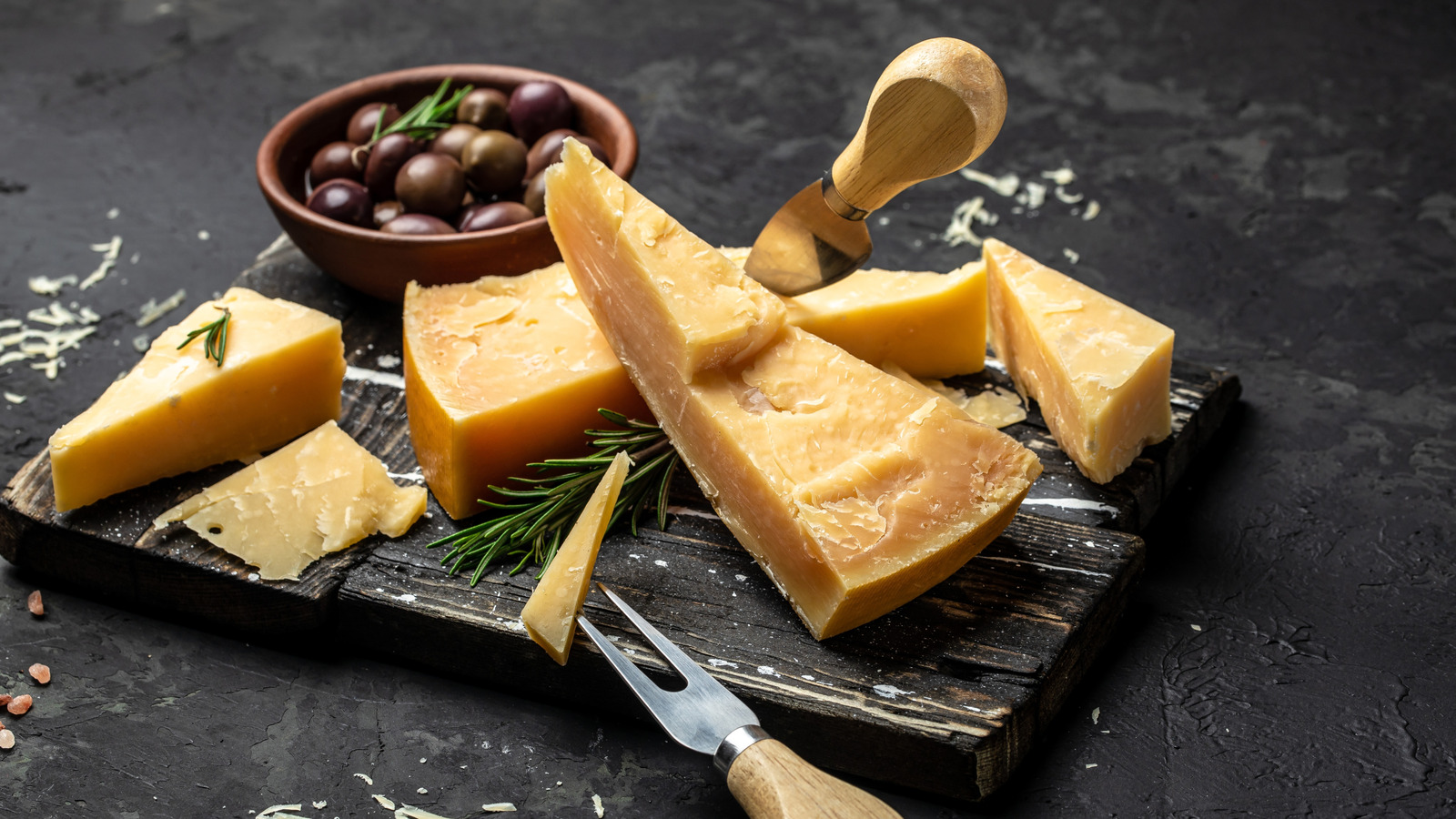
"A one-ounce serving of Parmigiano Reggiano contains up to 10 grams of protein, compared to the 6.3 grams found in the average egg. The Italian cheese also knocks it out of the park when it comes to calcium, with 320 milligrams or 25% of your daily requirements in each ounce. Although eggs do contain calcium, it's found mainly in the shell, with the edible portion offering just 28 milligrams."
"A serving size of Parmigiano Reggiano is smaller than an egg when it comes to weight, but a little goes a long way. Cheese is not always something we measure, but to give you an idea, an ounce of hard cheese is around the size of your thumb, or around one-third of a cup when grated. This probably more than you'd use as a topping for a pasta dish,"
"The nutrient density of Parmigiano Reggiano all comes down to the way it's made. It starts with just three simple ingredients - milk, rennet, and salt - which are heated, brined, and then formed into wheels to age. It's this aging process that slowly removes the water from the milk, leaving more concentrated nutrients. With 550 liters of milk to make a single wheel, that's a lot of protein and calcium in the end product."
Parmigiano Reggiano delivers high protein and calcium in small servings. One ounce supplies up to 10 grams of protein and 320 mg calcium (about 25% DV). An average egg contains about 6.3 grams of protein and only 28 mg of calcium in its edible portion, since most calcium is in the shell. An ounce of hard cheese is roughly thumb-sized or one-third cup grated, and a little yields concentrated nutrients. True Parmigiano Reggiano uses milk, rennet, and salt, is heated, brined, formed into wheels, and aged at least a year, concentrating nutrients from many liters of milk.
Read at Tasting Table
Unable to calculate read time
Collection
[
|
...
]