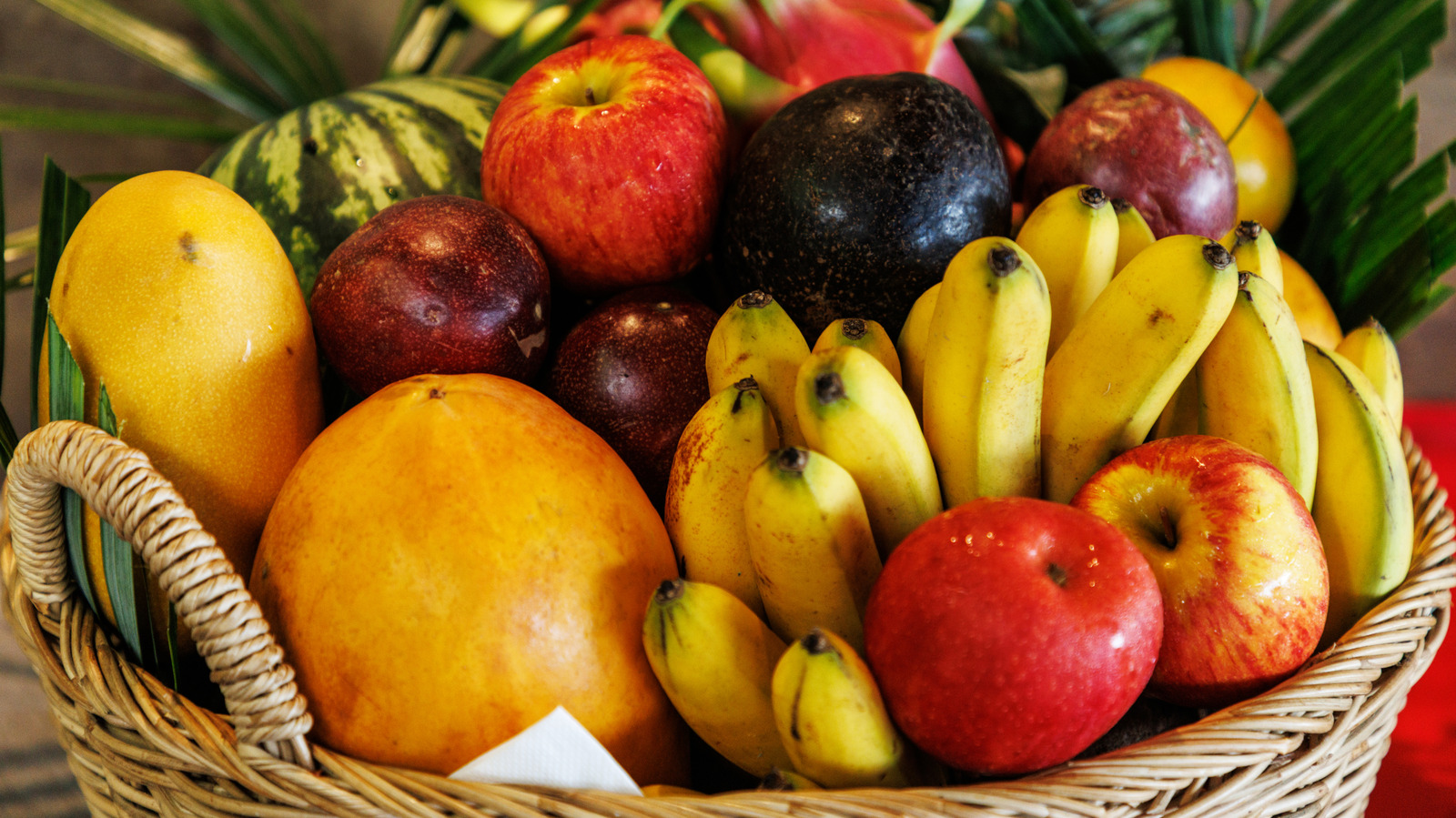
"One mango contains about 46 grams of sugar, which is more than what's in a 12-ounce can of Pepsi. By way of comparison, a large apple has 25 grams of sugar, a banana 15 grams, and a medium pear 17 grams. A whole watermelon has 280 grams of sugar, but you can hardly call those hand-held fruits. When you equalize fruit weight, however, mangoes fall somewhere in the middle. For example, 100 grams of mango contain 11 grams of sugar while black grapes have 17 grams. Lychees, bananas, and pineapple also have more sugar than mangoes. Going even higher, dates have 63 grams of sugar and tamarind pulp has 38 grams."
"Any way you slice it, mangoes are high in sugar, but that's not necessarily a bad thing. Eating a mango is much better for you than drinking soda - or even fruit juices for that matter. That's because mangoes, like other whole fruit, contain fiber that helps smooth out the body's metabolism of the fruit so as to not spike blood sugar. Sugary sodas, as well as pulp-less fruit juices, don't have fiber. Even though mangoes are relatively high in sugar content, they're not that high on the glycemic index, meaning they won't spike your blood sugar like white bread or candy. They're packed with nutrients like vitamin C, potassium, and niacin and have polyphenols, which"
Mangoes are relatively high in natural sugars because enzymes convert starch into fructose, glucose, and sucrose as they ripen. One whole mango can contain about 46 grams of sugar, exceeding a 12-ounce can of soda, but per-100-gram sugar content is moderate at about 11 grams. When weight is equalized, mangoes fall midrange compared with grapes, lychees, bananas, pineapple, dates, and tamarind. Whole mangoes provide fiber, vitamin C, potassium, niacin, and polyphenols that help moderate blood sugar. Whole fruit fiber reduces rapid glucose spikes compared with sugary sodas or pulp-less fruit juices.
Read at Tasting Table
Unable to calculate read time
Collection
[
|
...
]