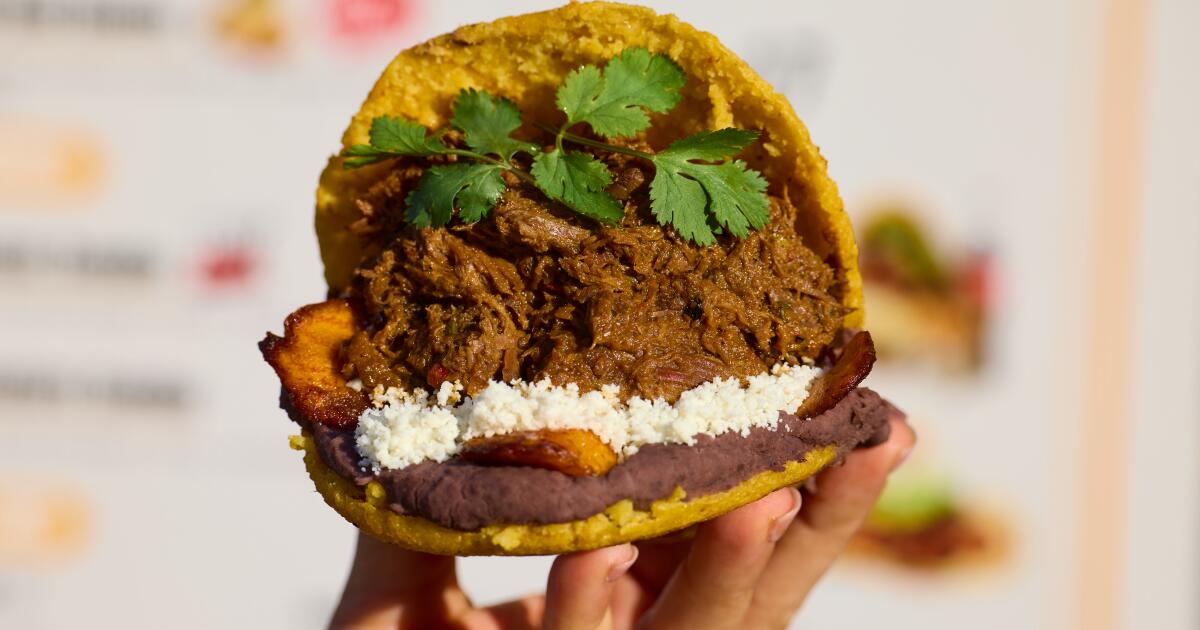
"To prepare an arepa, corn kernels are ground into flour or pre-ground corn flour is used (often the iconic yellow bag of Venezuelan brand P.A.N.), and mixed with water and salt. The soft dough is then fried, grilled or baked into a pancake-like shape. The result is delightfully simple yet endlessly customizable."
"The arepa has deep roots. Before Colombia and Venezuela came to be known as separate territories, they were unified by Indigenous groups with similar culinary traditions. When the Spanish first arrived in South America, Indigenous women were cooking corn cakes similar to the modern arepa, meaning the tradition likely goes back thousands of years, according to University of Venezuela anthropology professor Ocarina Castillo."
Streets of Cartagena feature cumbia musicians, tambora drums, flautas, women in red, yellow and blue ruffled dresses, and food vendors pushing carts with sizzling arepas. Arepas are central to Colombian and Venezuelan diets and are made from ground corn kernels or pre-ground corn flour, often P.A.N., mixed with water and salt, formed into a soft dough, and fried, grilled, or baked. Arepas are eaten throughout the day and vary regionally: Colombian arepas are often simpler, thinner, and served with cheese or as a side, while Venezuelan arepas are commonly split and stuffed like a pita with a wide array of fillings. The arepa tradition traces back to Indigenous culinary practices predating colonial boundaries.
Read at Los Angeles Times
Unable to calculate read time
Collection
[
|
...
]