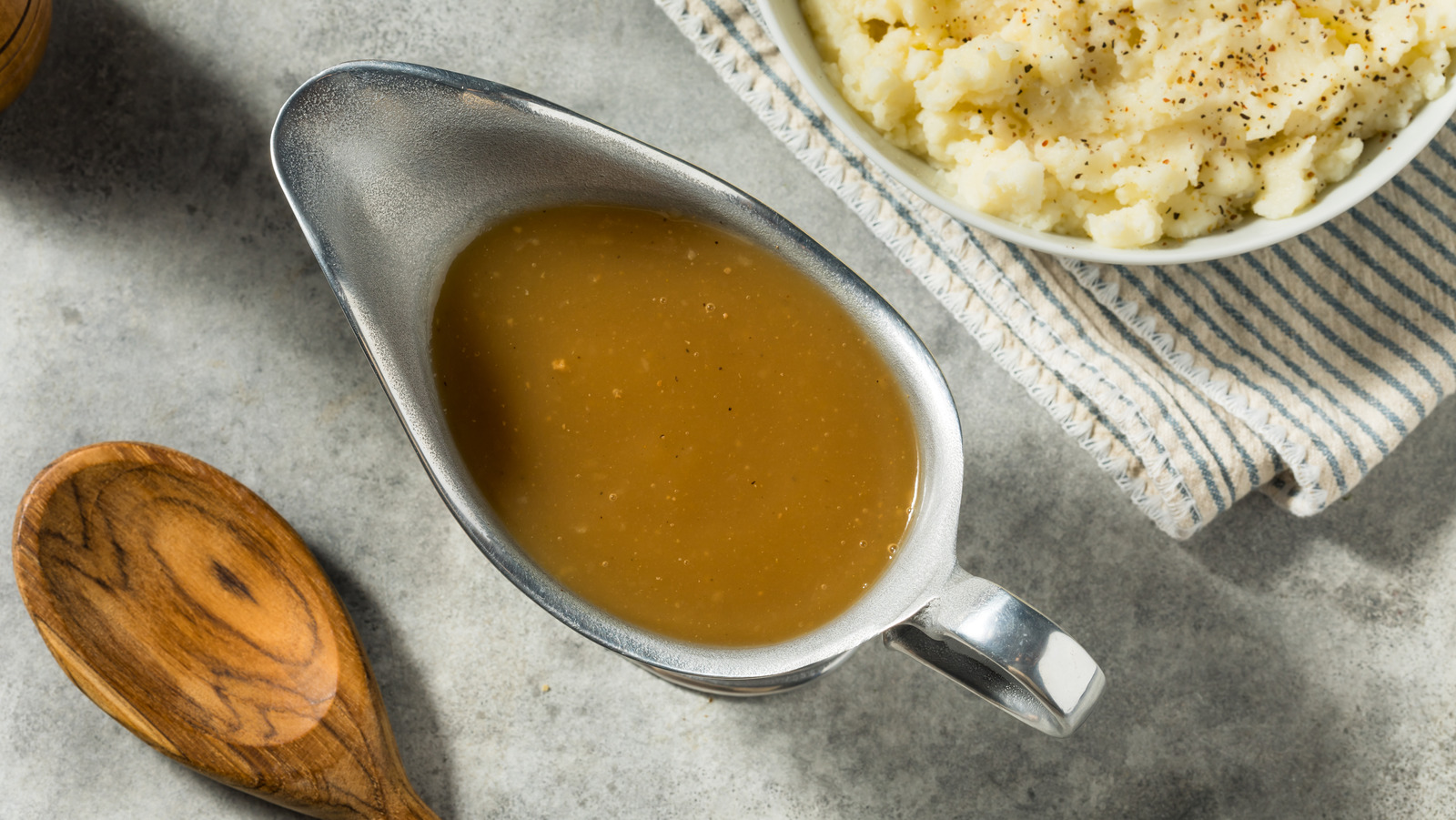
"Gravy is an essential for any festive feast, adding richness and savory depth to everything it touches. Poured generously over roasted meats and veggies, this comforting staple keeps things moist, juicy, and flavorful, and having a large batch on hand is a must when you're cooking for a crowd. However, once the plates are cleared, you might find yourself with some leftovers, and there's certainly no need to let any extra gravy go to waste."
"Stored in an air-tight container, gravy should keep well in the fridge for up to four days, and you can even freeze it for later if preferred. These leftovers don't always have to be served traditionally, either. Gravy can transform a wide array of dishes, from warming soups and cozy casseroles to savory breakfasts and carb-forward sides, so you won't have trouble putting it to good use."
"We often see gravy drizzled over platefuls of food as a flavorful finishing touch, but how about using it as a dip? Gravy is ideal for dunking fries, veggies, or roasted potatoes into, but it also makes an excellent accompaniment to a hearty sandwich. One classic recipe that makes the most of the gravy-bread pairing is the French dip sandwich. This typically consists of thinly sliced roast beef, sandwiched in a crusty sub roll with a layer of melty cheese."
Gravy adds richness, savory depth, and moisture to roasted meats, vegetables, and large holiday meals, making a large batch useful for feeding crowds. Leftover gravy keeps up to four days refrigerated in an airtight container and can be frozen for later use. Leftovers can be repurposed beyond traditional serving: as a dip for fries and sandwiches, incorporated into soups and casseroles, blended with breakfasts or carb-heavy sides, or used as au jus for sandwiches like a French dip. Thicker gravies work especially well as a dipping sauce for crusty rolls and melty cheese sandwiches.
Read at Tasting Table
Unable to calculate read time
Collection
[
|
...
]