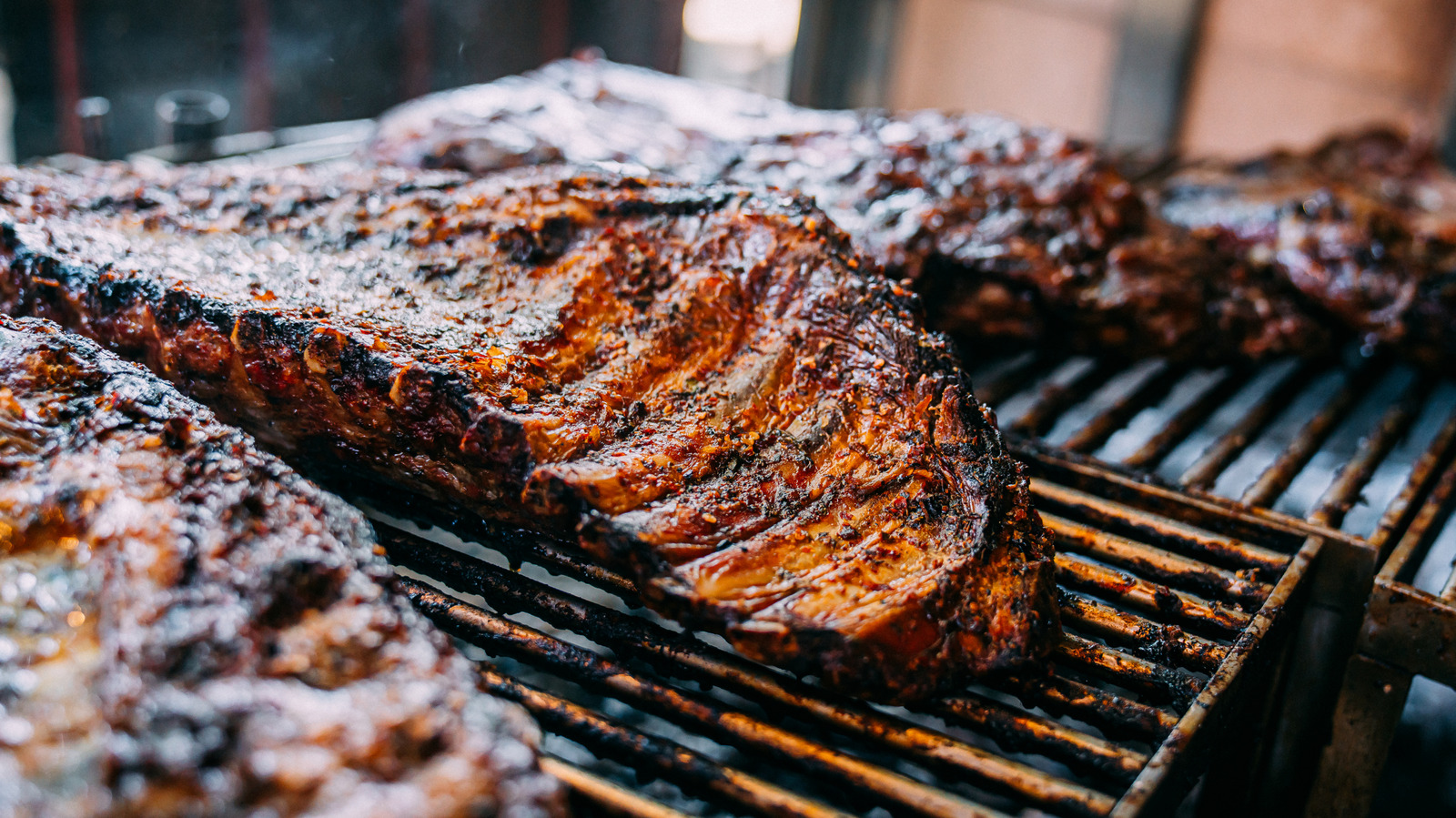
Washing meat in a sink spreads bacteria and increases the chance of cross-contamination on surfaces such as faucets and fridge handles. Cooking meat to the proper internal temperature kills harmful germs. Ribs have a USDA guideline of 145°F with a three-minute rest, while longer cooking can soften collagen at about 160°F for more tender results. Frozen ribs should not be thawed on the counter at room temperature because they remain in the food safety danger zone. Thawing in the refrigerator is generally the safest approach. Cross-contamination can also occur when using the same utensils for raw and cooked foods, so separate tools should be used.
"Washing meat in a sink (including chicken) is a bad idea because it spreads bacteria around and opens up the opportunity to cross-contaminate other surfaces, like the faucet and fridge handle, as you're cooking. Rather, cooking meat to the proper temperature will kill those pesky germs."
"The proper internal temperature for ribs is technically 145 degrees Fahrenheit with a three-minute rest time, per the USDA, though many pitmasters will cook their ribs longer. This is because the collagen in the connective tissue starts to soften at 160 degrees Fahrenheit, yielding tender, juicy, and terrific ribs that are also safe to eat."
"if you are thawing frozen ribs, you should never leave them out on the counter at room temperature, as this causes them to sit in the food safety danger zone and puts them at risk of foodborne contamination. Defrosting in the fridge is generally thought to be the safest method, though it requires a bit of foresight."
"Another important rib preparation tip is also about cross-contamination. When you're grilling a whole bunch of food at once, it can be easy to get your wires (err... tongs) crossed and pick up raw meat with the same tongs you use"
Read at Tasting Table
Unable to calculate read time
Collection
[
|
...
]