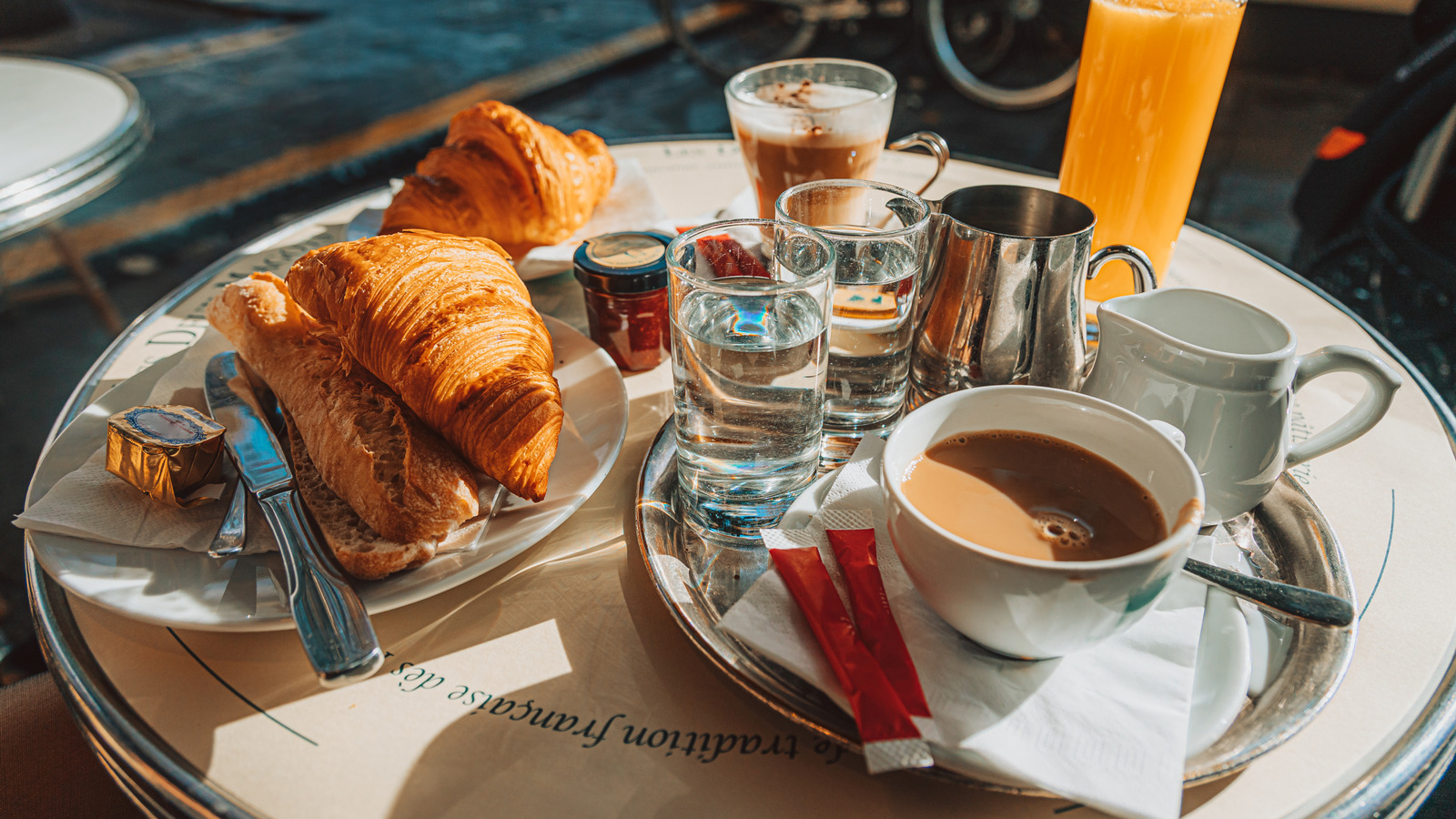
French cuisine is paired with strong traditions and etiquette. A traditional French breakfast is modest, typically including coffee, fruit juice, bread with butter or jam, or a freshly baked pastry such as a croissant. Breakfast stays light because lunch and dinner are treated with great seriousness. For meals at bistros, brasseries, or restaurants, reservations are required and guests should arrive promptly to keep their table. French service is described as professional and efficient rather than rude, with less emphasis on forced friendliness. Visitors are encouraged to be courteous without being overly familiar, matching the service style.
"If you tend to start the day with a Denny's Grand Slam, you'll find a traditional French breakfast to be a more modest, but still delicious, affair. Typically, it will consist of coffee, fruit juice, bread with butter or jam, or a freshly baked pastry, such as the classic croissant (which actually has Austrian origins). France is hardly abstemious in culinary matters - rather, breakfast is light because the French take lunch and dinner very seriously."
"When having lunch or dinner at a bistro, brasserie, or restaurant (it's worth learning the difference before doing so), you will need a reservation. Arrive promptly, as lateness will lose you your table. You may have heard horror stories about the notorious rudeness of French servers, but this is largely a myth - there's simply a greater emphasis on professionalism and efficiency than on maintaining an air of enforced jollity."
"Again, this is something we could all learn from the French - work as a restaurant server is hard enough without customers getting offended that the waiter didn't wear a fake smile. Be courteous but not overly familiar, and French servers will do the same."
Read at Tasting Table
Unable to calculate read time
Collection
[
|
...
]