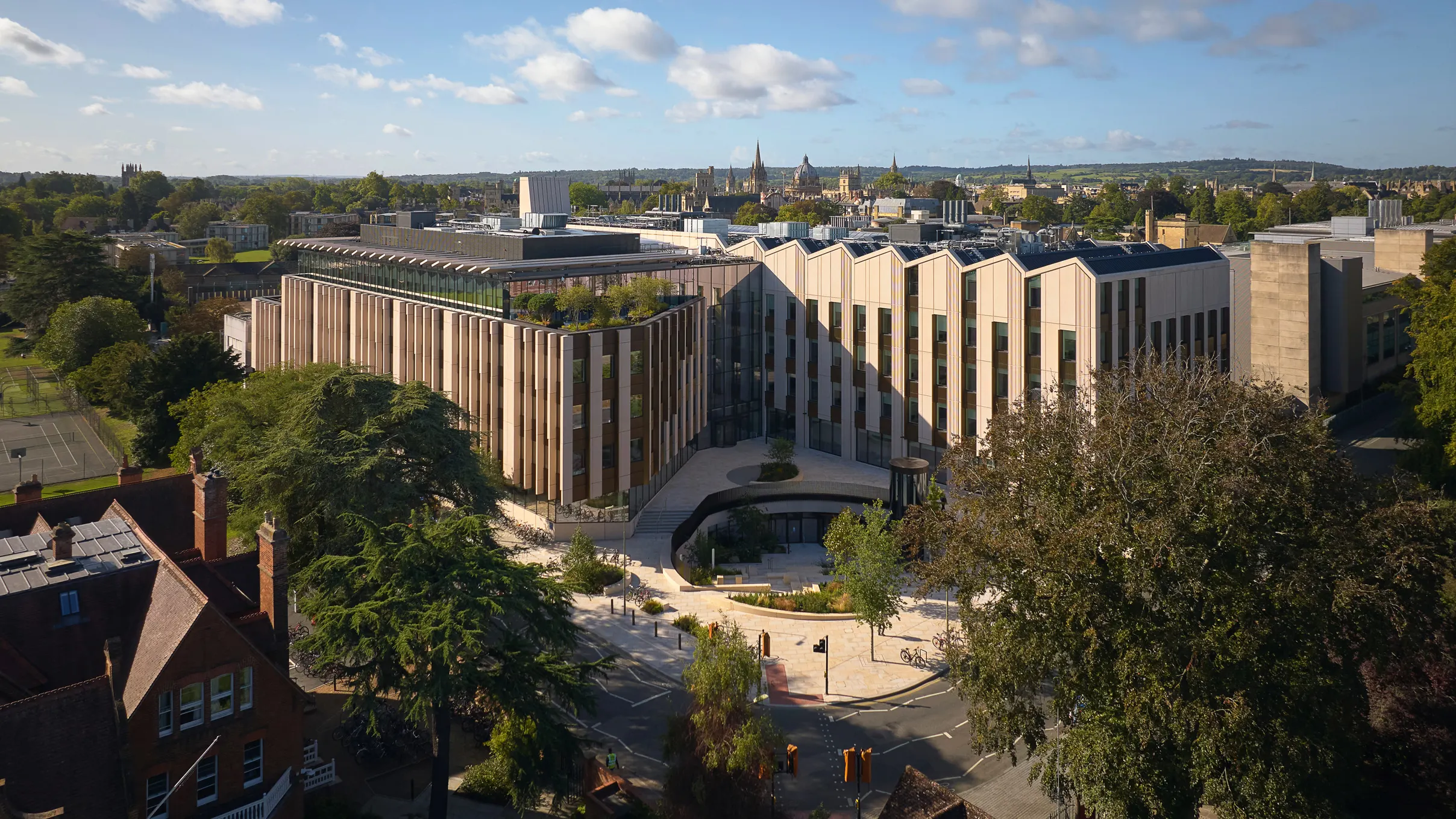
"As researchers approach the front doors of Oxford 's new Life and Mind Building (LaMB), they're greeted with a towering concrete facade, rendered with a rippling surface effect. What first appears to be a mere stylistic choice actually encodes something more special: Each of the concrete's waves and dips is derived from the brain scan of an Oxford researcher. Designed by the architecture firm NBBJ, the LaMB is a massive, 269,000-square-foot space that brings together two departments: experimental psychology, which studies the human brain and how it operates; and biology, which encompasses both zoology (animal studies) and plant sciences."
"The LaMB's facade is visually striking, but it also embodies a few clever ways that NBBJ is reimagining what a university lab building can be. The structure is built to account for the natural path of the sun, capture energy using solar panels, and use advanced cladding technology to lessen its environmental impact. In short, it's a vision of a lab that's better for both its staffers and the planet."
"Darius Umrigar, a principal architect at NBBJ and the lead project designer of LaMB, says one of his team's main priorities was to design with longevity in mind, given that Oxford itself is nearly 1,000 years old. That meant choosing durable materials (concrete, stone, and metal) to make up the facade. At the same time, they wanted to ensure that the building would have aesthetic interest and fit within the existing campus."
Oxford's Life and Mind Building (LaMB) features a rippling concrete facade whose waves and dips are derived from an Oxford researcher's brain scan. The 269,000-square-foot facility houses experimental psychology alongside biology, including zoology and plant sciences, creating a shared research environment. NBBJ designed the building to follow the sun's natural path, incorporate solar panels, and employ advanced cladding to reduce environmental impact. Durable materials such as concrete, stone, and metal were selected for longevity and campus fit. The design balances aesthetic interest with practical sustainability to serve staff and the planet.
Read at Fast Company
Unable to calculate read time
Collection
[
|
...
]