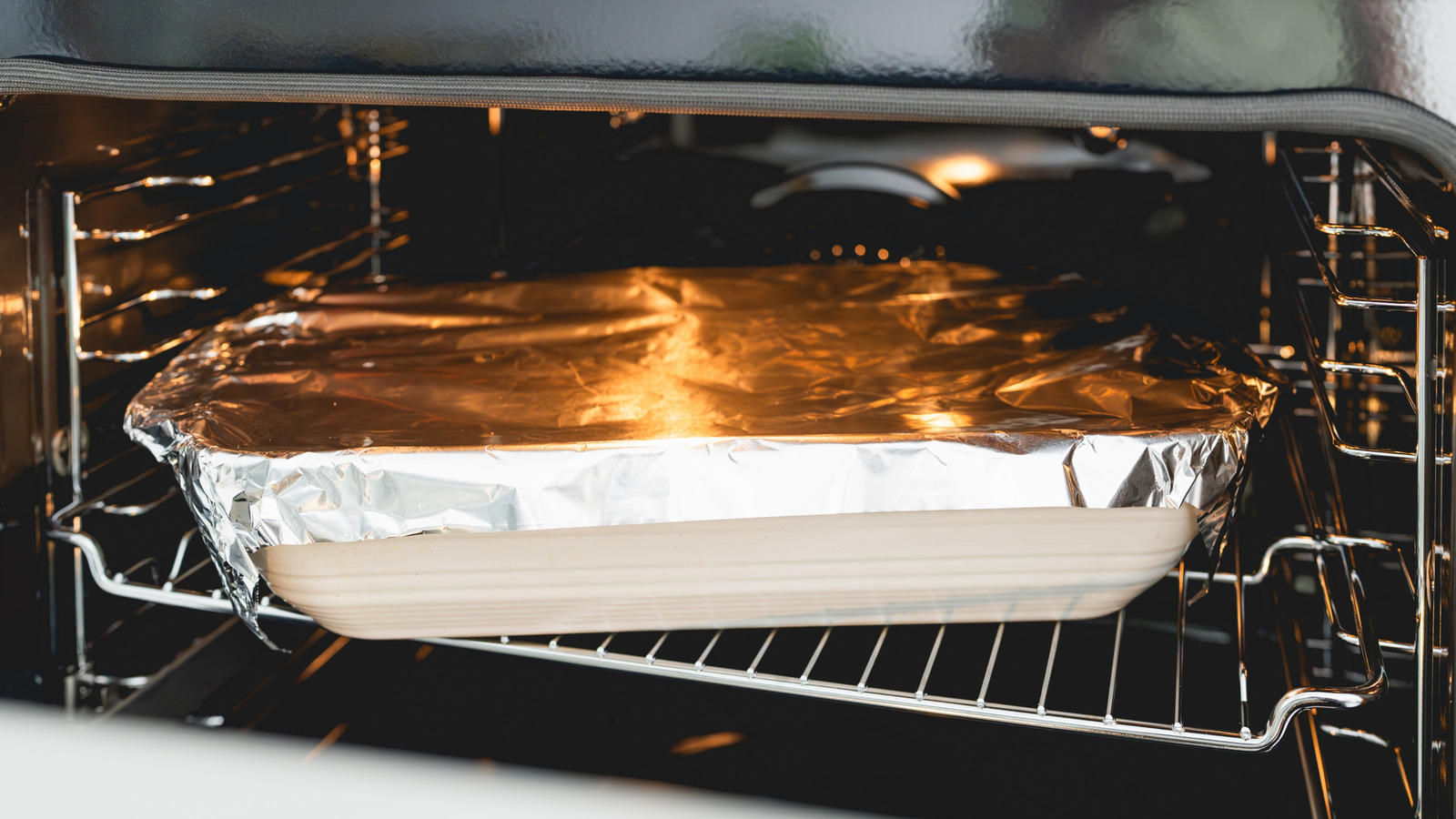
"For thousands of years, humans have used heat to transform raw ingredients into edible, digestible meals, all without the use of aluminum foil. But in modern kitchens, reaching for a shiny sheet to cover your baking dish is almost reflective ... er, reflexive. Aluminum foil is right there, seems multi-purpose, and hey, it's one less dish to have to wash, so why not?"
"A proper lid has more weight than foil, which means more mass. That mass absorbs heat, radiates it back into the pot, and helps maintain a steady internal temperature. Foil, by contrast, is extremely thin, and it's easy to make a couple of common mistakes when using it. Heat passes through it almost instantly, creating unstable cooking conditions."
"Instead of the gentle, consistent simmering you get with a real lid, a foil cover causes hot spots and fluctuating moisture levels, both of which lead to uneven results. Aluminum foil works well for certain tasks, like tenting a roast briefly, but it's not a lid. Covering something with foil in a pinch won't necessarily ruin a dish, but using it as a long-term lid creates problems, especially when better options are available."
Aluminum foil is commonly used as an improvised cover, but it does not function like a proper lid. A real lid has mass that absorbs and radiates heat to maintain a steady internal temperature, while foil is very thin and allows heat to pass through quickly. Foil permits uneven steam escape, accelerates liquid reduction, creates hot spots, and causes fluctuating moisture, leading to inconsistent results. Foil can be useful briefly, such as tenting a roast, but prolonged use as a lid creates problems. Aluminum can also react with acidic or salty foods, raising leaching concerns, and disposable covers should be used sparingly in favor of reusable alternatives.
Read at Tasting Table
Unable to calculate read time
Collection
[
|
...
]