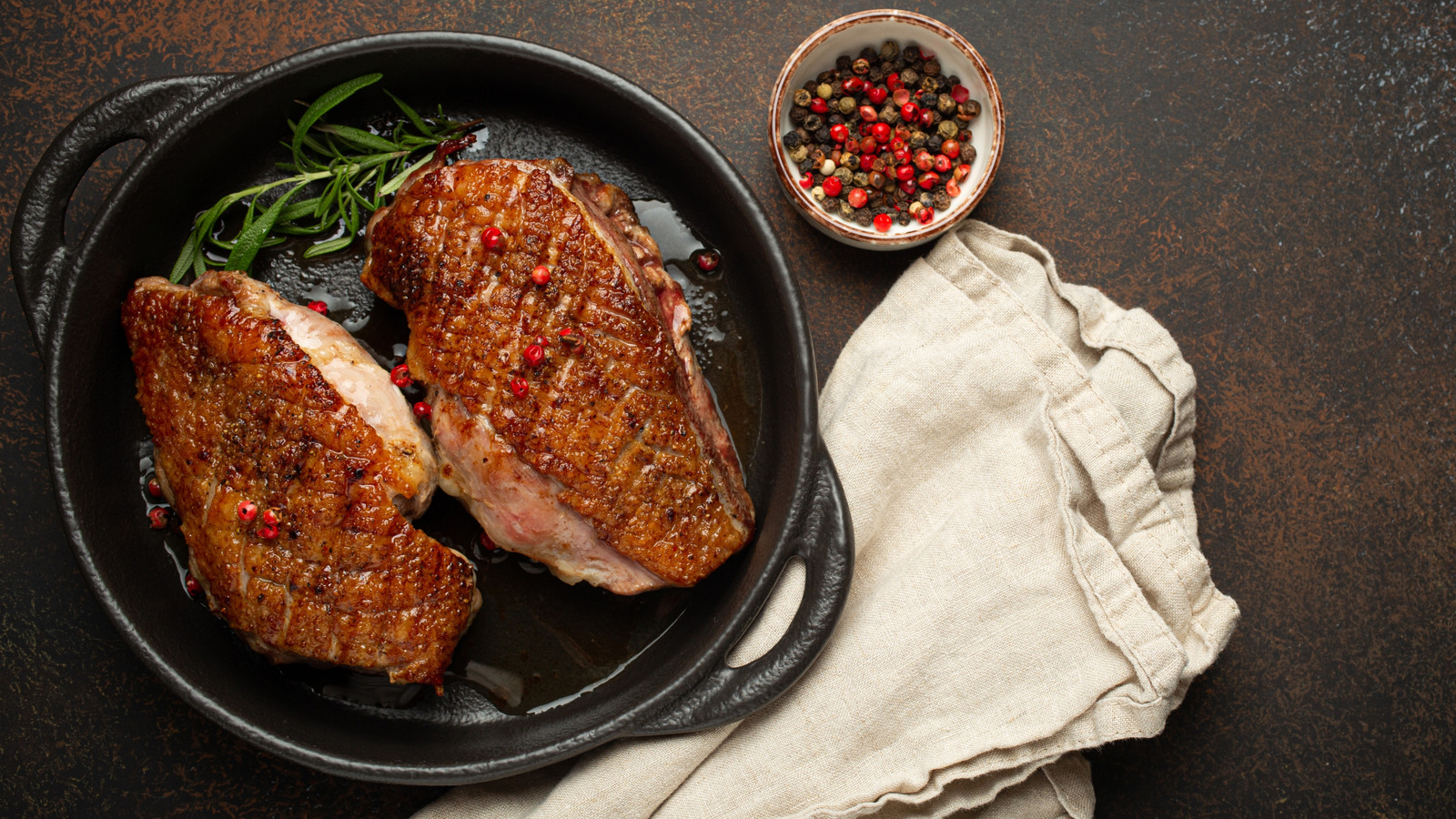
Duck breast is richer and pricier than common poultry, so home cooks often struggle and end up with chewy or dry results. Pan-roasting provides control, but it requires correct heat and timing. Duck breast should not be cooked like chicken; it needs time for the fat layer to render out. Cooking with too high heat prevents complete fat rendering before the flesh cooks, leaving a thick chewy fat layer between skin and meat. For best results, place duck breast skin-side down in a cold pan and cook over medium-low heat without increasing temperature for faster browning. Leave it undisturbed for about 15 to 20 minutes without flipping. Preparation can start earlier by buying a whole bird, removing legs, dry aging the crown, glazing, roasting, and resting.
"“A common mistake I see at home is pan-roasting a duck breast with too high heat, so that the thick layer of fat doesn't render completely before the flesh is cooked beautifully.” Duck doesn't need to be cooked all the way through like chicken, but he underlines that it does take time for fat to render out."
"“A beautiful pan-roasted duck breast will be medium-rare to medium (preference depending), with a crispy shell of skin nearly in contact with the flesh. If we don't take our time, and use a pan that is too hot, a thick layer of chewy fat will remain between the flesh and skin.”"
"“Duck breast should be added to a cold pan, skin-side down, then placed over medium-low heat. Don't be tempted to turn the heat up to get some color on the skin - this will develop with time.”"
"“Another mistake you're probably making when searing duck is moving it too quickly. You'll need leave the duck breast to cook without flipping it for around 15 to 20 minutes.”"
Read at Tasting Table
Unable to calculate read time
Collection
[
|
...
]