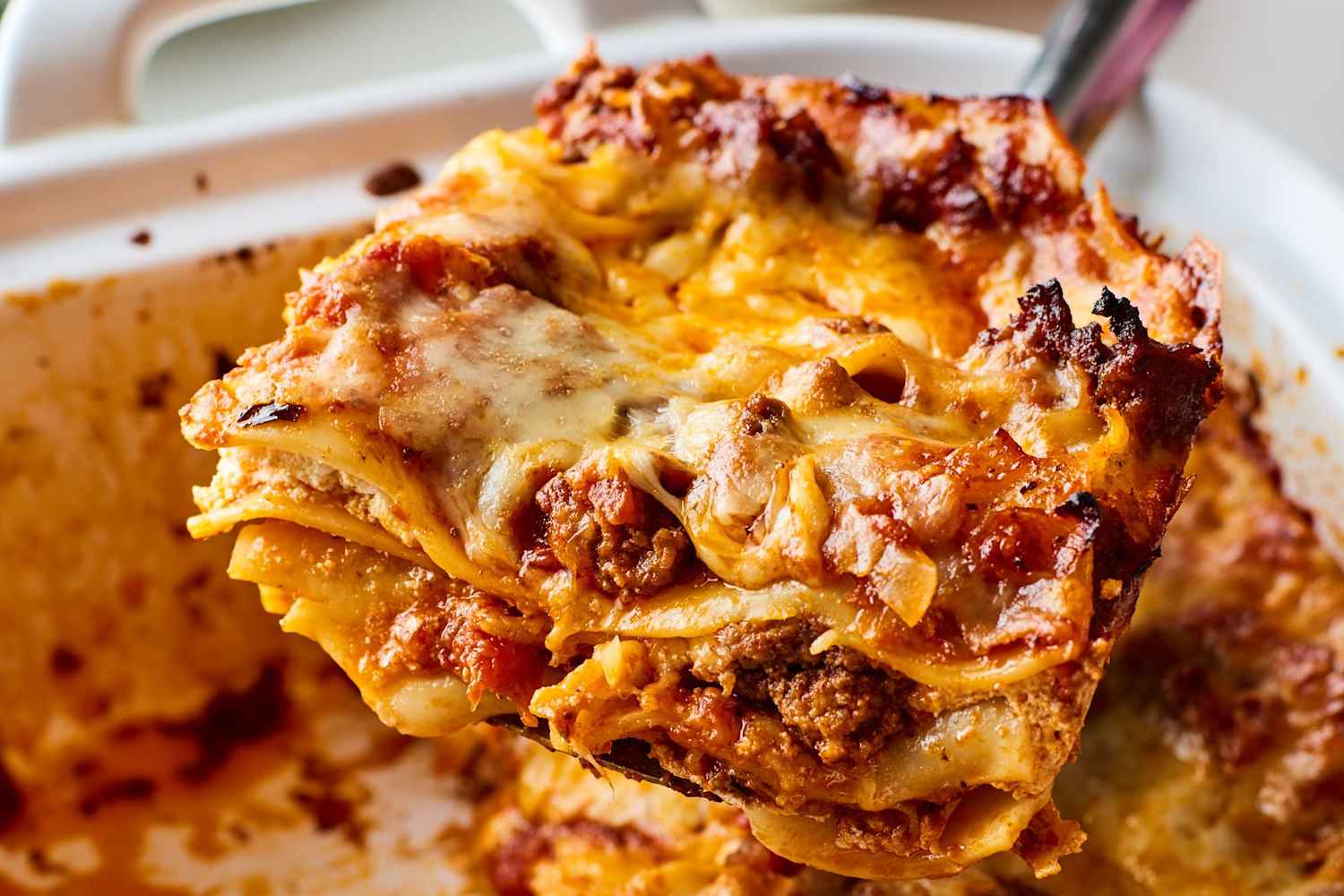
"Lasagna is slightly different in Italy - the style of pasta sheets, the fillings, and the portion sizes are all a little different than what you see in America. But what can we learn from Italian chefs and families? What are the keys to a perfect lasagna? I asked an Italian-born chef, Francesco Lucatorto, who carries with him a ton of professional experience, but perhaps most importantly, a lot of time spent cooking with Italian nonnas."
""No ricotta. Never," Francesco blurts out immediately when asked for lasagna tips, "This is the thing I want to point out first. It's the most common question I get at Ceci's." Ricotta simply doesn't fit Francesco's platonic ideal of lasagna, which he describes as having three essential building blocks- pasta, Bolognese, and béchamel sauce. While ricotta is a hard no, the Bolognese is a bit more fluid; in Francesco's native region of Liguria, pesto often replaces meat sauce."
Lasagna varies across Italy in pasta sheet style, fillings, and portion sizes compared with American versions. An Italian-born chef from Genoa learned to cook with his grandmother in Emilia-Romagna and bases many restaurant recipes on nonna traditions. Traditional lasagna relies on three core components: pasta, Bolognese, and béchamel sauce, while ricotta is excluded. Regional variations occur: Liguria often substitutes pesto for meat sauce, and southern preparations may include prosciutto or mushrooms. A restaurant menu can present lasagna traditionally with meat Bolognese or with pesto to reflect regional styles and home-cooking techniques.
Read at Apartment Therapy
Unable to calculate read time
Collection
[
|
...
]