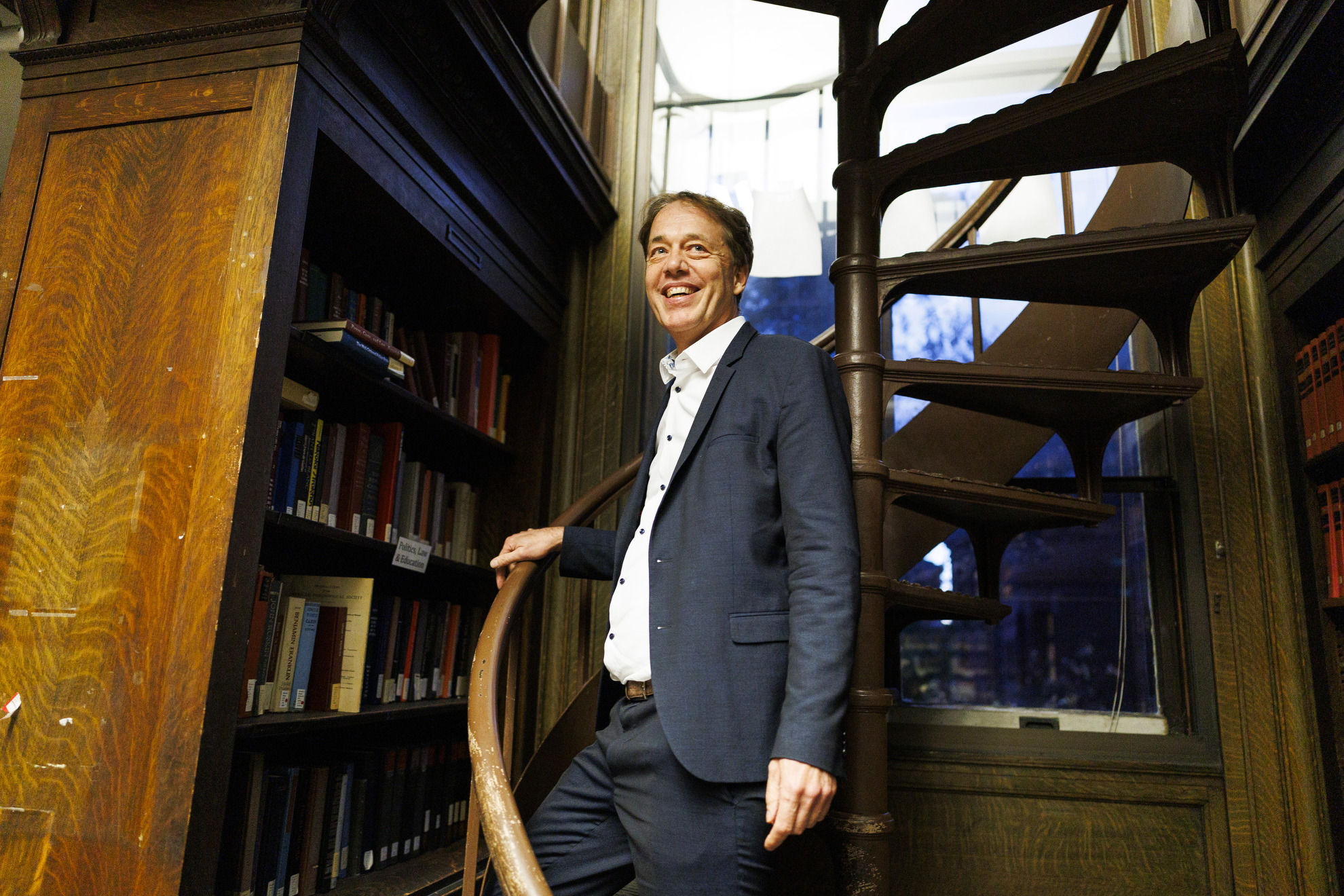
"Beckert, whose research seminars more than a decade ago helped instigate the Harvard and the Legacy of Slavery Initiative, starts with the 12th-century traders who opened new avenues for accumulating wealth and power. From there the book revisits the first long-distance trade networks, the cruelties of capitalism under colonialism and slavery, the dawn of the Machine Age, and the East Asian factories that furnish much of today's international marketplace."
"Capitalism is the backbone of 21st-century life, according to Sven Beckert. It determines how most of the world works, eats, and sleeps. It shapes how people pursue love, marriage, and family. "It has such an important presence," says Beckert, the Laird Bell Professor of History, "that we need to understand capitalism better in order to understand ourselves better." "Capitalism: A Global History" is Beckert's doorstop of a new release, tracing in its 1,344 pages how this evolving economic system came to rule the modern experience."
Capitalism functions as the backbone of 21st-century life, determining how people work, eat, sleep, and form relationships. The system emerged and transformed over the past millennium, beginning with 12th-century traders who created new routes for accumulating wealth and power. Subsequent developments included long-distance trade networks, colonial expansion, slavery, and the Machine Age that reordered production. Industrialization and the rise of East Asian factories integrated global markets and supply chains. Capitalism has varied across regions and epochs while generating cycles of innovation alongside recurring inequality. A global historical perspective reveals capitalism's changing institutions, mechanisms of accumulation, and enduring social consequences.
Read at Harvard Gazette
Unable to calculate read time
Collection
[
|
...
]