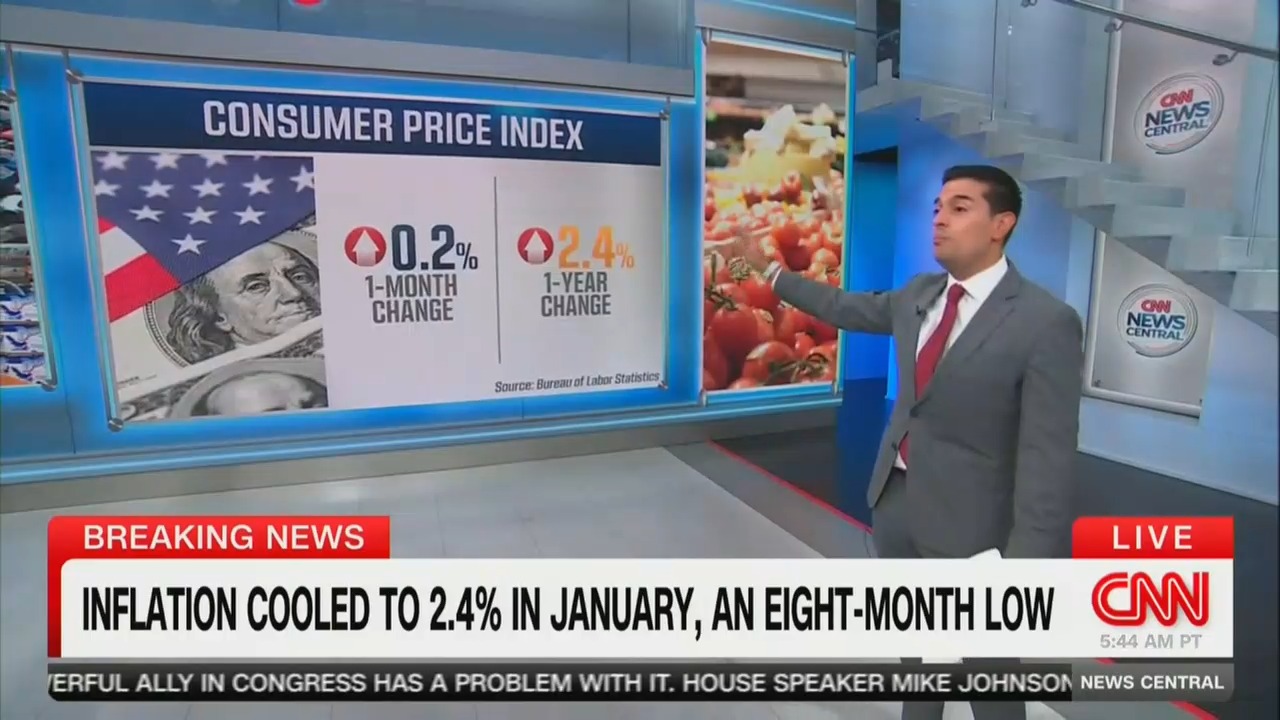
"Well, Kate, look, this is some encouraging news on the cost of living, right? Inflation took a big step in the right direction to start the year off, replied Egan. So consumer prices up by 2.4% year-over-year. That is an improvement from 2.7% in December that beat expectations which were for 2.5%. In fact, this a new, eight-month low for annual inflation, month-over-month. Prices up by 0.2%, also a step in the right direction, also beating expectation."
"Now, economists look really closely at core inflation, which excludes food and energy. Core inflation came in at 2.5%. That's notable because that's the lowest annual inflation rate for core since March of 2021, before the inflation crisis, he continued. Now, while we can't exclude food and energy from our family budgets, that's important because economists say that's a better indicator for where inflation is going."
"And when you look at the trend for inflation over the last few years, you can see there's been some improvement, right? It's been a little bit bumpy on this chart. It's been bumpy, but it has improved. There was this uptick in inflation starting last spring after the president slapped massive tariffs on imports. Inflation started to go heat back up up to 3%, but thankfully it's trending back down."
Consumer prices increased 2.4% year-over-year in January, down from 2.7% in December and slightly below expectations. Month-over-month CPI rose 0.2%, also beating forecasts. Core inflation, which excludes food and energy, was 2.5% annually, the lowest core rate since March 2021. Economists favor core inflation as a better indicator of underlying trends. Inflation trends have been bumpy but show improvement after an uptick following tariffs on imports last spring that pushed annual inflation toward 3%. Americans remain concerned about housing, health care, and groceries. Egg prices plunged 34%, and gasoline prices fell about 8%.
Read at www.mediaite.com
Unable to calculate read time
Collection
[
|
...
]