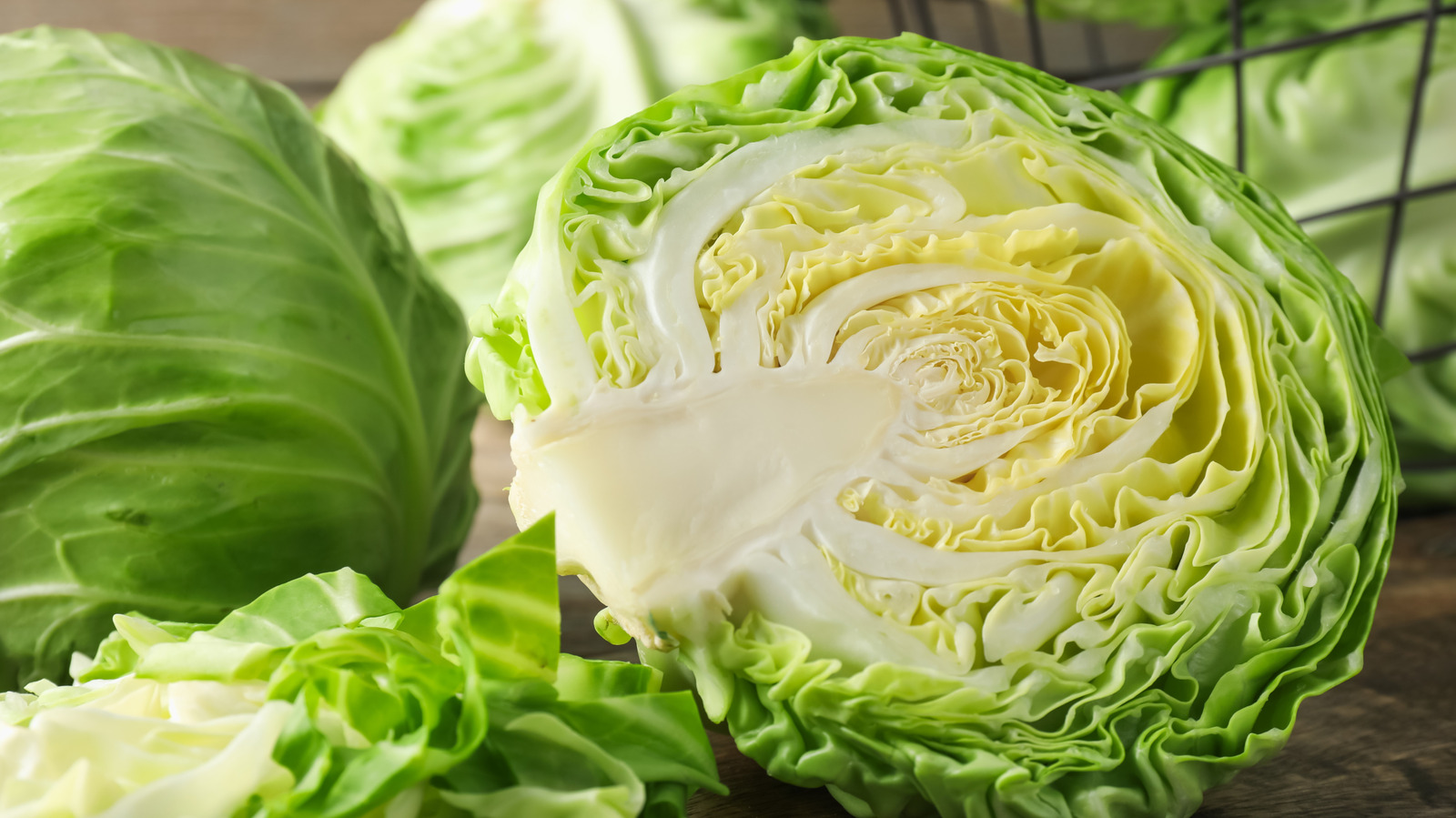
Cabbage comes in multiple colors, textures, and tastes, with four main cruciferous categories: red, savoy, green, and napa. Green and white cabbage are technically the same, even when marketed as separate varieties. The scientific name includes Brassica oleracea var. capitata f. alba, where “alba” refers to white and describes how the inside of the cabbage can grow very light in hue. Less light leads to less chlorophyll production, making the cabbage appear whiter. Other cabbage types may develop pale tones but are not commonly called white. Napa cabbage, also called Chinese cabbage, can have light stems and grows taller with lettuce-like leaves. Different varieties suit different dishes, including green cabbage for sauerkraut due to its crisp, slightly peppery leaves.
"Green and white cabbage are technically the same thing even though they're sometimes marketed as two separate vegetable varieties. The reason white and green cabbage are used interchangeably is mostly thanks to the scientific name for the leafy vegetable - Brassica oleracea var. capitata f. alba. Alba is the Latin word for white, and has been added to the end of the name to help describe how parts of the vegetable can grow very light in hue, especially on the inside."
"Basically, the less light the cabbage gets, the whiter it will appear as it will produce less chloropyll. Ultimately, both green and white cabbage refer to the same thick, round bushel of leaves you'll find at most farmers markets and grocery stores. After all, when people picture a cabbage, this variety is most often what comes to mind."
"While other types of cabbage can take on a whitish hue, they're not colloquially known as such. Napa cabbage, also known as Chinese cabbage, can have light stems, too. But this variety grows taller and has leaves that look more like lettuce than traditional cabbage does."
"Because there are so many cabbage varieties (more than 400 worldwide) there are also specific types that are best for certain dishes. Experts say green is the absolute best cabbage variety for homemade sauerkraut, thanks to its crisp leaves and slightly peppery flavor. It's what's used to make sauerkraut in Germany, where, they almost exclusively call it weißkohl, which translates to, you guessed it, white cabbage!"
Read at Tasting Table
Unable to calculate read time
Collection
[
|
...
]