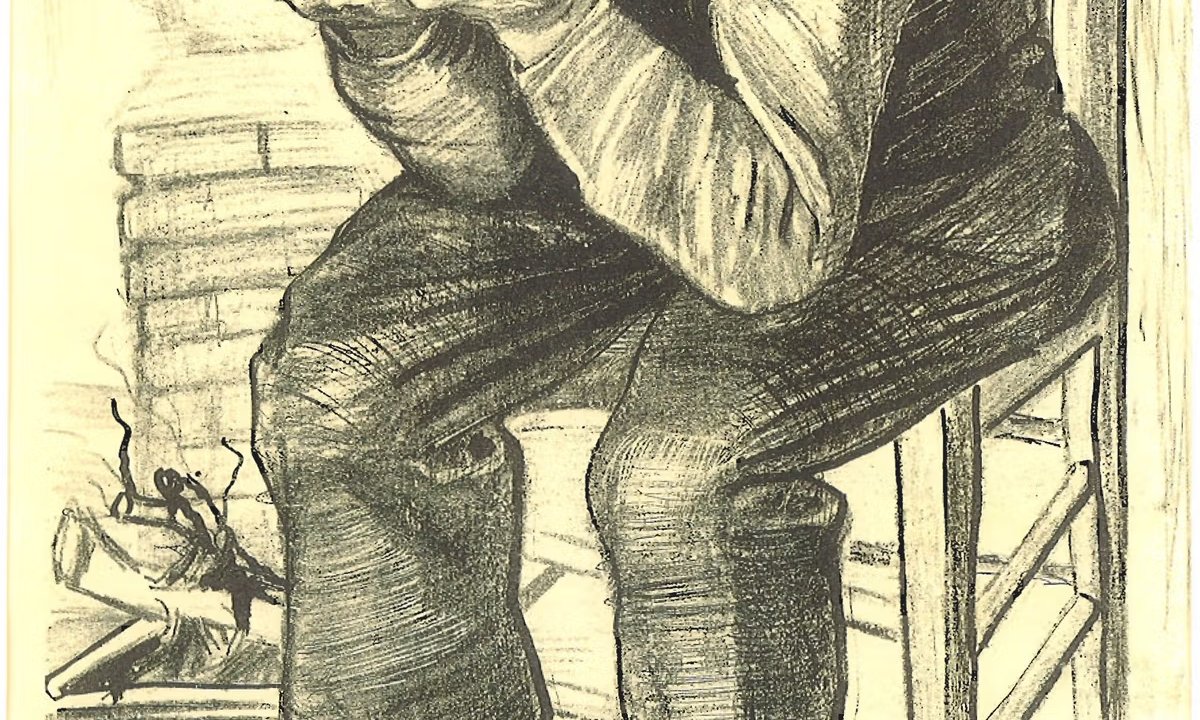
Van Gogh's 1882 lithograph 'At Eternity's Gate' depicts Adrianus Zuyderland, a 72-year-old resident of The Hague's Old Men's Home. Only seven examples survive, with one bearing Van Gogh's inscribed English title. The artist created it while seeking London illustration work. Van Gogh gave the inscribed print to fellow artist Anton van Rappard. It later passed through private collections before Nelson Rockefeller acquired it and sold it to dealer Eugene Thaw, who sold it in 1975 to Farah Pahlavi, the Shah of Iran's wife, for $65,000. She donated it to the Tehran Museum of Contemporary Art, which opened in 1977. Following the 1979 Islamic Revolution and the Shah's overthrow, the museum's Western artworks, including this Van Gogh, were stored away due to anti-Western sentiment and religious objections to certain pieces.
"Dating from November 1882, when Van Gogh was living in The Hague, the print depicts what he called an 'orphan man', a resident of the local Old Men's Home. Only seven examples of this lithograph survive, and on one of them the artist added the inked title. Van Gogh wrote it in English because he was then applying for work as an illustrator in London."
"Rockefeller soon sold on the Van Gogh to the New York dealer Eugene Thaw, who in turn sold it in 1975 for $65,000 to the Shah of Iran's wife, Farah Pahlavi. She was supporting the planned Tehran Museum of Contemporary Art, which opened in October 1977."
"Just over a year later, in February 1979, the Shah was overthrown, to be succeeded by Ayatollah Khomeini and the present Islamic Republic. Most of the collection, including the Van Gogh, has since lain unseen for much of the time in the museum's stores. There were strong anti-Western feelings in Iran and the new regime considered some of the artworks indecent."
#van-gogh-lithograph #tehran-museum-of-contemporary-art #iranian-revolution #art-history #cultural-heritage
Read at The Art Newspaper - International art news and events
Unable to calculate read time
Collection
[
|
...
]