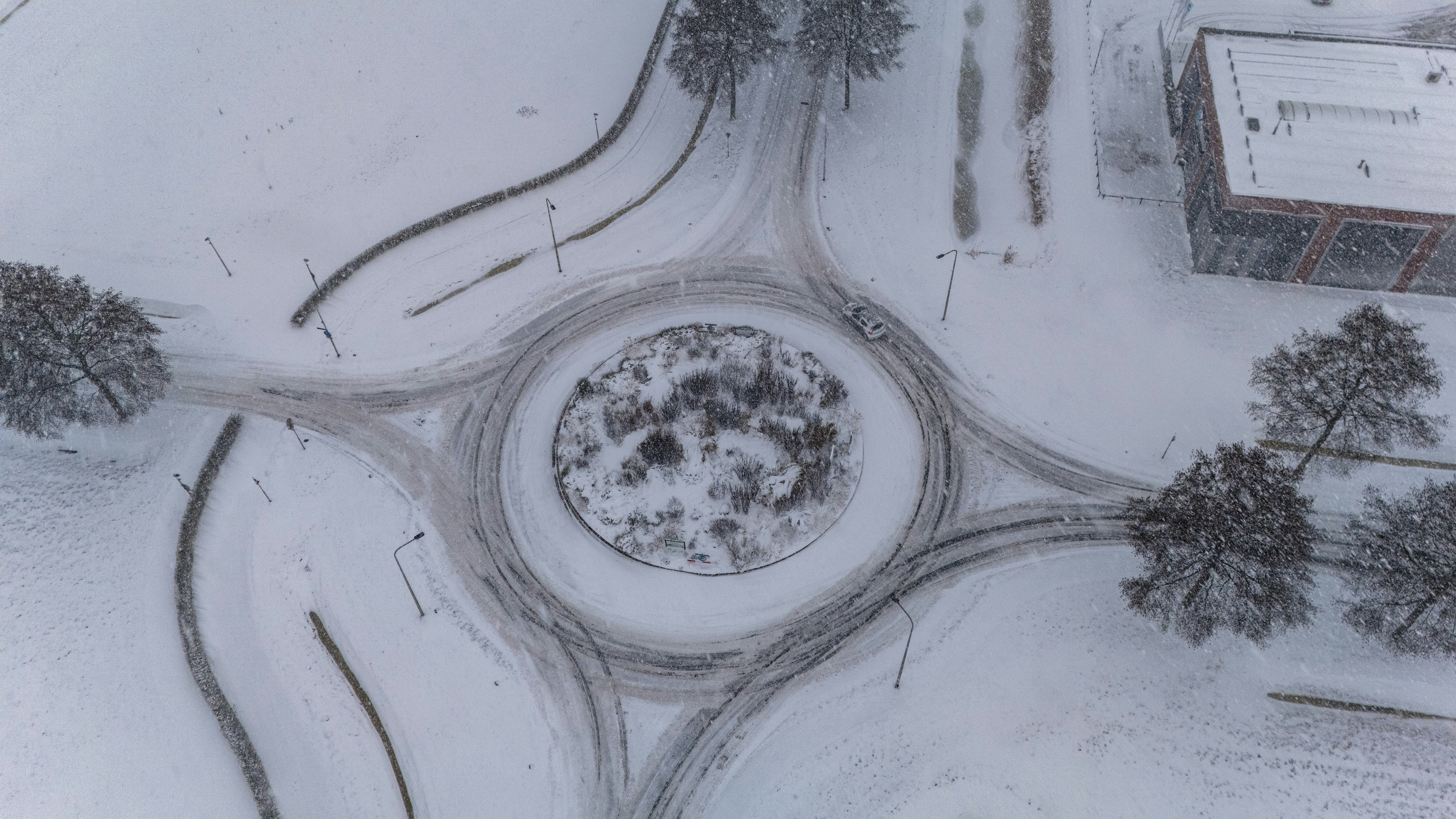
"The UNC Chapel Hill analysis - with the provocative title "Roundabouts Are For Rich People" - recently found that the circular intersection design that reduced injury crashes by 80 percent was disproportionately sited in wealthy neighborhoods. The racial makeup of a neighborhood was also predictive of whether a street received a roundabout or not, with Black neighborhoods receiving fewer than white ones, though it wasn't as strongly associated as whether those neighbors had money."
"For study author Matthew Bhagat-Conway, the distribution of roundabouts is only an example of larger inequalities in transportation planning, albeit one that's particularly easy to study in statewide databases. "[It was a way of] zooming way out to look at the whole state, and asking, 'Are we seeing patterns of inequity being reproduced by traffic control devices?' And we found that particularly with roundabouts, you'd see a lot fewer of them in lower-income neighborhoods across the state.""
A University of North Carolina Chapel Hill study reveals significant inequities in the distribution of roundabouts, a proven traffic safety intervention that reduces injury crashes by 80 percent. The research found that roundabouts are disproportionately located in wealthy neighborhoods while being largely absent from lower-income areas. Neighborhood wealth was the strongest predictor of roundabout installation, though racial composition also played a significant role, with Black neighborhoods receiving fewer roundabouts than white ones. The study suggests these patterns reflect broader inequalities in transportation planning across North Carolina. Researchers argue that transportation officials can address these disparities by adopting more proactive, equitable approaches to safety infrastructure distribution citywide.
#transportation-equity #infrastructure-inequality #traffic-safety #racial-disparities #urban-planning
Read at Streetsblog
Unable to calculate read time
Collection
[
|
...
]