Sabahs are made entirely by hand from 100% leather in either Texas or Turkey—two regions with distinct yet deeply rooted relationships to the material. The result is a shoe that varies subtly from pair to pair, even within the same size.
The Hanwha Seoul Pompidou Center is conceived as both an exhibition venue and a meeting point where education and art converge, offering adaptable spaces to host a broad range of activities.
The podium-tower is a hybrid structure consisting of a high-coverage, low-rise podium supporting one or more slender vertical towers, maximizing urban density while maintaining a 'human-scaled' street wall.
"What we wanted to do was to make this about people. When I came into my role, it was exactly at the time that the pandemic began. We built a team, an idea, and a vision through remote work."
Hector Guimard's distinctive designs are well known - even if his name isn't. His signature work, the Paris Métro entrances, are classic examples of Art Nouveau, characterized by their elegant flowing lines, floral ornamentation, geometric forms, and mythical symbolism, taking inspiration from nature.
In 1962, the architect Buckminster Fuller envisioned a floating city that would free humanity from its dependence on the Earth. The speculative project consisted of enormous geodesic spheres that would naturally levitate in air warmed by the sun and be anchored to mountaintops.
The architectural approach emphasizes simplicity, durability, and contextual integration, with brick as the primary material for its structural capacity and long-term performance.
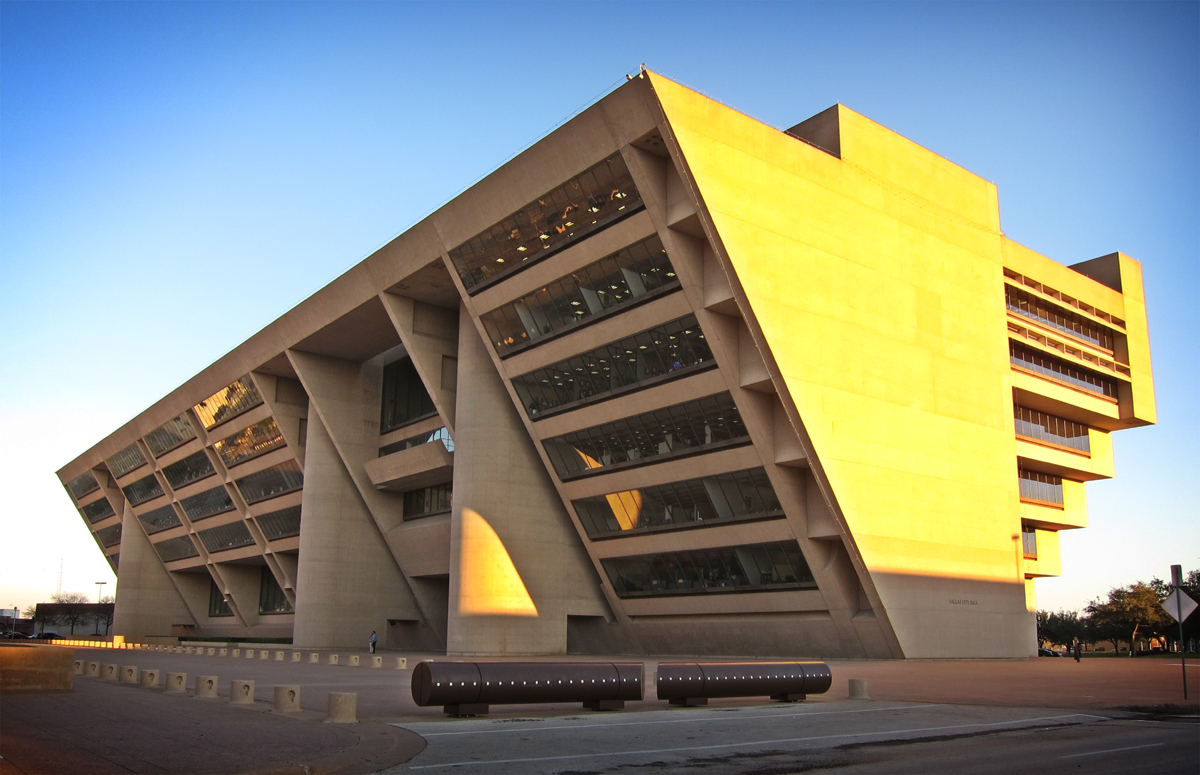
The style is characterized by raw, exposed concrete and bold geometric forms. You've certainly seen it before in many cultural and civic buildings built between the 1950s and '70s. With countless examples spanning countries and continents, the look has both historical significance and remains popular-particularly in residential design-today.
With a cornucopia of credits to his name-having designed some of Asia's hottest new hotels including the Waldorf Astoria Osaka, Capella Taipei, and Upper House Hong Kong; restaurants like Duddell's and Estro in Hong Kong; and even furniture for Louis Vuitton-Fu needs as much artistic inspiration as he can get to fuel his work. Fortunately, he doesn't have to go far in this dynamic city: "There's the ultramodern and chic, yes, but the city's spirit is rooted in places that are grounded and authentic," he says.
Gropius, who from 1919 to 1928 directed the Bauhaus in Weimar and Dessau, designed the house in 1921-22 for lawyer Fritz Otte. The property is considered a dramatic evolution of Gropius's earlier seminal Haus Sommerfeld, which was also located in Berlin, but destroyed in World War II. The Bauhaus founder embraced a forward-looking approach with an unadorned, sharp-edged structure that rejected the heaviness of 19th-century historicism.
The building is organized around a series of repetitive vertical concrete fins that define the primary system. These elements operate as climatic filters, spatial thresholds, and structural components, establishing a rhythmic articulation across the elevation. Their spacing creates varying degrees of permeability, regulating natural light while framing controlled views toward the distant topography.
Postmodernism began as a critique of modernism's exhausted promises. By the late 1960s and early 1970s, many designers no longer treated modernism as radical or socially redemptive. Urban renewal projects accelerated the demolition of historic neighborhoods, and landmark preservation battles raised urgent questions about what the United States valued and, ultimately, protected. The loss of major civic icons, including New York's Penn Station, sharpened public awareness that progress often arrives through erasure.