Textiles are a window into the communities that created them, with every motif and line signalling a different memory, tradition or identity. Often seen as folk art, these pieces of embroidery and weaving bring together dozens of narrative threads, from Japan to South America. But nowhere is it more fraught with meaning than in Palestine.
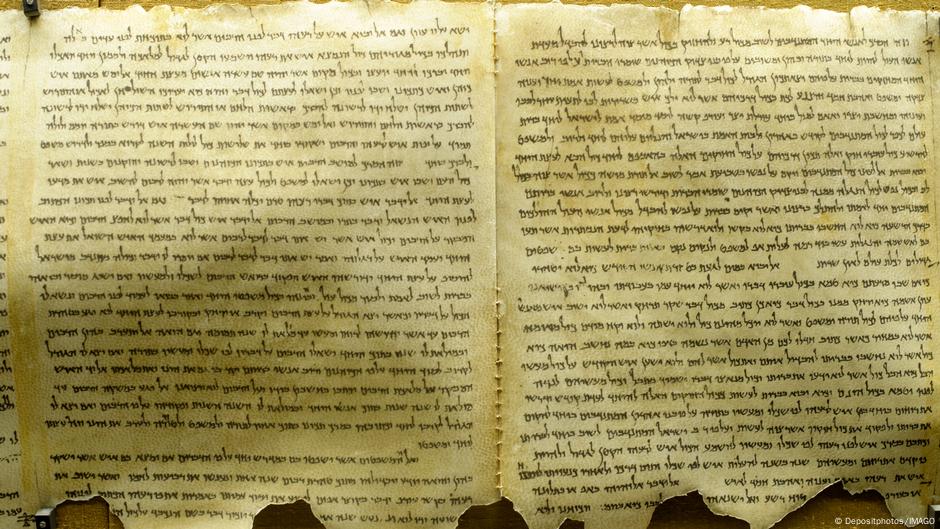
The ostraca show us an astonishing variety of everyday situations. We find tax lists, deliveries, short notes about everyday activities, religious texts, and priestly certificates attesting the quality of sacrificial animals.
Two hundred and fifty-six Quran memorisers—Palestinians who have committed the entire holy book to memory—sat in the place while companions beside them listened attentively, following each word carefully to ensure the recitation remained flawless. The gathering, titled Safwat Al-Huffaz—The Elite of Quran Memorisers, has become a special collective way of observing Ramadan in Gaza.
According to the Gospel of John, Roman soldiers broke the legs of the two men executed alongside Jesus to hasten their deaths. But when they came to Jesus, they did not break his legs because they saw he was already dead. This detail has long intrigued historians and doctors because crucifixion victims often survived for many hours, and sometimes days.
King Nebuchadnezzar II himself 'speaks' in the text, proudly describing how he restored an old, crumbling stepped temple tower in the city of Kish that was dedicated to the Mesopotamian god and goddess of war, Zababa and Ishtar. He explained that earlier kings had built and fixed the ziggurat before, but it had fallen into disrepair again from age and rain.
An ancient Egyptian papyrus held by the British Museum has been cited as possible evidence supporting some of the Bible's most controversial claims about giants. The 3,300-year-old document, known as Anastasi I, has been in the museum's collection since 1839 and has recently resurfaced on the Associates for Biblical Research, renewing interest in its possible links to biblical accounts. The papyrus describes encounters with the Shosu people, said to stand 'four cubits or five cubits' tall, up to eight feet in height.
The Book of Genesis describes Eden as a paradise watered by a single river that split into four: Pishon, Gihon, Tigris, and Euphrates. While the Tigris and Euphrates are well-known rivers in modern-day Iraq, the Pishon and Gihon have long been lost to history, until now. The dry riverbed, called Wadi al-Batin, stretches from the western highlands of Hejaz near Medina northeast to the northern Persian Gulf near Kuwait.
Nine meters (30 feet) beneath the waves, they found it: a vast, man-made stone wall, averaging 20 meters (66 feet) wide and two meters (6.6 feet) tall. The structure consists of some 60 massive granite monoliths, set directly onto the bedrock in pairs at regular intervals. Smaller slabs and packing stones fill in the gaps, locking the whole into a single, deliberate construction. With an estimated total mass of around 3,300 tons, this is the largest underwater structure ever discovered in France.
Image by Klaus Schmeh, via Wiki­me­dia Com­mons Mag­yar, which is spo­ken and writ­ten in Hun­gary, ranks among the hard­est Euro­pean lan­guages to learn. (The U.S. For­eign Ser­vice Insti­tute puts it in the sec­ond-to-high­est lev­el, accom­pa­nied by the dread­ed aster­isk label­ing it as "usu­al­ly more dif­fi­cult than oth­er lan­guages in the same cat­e­go­ry.") But once you mas­ter its vow­el har­mo­ny sys­tem, its def­i­nite and indef­i­nite con­ju­ga­tion, and its eigh­teen gram­mat­i­cal cas­es, among oth­er noto­ri­ous fea­tures, you can final­ly enjoy the work of writ­ers like Nobel Lau­re­ates Imre Kertész and Lás­zló Krasz­na­horkai in the orig­i­nal. Alas, no degree of mas­tery will be much help if you want to under­stand a much old­er - and, in its way, much more noto­ri­ous - Hun­gar­i­an text, the Rohonc Codex.
When universities began to emerge in Europe during the eleventh and twelfth centuries, they soon became important centres of knowledge. Their libraries could hold hundreds of books, and many of the most valuable volumes were kept under close control - sometimes even chained to desks. We have few details about how medieval university libraries operated, but a revealing set of rubric headings survives from the University of Angers in western France.
This is a book about a book: the small, cropped, somewhat ragged but brightly illustrated volume now known formally, and rather forbiddingly, as British Library MS Cotton Nero A.x/2. The fame and beauty of its four Middle English poems have given it sobriquets beyond the shelfmark, however, which are more familiar and intimate: it is also the Gawain-Manuscript or, as I will call it, the Pearl-Manuscript.
Two exceptionally rare and beautifully carved Mithraic altars found in Inveresk, East Lothian, Scotland, are going on display for the first time. They are not just the only Roman altars ever found in Scotland, but are among the finest examples of Roman sculpture in Roman Britain. They are also uniquely early in date, having been made in 140s A.D. during Antoninus Pius' reoccupation of southern Scotland, whereas most other archaeological materials related to the worship of Mithras in Britannia date to the 3rd century.
The team identified multiple buildings aligned roughly west-east, in several sizes, ranging from about 8 × 7 metres to 14 × 8 metres. Within these structures are rectangular halls-some interpreted as spaces for worship-alongside smaller rooms that may have served devotional or practical functions for the monks. Excavators also noted evidence of plastered wall surfaces and tiled floors, as well as architectural features such as entrances and surviving supports, including beams.