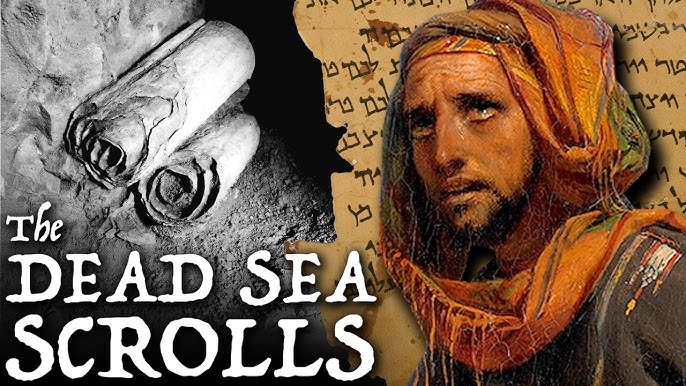
"The appear­ance of the Dead Sea Scrolls was the most impor­tant doc­u­ment dis­cov­ery of the twen­ti­eth cen­tu­ry. Yet, in some sense, they did­n't deliv­er what many assumed to be promised with­in: that is, the basis for a com­plete revi­sion of every­thing we thought we knew about Chris­tian­i­ty. The real­i­ty of the Dead Sea Scrolls' con­tent is less sim­ple, but also stranger - which makes it an ide­al sub­ject for the YouTube chan­nel Hochela­ga, giv­en its pen­chant for explor­ing the obscure byways of reli­gious his­to­ry."
"But the fact remains that those caves did con­tain, tight­ly rolled up and for the most part well-pre­served, a set of scrolls adding up to "around 900 indi­vid­ual man­u&scrip ts: 40 per­cent of them "resem­bled books found in the Bible"; 30 per­cent, apoc­ryphal writ­ings "banned" from the Bible; and anoth­er 30 per­cent, "writ­ings pre­vi­ous­ly unknown to schol­ar­ship." Those last include "texts that described a secre­tive reli­gious com­mu­ni­ty and apoc­a­lyp­tic visions of a great heav­en­ly w"
The Dead Sea Scrolls were discovered in 1946 in caves near the Dead Sea, reportedly by a Bedouin shepherd searching for a lost goat. Approximately 900 individual manuscripts were recovered: about 40% resembled books found in the Bible, about 30% were apocryphal writings excluded from the biblical canon, and about 30% were previously unknown texts. The previously unknown writings describe a secretive religious community and apocalyptic visions of a heavenly realm. The manuscripts include the oldest biblical writings ever found and complicated existing understandings without producing a complete revolution in Christian origins.
Read at Open Culture
Unable to calculate read time
Collection
[
|
...
]