#artificial-general-intelligence
#artificial-general-intelligence
[ follow ]
#openai #ai-safety #gpt-5 #large-language-models #ai-risk #ai-development #ai #turing-test #artificial-intelligence




Artificial intelligence
fromFortune
1 month agoUber cofounder has 'white pill' outlook on AI's job disruption: he says humans will be 'super fine' until super AGI steps into the picture | Fortune
Business leaders debate whether AI will eliminate jobs or create valuable new opportunities, with some arguing humans will become increasingly essential and powerful in the workforce.
Artificial intelligence
fromTheregister
1 month agoGoogle Deepmind hackathon to pit meatbags v machines
Google DeepMind developed an empirical framework with a cognitive taxonomy to measure progress toward artificial general intelligence by benchmarking AI systems against human capabilities across ten cognitive areas.
Artificial intelligence
fromComputerWeekly.com
2 months agoIs AI our agent, or are our governments becoming agents for AI? | Computer Weekly
Meta's acquisition of Moltbook, a social network for AI agents, raises serious security concerns given recent research documenting critical vulnerabilities in AI agent interactions including unauthorized compliance, data disclosure, and system takeover risks.
fromFuturism
2 months agoInsiders Afraid the Government Will Nationalize the AI Industry
With AI just about only thing propping up an otherwise crumbling economy, fueling a supposed wave of innovation and helping the Pentagon choose who to bomb next, it stands to reason the feds would want to keep the tech on a short leash. If recent events are any indication, that leash is only getting tighter.
Artificial intelligence
Venture
fromFortune
2 months agoWhy Leopold Aschenbrenner's AI hedge fund is betting big on power companies and bitcoin miners to fuel the AI boom | Fortune
Leopold Aschenbrenner's hedge fund bets on massive power generation infrastructure based on his thesis that AGI development requires exponential computational scaling and will reshape geopolitics and economics.
fromEngadget
2 months agoOpenAI secures another $110 billion in funding from Amazon, NVIDIA and SoftBank
OpenAI just announced a massive funding round of $110 billion, which is one of the biggest investment rounds in Silicon Valley history. The investors feature many of the usual suspects, including Amazon with $50 billion, NVIDIA with $30 billion and SoftBank with $30 billion. This investment brings OpenAI to a $730 billion valuation.
Artificial intelligence
Artificial intelligence
fromBusiness Insider
2 months agoEmails show the 'Godfather of AGI' courted Epstein for funding and congratulated him on jail release
Jeffrey Epstein funded Ben Goertzel's AI work, pressured him personally about appearance, and pledged substantial grants tied to ambitions for artificial general intelligence.








Artificial intelligence
fromwww.theguardian.com
5 months agoIt's going much too fast': the inside story of the race to create the ultimate AI
Silicon Valley workers and major tech firms are locked in an intense, well-funded global race to develop artificial general intelligence and outcompete geopolitical rivals.
fromPsychology Today
5 months agoWhy Natural General Intelligence (Still) Reigns Supreme
Despite the impressive achievements of current generative AI systems, the dream of Artificial General Intelligence remains far away, notwithstanding the hype offered by various tech CEOs.[1] The reasons are easy to state, if hard to quantify. Human intelligence requires three primary features, none of which have been fully cracked: logic, associative learning, and value sensitivity. I'll explain each in turn.
Artificial intelligence


fromBusiness Insider
9 months agoDavid Sacks says the doomsday scenario of AI wiping out jobs is 'overhyped'
AI hasn't progressed as quickly as many have predicted; specifically, the idea that AI will 'self-improve' and rapidly achieve 'godlike superintelligence' has been blown out of proportion.
Artificial intelligence
fromwww.theguardian.com
9 months agoIt's missing something': AGI, superintelligence and a race for the future
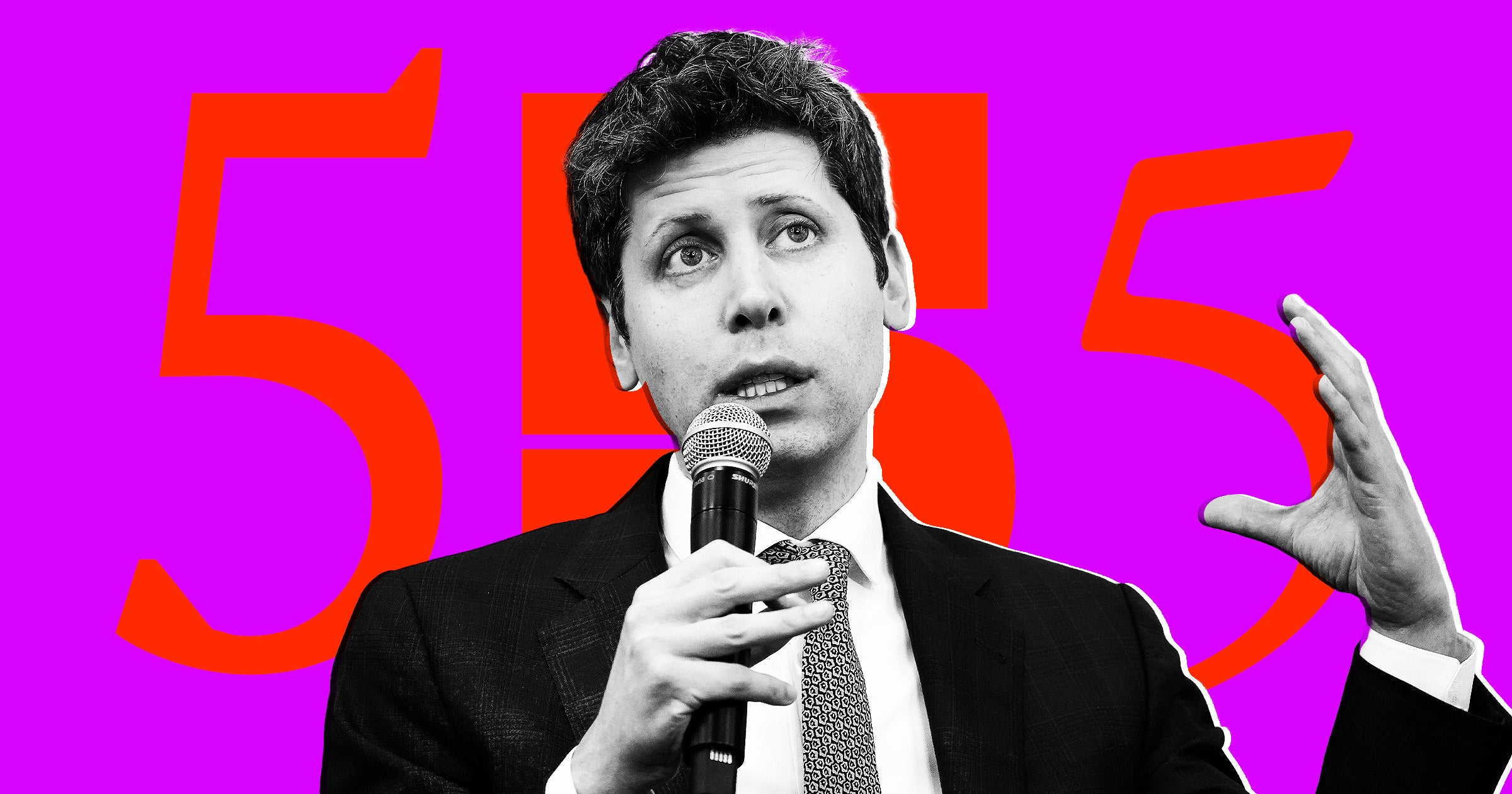
OpenAI's new GPT-5 model represents a significant step toward artificial general intelligence, yet it lacks crucial elements like autonomous continuous learning, limiting its full potential.
Artificial intelligence


fromZDNET
9 months agoWatch AI models compete right now in Google's new Game Arena
Games provide a clear, unambiguous signal of success. Their structured nature and measurable outcomes make them the perfect testbed for evaluating models and agents. They force models to demonstrate many skills including strategic reasoning, long-term planning, and dynamic adaptation against an intelligent opponent, providing a robust signal of their general problem-solving intelligence.
Artificial intelligence


Artificial intelligence
fromtime.com
1 year agoA Potential Path to Safer AI Development
AI development parallels an unmarked and foggy mountain road, with risks that could lead to significant loss of control.
Recent advancements in AI dynamics indicate a rapid approach towards Artificial General Intelligence (AGI) beyond previous expectations.
Artificial intelligence
fromHarvard Business Review
1 year agoAI Reasoning Models Can Help Your Company Harness Diverse Intelligence - SPONSOR CONTENT FROM MICROSOFT AZURE & NVIDIA
The theory of multiple intelligences adds depth to understanding artificial general intelligence, particularly in reasoning models that emulate human problem-solving.
[ Load more ]