The VA identified its five most widely used software vendors with the highest quantity of licenses installed, but faced challenges in determining whether it was purchasing too many or too few of these software licenses.
Retired Army Special Forces officer Mike Nelson criticized Hegseth's rhetoric, stating, 'That's a necessary end to achieve goals through military force - you have to kill people to achieve them. That's not the end. It's a weird obsession with death for the sake of it.'
That's a $9,000 raise, essentially. Sell the car and use that cash to get a functional car. If you can sell it, get that $5,000 in your hand plus this $9,000 and buy you a $15,000 paid-for car, that's a nice car. And now you got no car payments.
In a February 19 memo sent to civilians across the DoD, secretary of defense Pete Hegseth wrote that he expects "every supervisor to encourage their civilian employees to volunteer. Leadership must continue to promote this detail program and educate their civilian employees on its importance."
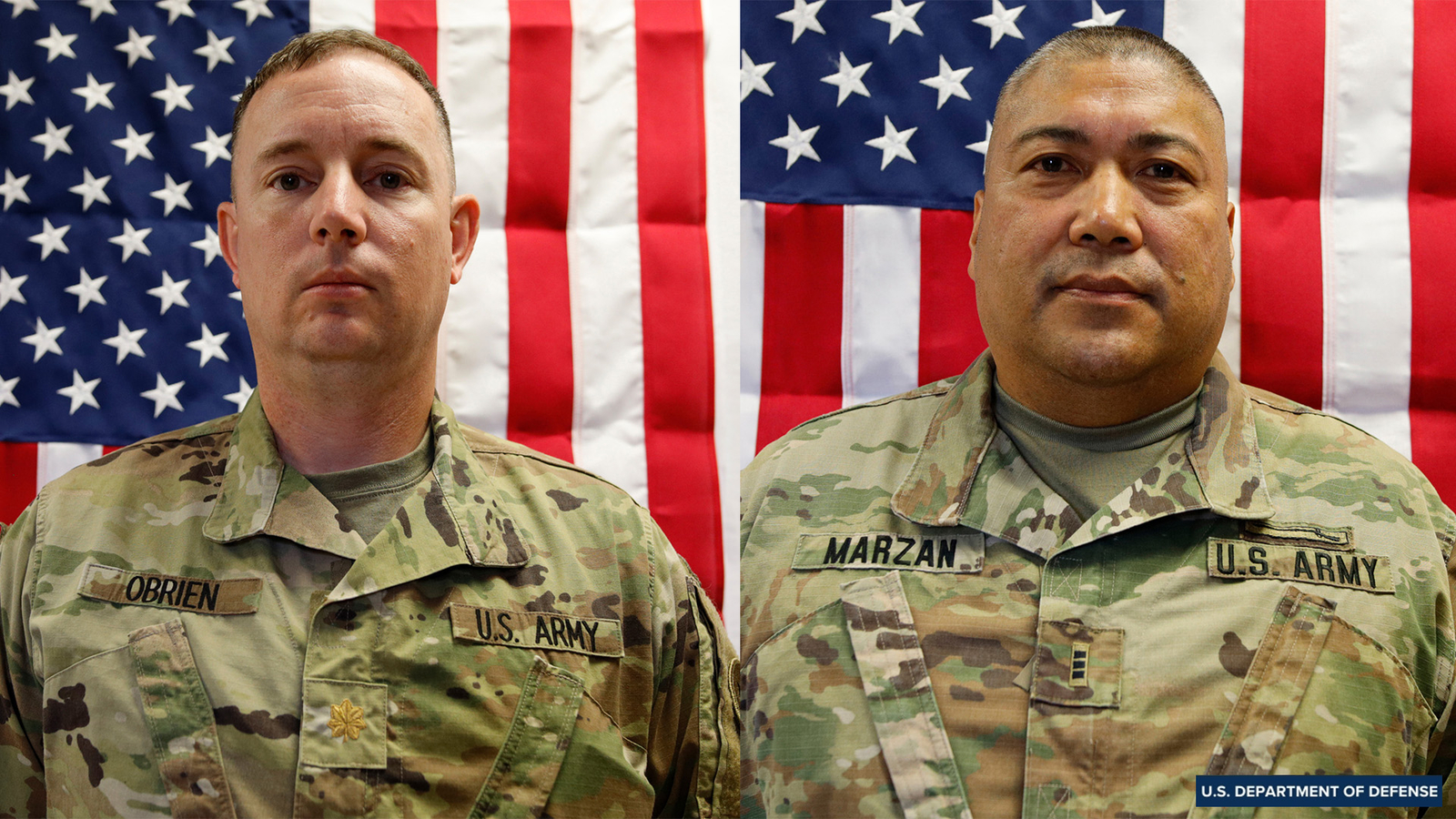
Major Davius dedicated his life to serving others - as a member of the U.S. Army National Guard, an NYPD officer, and previously as an FDNY paramedic. His commitment to protecting and helping others, both here at home and while serving our nation overseas, is a true testament to his character and courage.
The Marines are a 24-hour responsibility. Once you commit, your personal ambitions take a backseat. Eventually, I reached a point where I wanted to explore those ambitions - specifically, entrepreneurship - while I was still young enough to act on them. I made the decision to leave the service during the height of the COVID-19 pandemic - even though the civilian job market felt uncertain, and many encouraged me to stay. But retired service members who had built businesses offered a different message. They helped me realize that the military equips people with more transferable skills than they often think. The transition resources on base reinforced that point, so I felt ready to move on.
Some aircraft succeeded even though they made life harder for the people flying them. They demanded constant attention, punished mistakes, and left little margin for error. Instead of relying on forgiving design, these platforms forced crews to compensate through skill, planning, and coordination. Over time, combat proved that the human element was the decisive factor behind their success. Here, 24/7 Wall St. is taking a closer look at these aircraft that embodied the human factor.
For many veterans, returning home marks not resolution but the beginning of a quieter struggle. Despite decades of innovation in trauma-focused therapies and medication, a substantial number continue to live with psychological injuries that existing treatments only partly address. Their trauma is not merely a cluster of symptoms; it is a disruption of identity, moral coherence, and belonging. It reflects lived experience often shaped by early adversity, military culture, and the potentially socially isolating aftermath of service.
The US Army's biggest AI gamble may not be on autonomous weapons, but instead whether Silicon Valley software can tackle the service's most tedious and, more often than not, grueling administrative jobs. Think less uncrewed aircraft and more behind-the-scenes tasks like recruiting, equipment maintenance, and endless gear inventories. Through a mix of new tools, redesigned workflows, and data integration, logisticians
Though the 83-year-old (who will turn 84 in two weeks) is rarely spotted in the Capitol these days, his vocal opposition to President Donald Trump on a myriad of issues is louder and more present than ever when deemed useful for the motivated liberal press. For instance, McConnell was quoted far and wide last month after he criticized Trump's desire to acquire Greenland, a move the Kentuckian suggested would "incinerate" the threadbare alliance that remains between the United States and NATO.
Number one is speed takes priority over perfection. We can iterate to get to operational capability. And the second is that early soldier feedback is critical in order to make sure we're getting the right technology for the future fight, and then we want to be able to prove the demand signal before we spend big dollars on programs.
Out of about 780,000 civilians at the Department of War, formerly the Department of Defense, approximately 62,000, or 8%, did not return to in-person work as of July 31, 2025, according to a U.S. Government Accountability Office report. War department officials told the government watchdog that 45,000, or 6%, have deferred resignation status or other exemptions, and 17,000, or 2%, have wavers. GAO released the report, "Civilian Telework and Remote Work: DOD Should Evaluate Programs in Relation to Department Goals," this month.