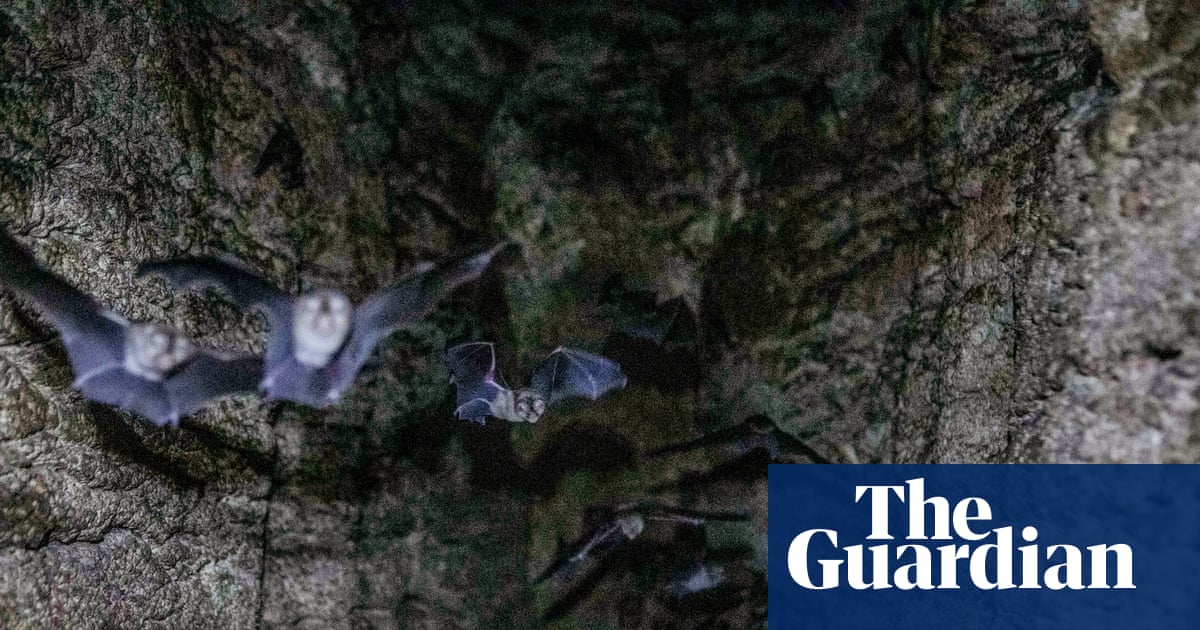
"Guano is far more than just bat droppings. If I had to describe it in one word, I'd say ecosystem. Developed over time from bird and bat faeces, guano is a rich, potent, organic material that is home to cave-dwelling beetles, frogs and salamanders."
"Caves are little worlds of their own. Everything smells, looks and feels different, with organisms and microbiomes that have evolved to exist under very niche conditions without sunlight."
"These underground, honeycombed networks cover 183 sq km, according to the park's science department. While no data exists on how many of the 100-plus species of bats found in Gorongosa live here, Tombo Aphale 5 hosts more than 10,000 bats."
"Gorongosa was founded in 1960 by the colonial Portuguese government. But biodiversity and conservation were not a priority for the Marxist-leaning Frelimo party, which came to power in 1975 after a decade-long war of independence."
Raul da Silva Armando Chomela studies bats and their guano in the caves of Gorongosa National Park, Mozambique. Guano, a rich organic material, supports diverse life forms, including beetles, frogs, and salamanders. Caves are unique ecosystems with organisms adapted to dark, niche conditions. Chomela's research involves exploring over 30 caves, including Tombo Aphale 5, which houses more than 10,000 bats. Gorongosa, established in 1960, has faced challenges in biodiversity and conservation due to historical political priorities.
Read at www.theguardian.com
Unable to calculate read time
Collection
[
|
...
]