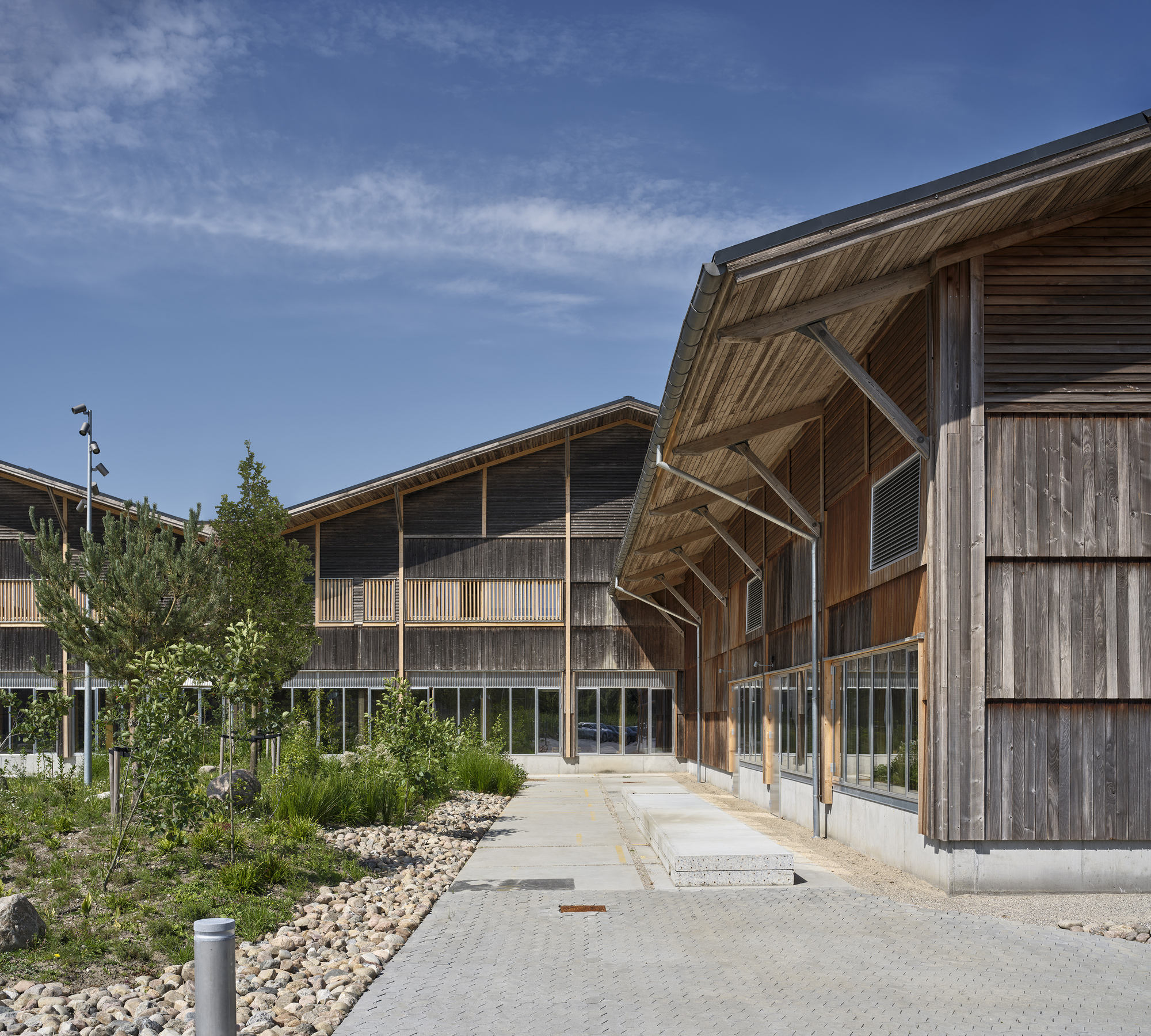
"The LKR Innovation House project challenges conventional building practices, preserves material legacy, and offers practical lessons for architects working with existing structures."
"Rather than demolishing the building, VELUX partnered with various architects and engineers to transform it into a workspace that supports product development across the VELUX Group."
"By transforming the existing structure instead of demolishing it, more than 55% of the building's materials were saved compared with new construction."
"The project achieved a carbon footprint of 4.6 kg CO₂eq/m²/year, well below the projected Danish Building Regulations."
The LKR Innovation House in Østbirk, Denmark, transformed a 30-year-old timber warehouse into a modern workspace for VELUX employees. This project emphasizes the importance of reusing existing structures rather than opting for demolition. By preserving over 55% of the original materials, the project significantly reduced its carbon footprint to 4.6 kg CO₂eq/m²/year, showcasing a sustainable approach to architecture. The initiative serves as a model for future architectural practices, encouraging a dialogue with existing sites and their histories.
Read at ArchDaily
Unable to calculate read time
Collection
[
|
...
]