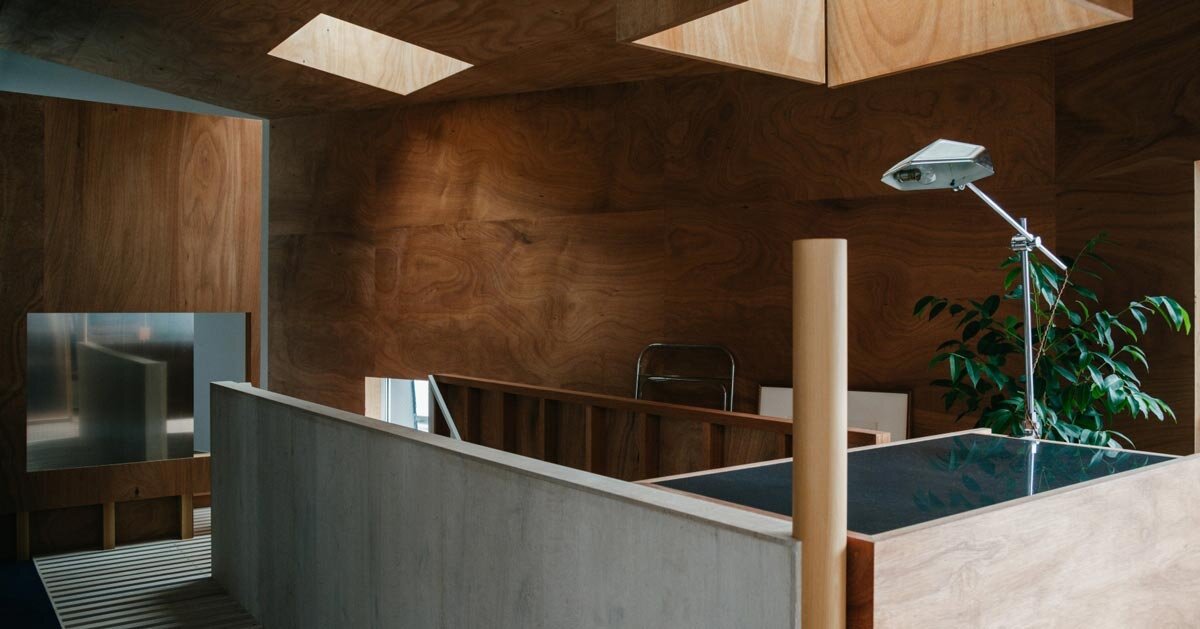
"Conceived as the architect's own home, the project responds to this layered context through a strategy of adjustment rather than contrast. The intention was to create a building that integrates into the shifting character of the area while maintaining spatial flexibility for varied domestic activities. The design acknowledges the unpredictability of urban conditions, where degrees of openness and privacy constantly shift."
"To moderate its presence along the street, the first and second floors are articulated as distinct volumes. The upper level is clad in the same material as the roof and shaped with a pitched form that directs views upward. This sloping volume generates an eave over the lower floor, mediating scale between the house and a small roadside shrine at the front of the property."
"Large openings are positioned to connect interior spaces with the road, enabling visual exchange between domestic life and passing pedestrians. At the same time, the design incorporates elements that regulate exposure and enclosure. Windows and solid walls alternate; reinforced-concrete surfaces coexist with built-in benches; transparent stair railings contrast with opaque ones."
Jonoya residence, designed by Masakazu Tsujibayashi Architects as the architect's own home, occupies an irregular plot in a dense Osaka residential district bordered by roads on three sides. The surrounding context features narrow alleys, older tenement houses, shrines, and temples with domestic life visible along roadsides. The design strategy prioritizes adjustment over contrast, creating a building that integrates into the area's shifting character while maintaining spatial flexibility. The building footprint follows the site geometry, with distinct articulated volumes on the first and second floors. The upper level, clad in roof material with a pitched form, generates an eave over the lower floor and mediates scale with a nearby roadside shrine. Large openings connect interior spaces with the road, enabling visual exchange between domestic life and pedestrians, while alternating windows, solid walls, and varied railings regulate exposure and enclosure.
#residential-architecture #urban-integration #adaptive-design #japanese-architecture #spatial-flexibility
Read at designboom | architecture & design magazine
Unable to calculate read time
Collection
[
|
...
]