"This approach minimizes the need for interior columns and enables an open, flexible floor plan. The roofs extend over both indoor and outdoor areas, creating a continuous spatial sequence that connects the ground-level garden with the upper-level study. Circulation is arranged so that family members enter directly into a shared, multi-story living space when moving from private rooms, reinforcing visual and spatial connections throughout the house."
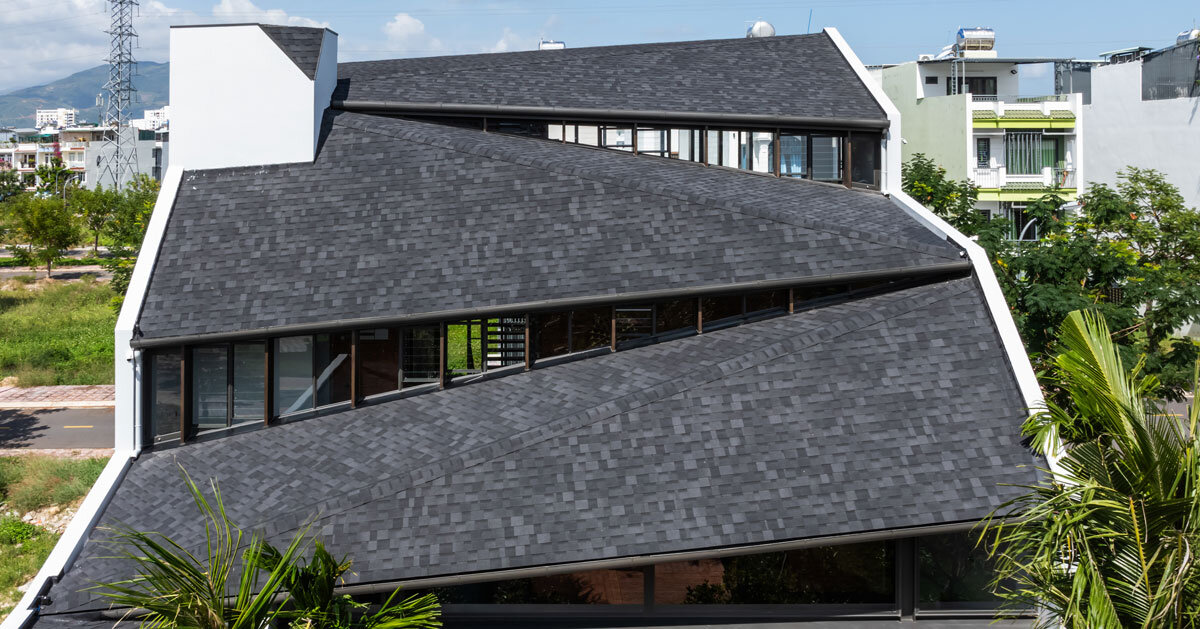
"The layered roof configuration supports natural ventilation and daylighting, with the building orientation and roof geometry optimized to enhance environmental performance. all images by Hiroyuki Oki Overlapping roof planes give the residence its tent-like form Openings between the roof planes frame views of surrounding greenery and the urban context while allowing daylight to penetrate deep into the interior. Operable glass louvers regulate airflow, facilitating cross-ventilation during warmer months and providing protection from heavy rainfall during the monsoon season."
The design is organized around a series of roof planes spanning between two primary structural walls, minimizing the need for interior columns and enabling an open, flexible floor plan. Roofs extend over indoor and outdoor areas to create a continuous spatial sequence that connects a ground-level garden with an upper-level study. Circulation routes lead family members directly into a shared, multi-story living space from private rooms, reinforcing visual and spatial connections. Layered roof geometry and building orientation support natural ventilation and daylighting. Operable glass louvers regulate airflow for cross-ventilation and provide protection during the monsoon. Overlapping roof planes define a tent-like form that integrates light, air, and landscape.
Read at designboom | architecture & design magazine
Unable to calculate read time
Collection
[
|
...
]