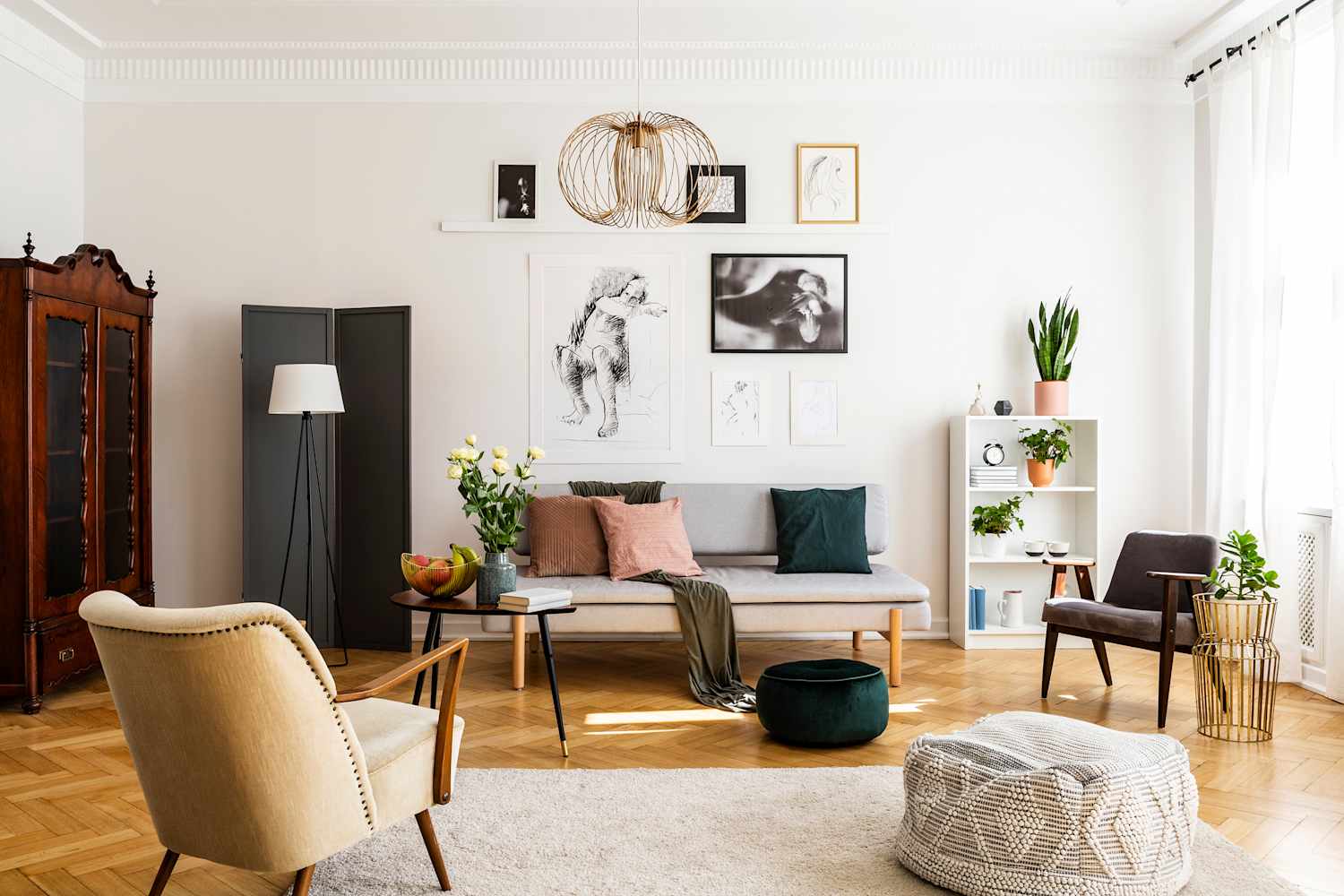
Designers prioritize authenticity in their own homes. They avoid furniture and finishes that pretend to be something else, such as faux wood grains and stone-effect contact papers. They prefer sourcing real materials even when they are harder to find and cost more upfront. Natural materials like wood, wool, and stone are viewed as sturdier and longer-lasting than imitation alternatives. Designers also steer away from mass-produced wall art like printed paintings. Instead, they recommend hanging meaningful textiles such as quilts, tapestries, rugs, or craft projects, including a canvas painted by hand.
"“I never use materials pretending to be something they're not,” says Laetitia Laurent, principal designer and founder of Laure Nell Interiors. Essentially, she'd rather save for “the real deal.” That means, in many cases, steering clear of faux wood grains, stone-effect contact papers, etc."
"Although “authentic” pieces can be more difficult to source and pricier upfront, your money will often go further with them. Ksenya Malina, principal designer of Time & Place Interiors, specifically invests in pieces made of sturdier natural materials like wood, wool, and stone, which have longer lifespans than imitation products."
"Ariana Lovato, owner and principal designer at Honeycomb Home Design, specifically calls out mass-produced art, too, like printed-on “paintings.” Instead, Lovato says, she'd rather hang up a meaningful quilt, tapestry, rug, or crafting project on her walls. A canvas you painted yourself (no matter your skill level!) will alway"
Read at Apartment Therapy
Unable to calculate read time
Collection
[
|
...
]