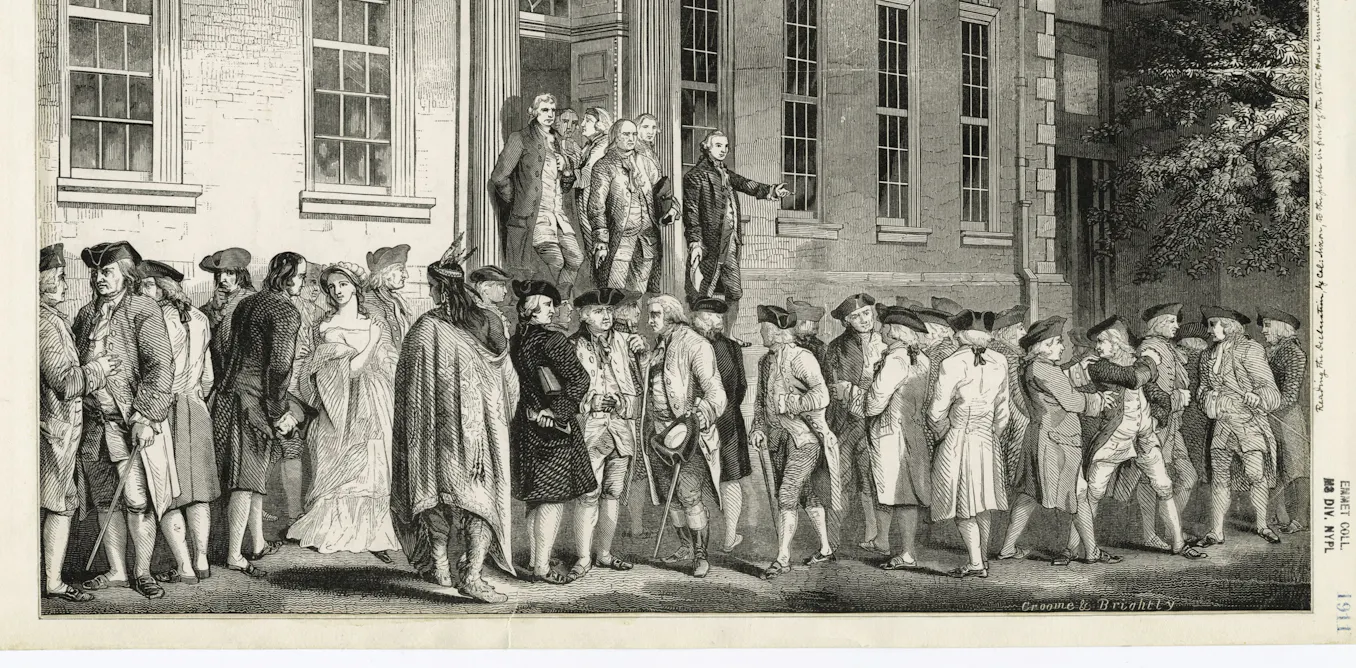
The Declaration of Independence was adopted on July 4, 1776, and was intended to be widely proclaimed and read aloud. It faced dissent from various groups, including Loyalists and pacifist churches. The declaration's claims, particularly regarding unalienable rights, have been debated throughout American history. In recent years, its references to God have polarized opinions, with some viewing the U.S. as a secular republic and others as a Christian nation. The 250th anniversary in 2026 will prompt further reflection on its significance.
"The declaration was also meant to be read aloud. Thomas Jefferson's rough draft has marks signaling where the reader should pause briefly, or take a longer pause. And there were ceremonial public readings: first in Philadelphia and then in town squares, courthouses, churches and taverns up and down the Eastern Seaboard."
"Not everyone listening would have agreed with the declaration, and religion was one dividing point. Loyalists who sided with England and the official Church of England dissented on both spiritual and political grounds."
"Americans have continued to debate the declaration's claims. In recent decades, its few references to God have been especially polarizing, as Americans defend starkly contrasting views of the United States."
"Some say the country is a secular republic founded on 18th-century conceptions of human reason and natural law. Others suggest that it is a Christian nation, chosen by God and founded on biblical principles."
#declaration-of-independence #american-history #religion #political-dissent #historical-interpretation
Read at The Conversation
Unable to calculate read time
Collection
[
|
...
]