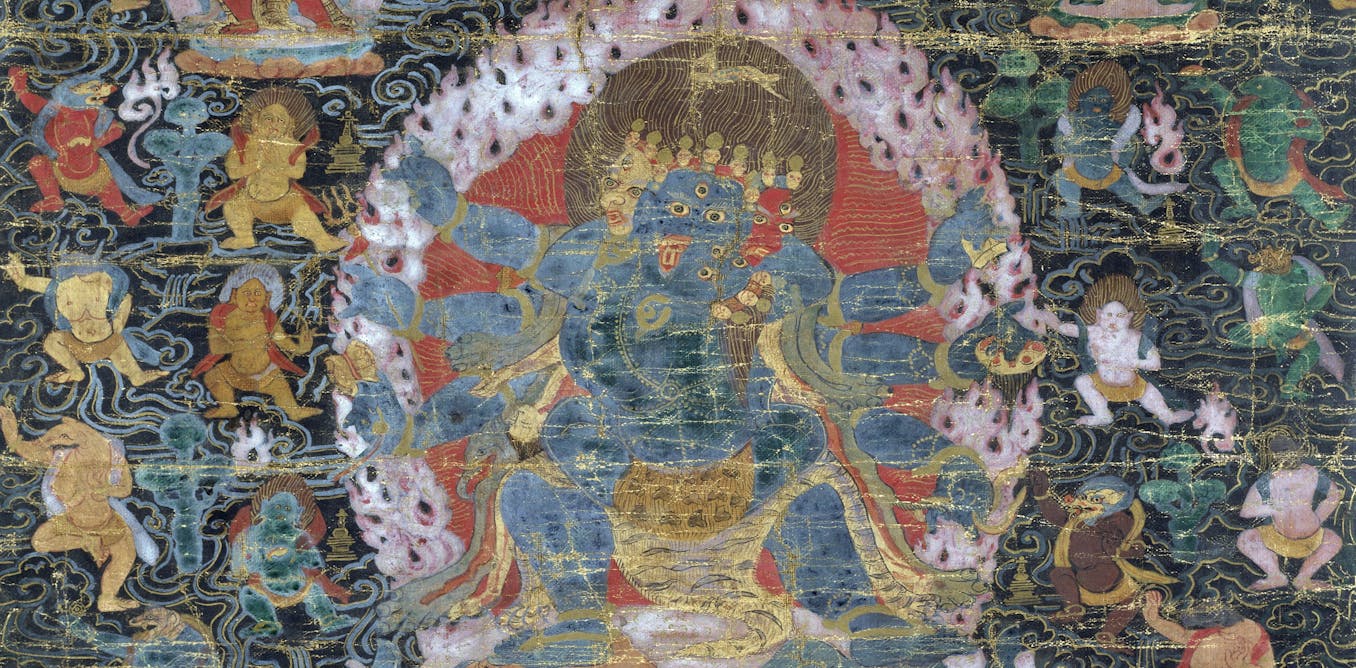
The Tibetan Book of the Dead is the most famous Tibetan Buddhist text in the Western world, appearing prominently in bookstores and popular culture. First translated by American anthropologist Walter Evans-Wentz in 1927, the text gained broader recognition when Timothy Leary adapted its philosophy for psychedelic experiences in 1964, and further when actor Richard Gere narrated an audio version in 2008. The original 14th-century Tibetan text carries the full title "The Great Liberation by Hearing in the Intermediate States," shortened to "Bardo Thodrol" meaning "liberation upon hearing." Evans-Wentz's translation was incomplete and based on oral commentary rather than the original text. The first complete translation was completed in 2007 by Tibetan Buddhism scholar Gyurme Dorje and endorsed by the Dalai Lama.
"Originally, the book was not even called "The Tibetan Book of the Dead" - and this book is not just about death. The full title of the original Tibetan text from the 14th century translates as "The Great Liberation by Hearing in the Intermediate States." In Tibetan, it is shortened to "Bardo Thodrol," which loosely translated to "liberation upon hearing.""
"It was first translated by American anthropologist Walter Evans-Wentz in 1927. The book's philosophy of death and rebirth as spiritual practice was adapted in 1964 by Timothy Leary, the founder of psychedelic studies, to guide psychedelic experiences. Actor Richard Gere narrated the audio version of the book in 2008, helping introduce it to a broad audience."
"The English title took off with Evans-Wentz's first translation. But Evans-Wentz translated only a part of the book, and the translation was based on oral commentary rather than the Tibetan text. The first full translation was done in 2007 by scholar and translator of Tibetan Buddhism Gyurme Dorje."
Read at The Conversation
Unable to calculate read time
Collection
[
|
...
]