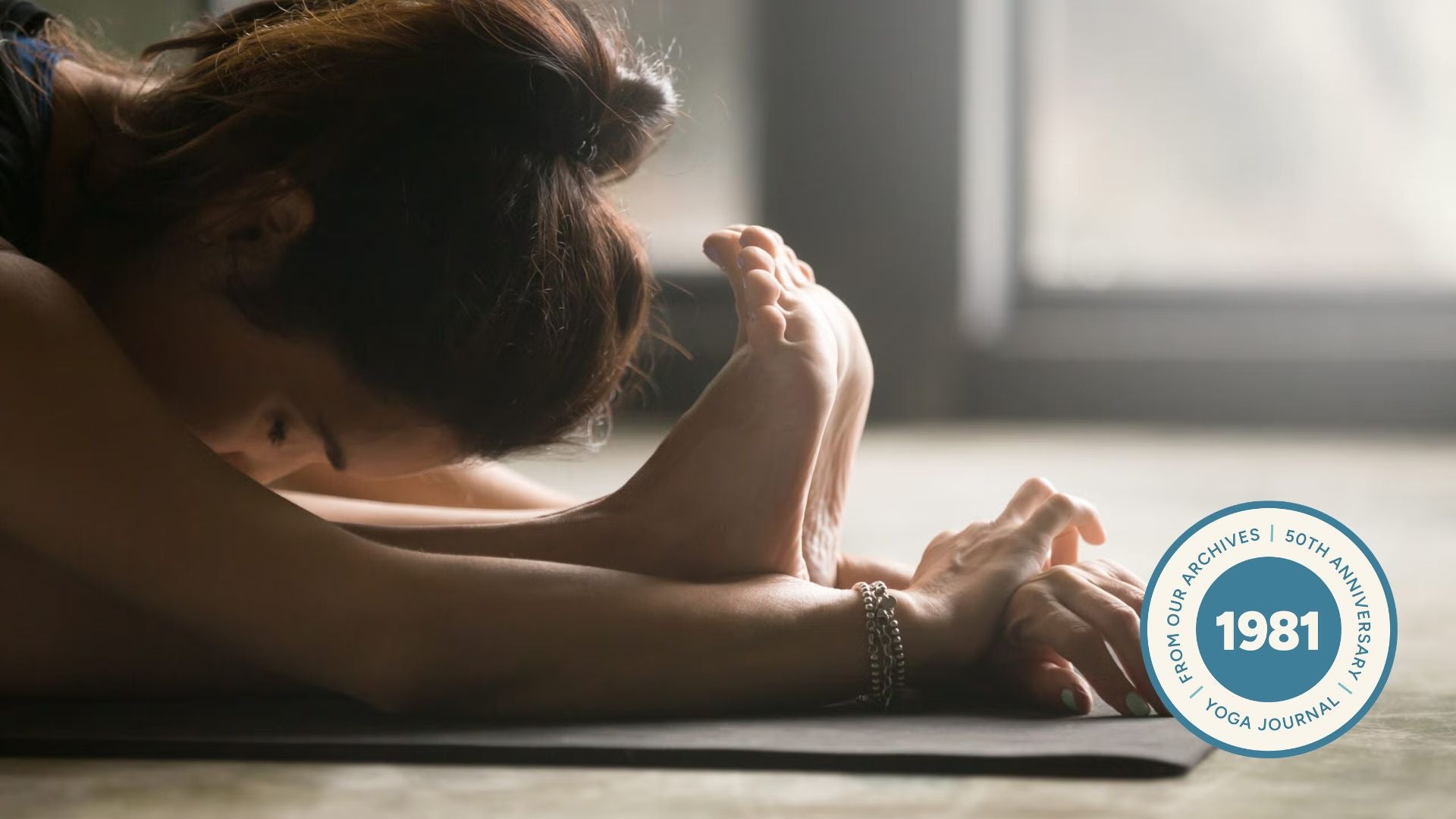
"While this asana (pose) appears to be a simple forward bend, Paschimottanasana (Sanskrit for intensive stretch to the West or back of the body) is the most difficult forward bend for most students to practice correctly. What makes the pose so difficult is that the hamstring muscles in the back of the thigh must lengthen in order for the pelvis to rotate forward. This allows the spinal column to remain relatively straight while bending forward."
"During the forward movement, emphasis should be placed upon lifting up rather than forward. This actually elongates the spine so the forward bend can be done without curving. Curving the back to bend forward creates imbalance in the structure of the back. By overstretching the thoracic (mid) spine, the normal curve of this area may be increased. Continued practice over time can cause an overstretch to the posterior (back) structures of the thorax enhancing the tendency for a rounded back."
"Paschimottanasana is an extremely quieting pose mentally, when practiced correctly. But if the emphasis is on putting the forehead on the knees, the back rounds and the pose becomes aggressive and goal-oriented. The element of striving to reach the goal of forehead to knee, for example, colors the attitude one has toward the pose; it generates anxiety about success or failure; it also creates tension in the student, so that more force must be used to overcome the body's resistance."
Paschimottanasana is a deceptively simple forward bend that is often the most difficult for students to perform correctly. Hamstring lengthening is required so the pelvis can rotate forward and keep the spine relatively straight during the bend. Emphasis during the movement should be on lifting the spine upward rather than reaching forward, which elongates the spine and prevents rounding. Rounding the back creates structural imbalance and can overstretch the thoracic spine, promoting a rounded back over time. Focusing on achieving external goals such as forehead-to-knee fosters anxiety, tension, and aggressive effort that undermines the pose's calming quality.
Read at Yoga Journal
Unable to calculate read time
Collection
[
|
...
]