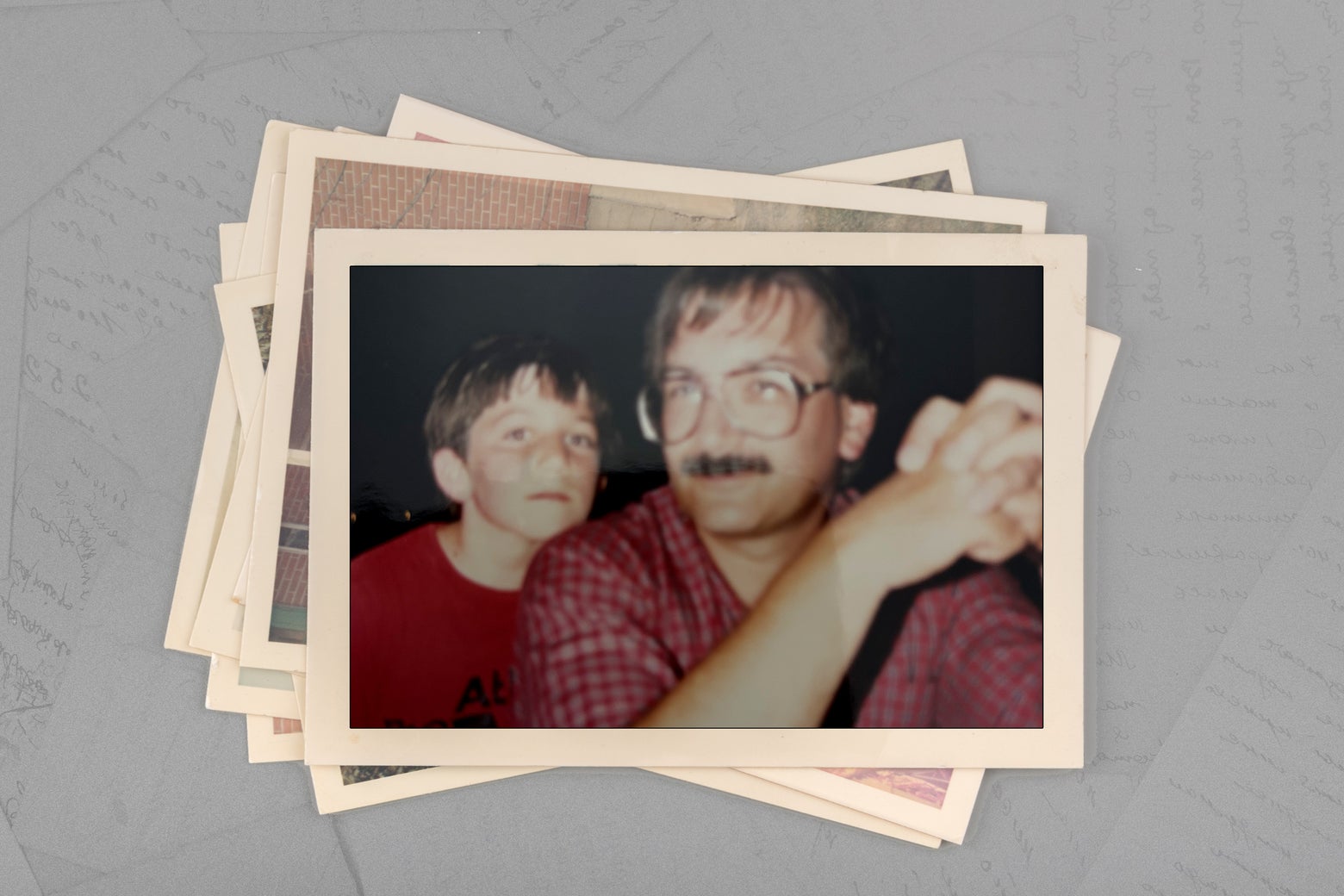
"The morning before Hurricane Katrina made landfall in 2005, I helped my parents batten down their house in uptown New Orleans. The last step was tending to my dad's home offices, plural. His overflow of books, journals, and files from the history department of the University of New Orleans filled my brother's former bedroom and an enclosed porch, both lined with exposed windows on the second floor."
"My dad couldn't do much to protect his work himself. Seven years after being diagnosed with Parkinson's disease, he moved haltingly, like each limb weighed a ton. With traffic on the evacuation route worsening by the minute, I didn't have time to do much either. He pointed to four cardboard boxes dense with loose papers and asked me to put them in a windowless foyer at the top of the stairs. As soon as I did, we hit the road."
"I gave no thought to what was in those boxes, or why my dad prioritized them, until he retired five years later. While helping him organize his files, I found some old correspondence with an editor. (My dad, never at ease with computers, had printed an email thread and put it in a manila folder.) When I asked him what it was about, he said off-handedly they'd been discussing a companion to the first book of his career, from 1983."
"I never saw my dad comport himself like someone whose work was of greater consequence than anyone else's. Short and round, with the eyeglasses and mustache of seemingly every Jewish dad from Chicago, he didn't cut a prominent figure. He didn't display any awards, or talk about any accolades. So when we started going through his files, I had no idea that he was considered one of the preeminent scholars of 20 th century American history."
A person helped their parents prepare for Hurricane Katrina in 2005 by securing a New Orleans home and moving dense office materials into a windowless foyer. The father, living with Parkinson’s disease, could not protect his work himself, and evacuation pressures limited time for careful handling. Years later, while organizing the father’s files after retirement, the person found correspondence with an editor preserved as printed email threads. The father mentioned that the correspondence concerned a companion to his 1983 book, Making the Second Ghetto. The father appeared unassuming and rarely discussed accolades, yet he was later recognized as a leading scholar of 20th-century American history.
Read at Slate Magazine
Unable to calculate read time
Collection
[
|
...
]