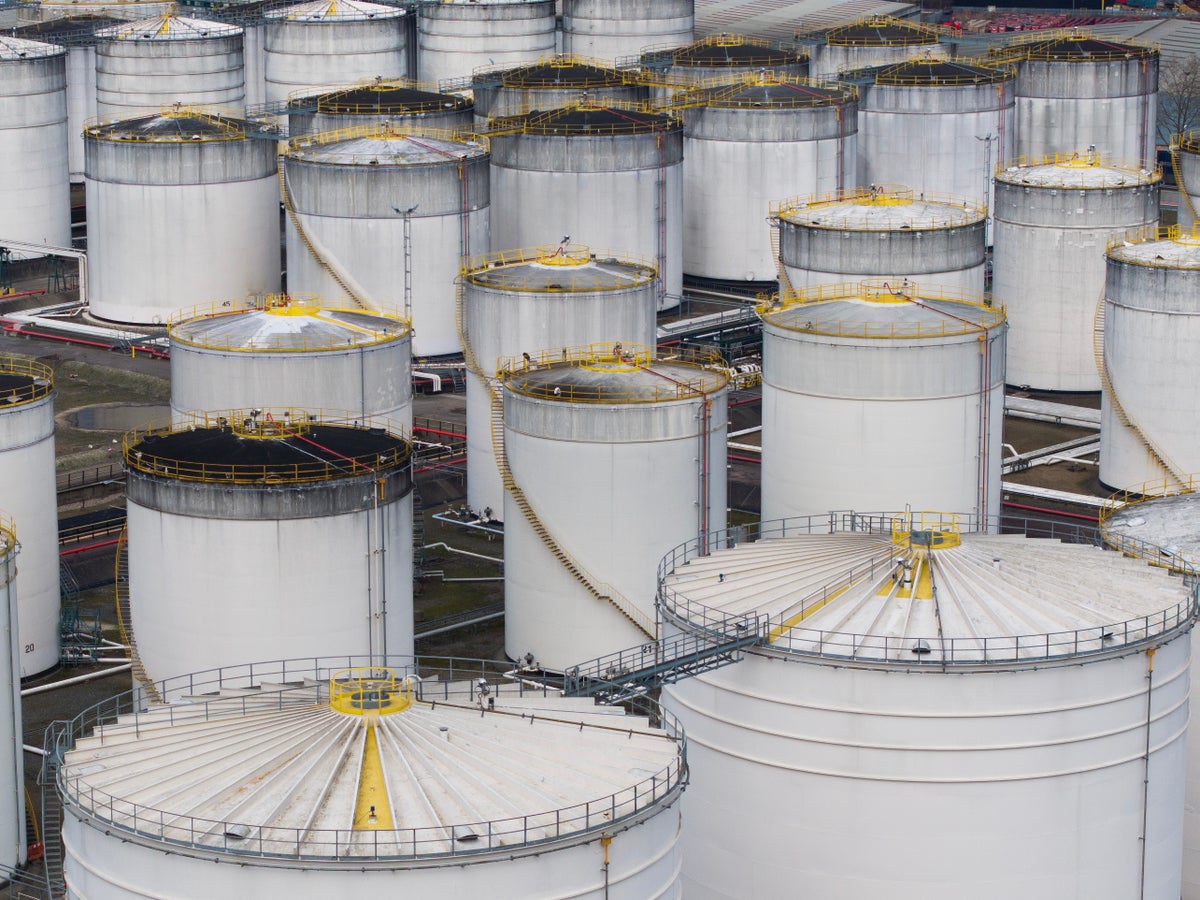
"The war in Iran has choked the world's supply of oil to a trickle, the International Energy Agency said in a new report released on Thursday. According to the organization, which tracks and helps set policy for the global energy sector, the widening conflict in the region has created an unprecedented disruption in the global oil market—one that will almost certainly force energy and other fuel-dependent costs to rise."
"The reason why Iran has such sway over fossil fuels has to do with a quirk of geology. The country sits on top of where the Arabian tectonic plate is smashing into the Eurasian plate. This continental collision gave rise to the Zagros Mountains, which push down on the Arabian plate in a way that has created a basin in Earth's crust that traps hydrocarbons—hence, all that oil and gas."
"Around a fifth of the world's shipments of oil and liquid natural gas pass through a narrow stretch of sea called the Strait of Hormuz, which separates the Persian Gulf and the Gulf of Oman. Iran effectively controls the strait, and when the U.S. and Israel ignited the war on February 28, Tehran closed the waterway down."
The International Energy Agency reports that the war in Iran has severely disrupted global oil supplies, creating an unprecedented market disruption. Iran's geological position atop vast oil and gas reserves, combined with its control of the Strait of Hormuz through which approximately one-fifth of the world's oil shipments pass, gives the country significant leverage over global energy markets. The conflict, which began on February 28, prompted Iran to close the Hormuz strait, directly threatening diesel and jet fuel markets. The region contains about 12 percent of the world's oil reserves, making any disruption to Iranian production consequential for global energy prices and fuel-dependent costs.
#middle-east-conflict #oil-supply-disruption #energy-crisis #strait-of-hormuz #global-energy-markets
Read at www.scientificamerican.com
Unable to calculate read time
Collection
[
|
...
]